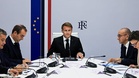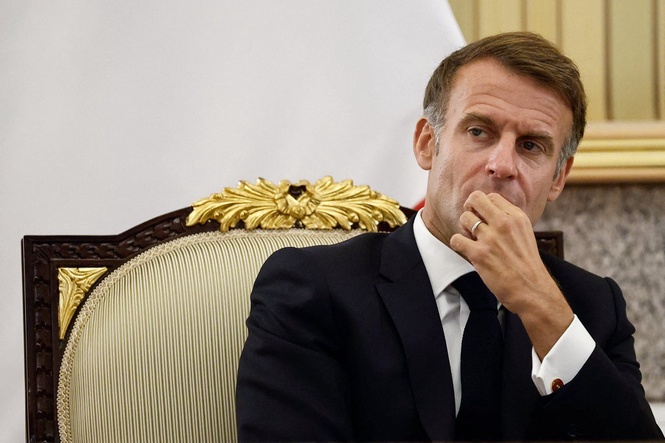
French president Emmanuel Macron was accused of being “out of touch” for pressing ahead with a tour of the Gulf on Monday as his country reeled from a weekend of major demonstrations that descended into violence.
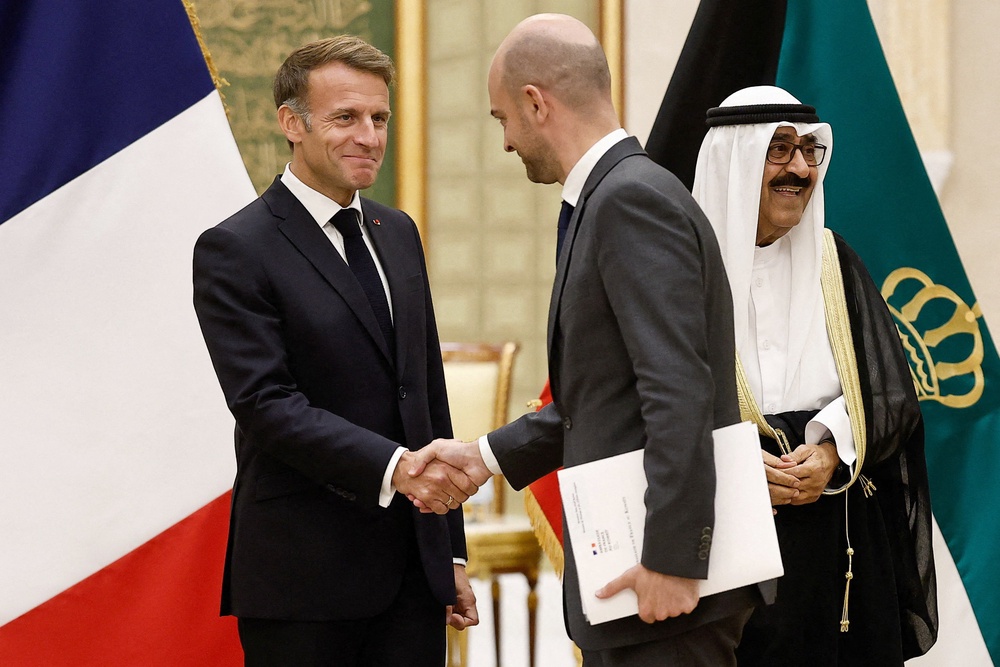
Mr Macron stopped off in Kuwait and the UAE to discuss the ongoing crisis around the Strait of Hormuz as part of a three-day visit to the region aimed at lowering energy prices inflamed by Donald Trump’s ongoing war with Iran.
The visit, announced by the Elysee Palace last week, comes at a time of crisis for France, after more than half a million people turned out over the weekend to protest the rising cost-of-living and dysfunctional public services.
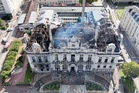
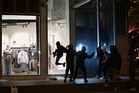
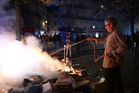
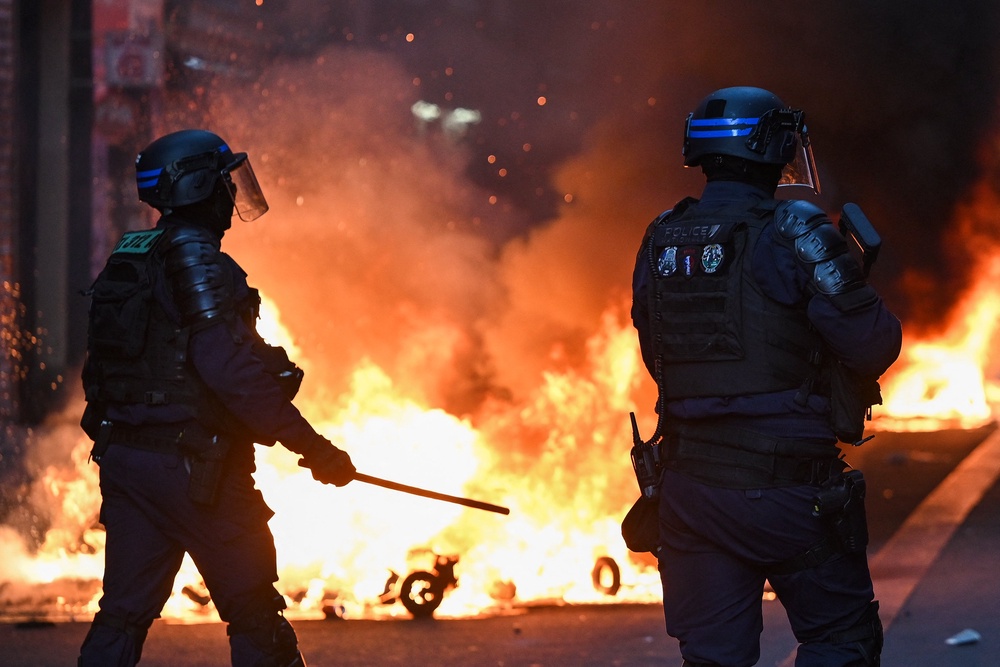
In many places including Paris, Marseille and Lyon, peaceful protests were hijacked by rioters on Saturday. Hundreds of buildings were vandalised in the capital, and more than 2,400 people were arrested amid clashes with police.
An Elysee source told The National that Mr Macron’s discussions in the Middle East would focus on securing and diversifying energy supplies with the aim of limiting the impact of the energy crisis on the daily lives of French people.
“In light of the crisis gripping the Middle East, the President will continue his efforts with regional leaders to promote a return to stability and freedom of navigation in the Strait of Hormuz,” the source said.
David Lees, reader in French studies at the University of Warwick, told The Independent that Macron’s trip risked being perceived like Charles de Gaulle’s secret flight to West Germany in 1968, at the height of civil unrest and strikes sweeping France.
“Even if Macron is actually seeking to address some of the challenges around oil prices that have meant such a high cost of living for the French people, at worst this will seem like a condescending action by a president who frequently appears to be out of touch with the concerns of ordinary people,” he said.
Benjamin Morel, a French constitutional law expert and lecturer at the University of Paris-Panthéon-Assas, said the tour would give “an impression of normality... but may also appear out of touch and suggest a kind of power vacuum”.
Images of Macron attending a Céline Dion concert with his wife Brigitte on Friday evening, hours before the unrest erupted, only reinforced perceptions, prompting ridicule on social media.
Jean-Baptiste Moreau, a former Macron lawmaker who spoke to Macron on Sunday, said he urged the president to prepare an orderly early departure to break the current political deadlock and avoid another six months of drift.
“He doesn't want to give up, that's not his character. But that's what he should do for the country,” he told Reuters.
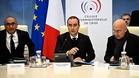
Prime minister Sebastien Lecornu was meanwhile left to quell the unrest at home, relaying after a crisis meeting on Monday that he had urged prefectures and regional governments to put in place “partial curfews” to help curb the mounting unrest.
He blamed the violence on what he called the “ultra-left” and claimed intelligence agencies had briefed on a risk that the “extreme left” could seek to disrupt the upcoming presidential election.
“We have an extreme-left movement that is looking to create disorder, a very deep-seated disorder in the country going right up to the presidential election. I think that has been clearly said to us this morning by the intelligence agencies,” he said.
Mr Lecornu said there was “currently an issue with the far-left in Marseille”, which on Monday imposed a ban on public gatherings after a number of public buildings were targeted over the weekend, with a small group briefly storming the City Hall.
The mayors of France's biggest cities meanwhile demanded answers from the government over what they called a lack of preparation by security forces to deal with rioting and looting.
Organisers calling themselves ‘17octobregiletjaune’ [17 October Yellow Vest] also said they were planning a “second act” of demonstrations for the coming weekend, urging that “Macron must go and make way for the people”.
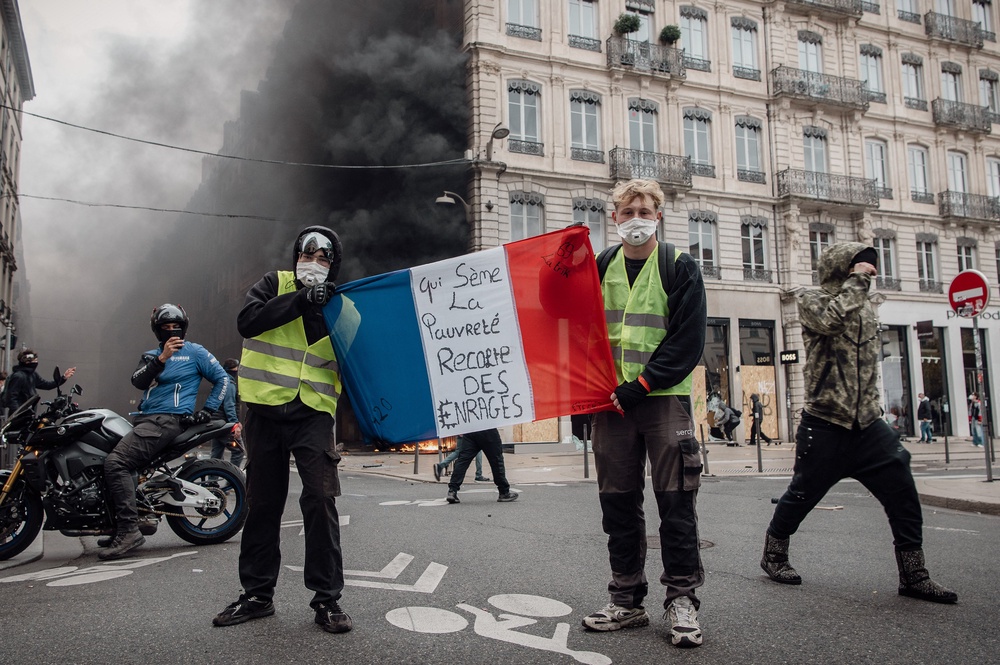
Unlike during the Yellow Vest uprising of 2018-2019, when Macron sought to defuse public anger with billions of euros in concessions, France’s strained public finances and fractured parliament leave him with precious few levers to pull.
“There is the potential for all protest, including peaceful demonstrations, to be banned and we could see an increasingly authoritarian approach to government, with more decrees and less discussion and debate within the National Assembly,” Dr Lees warned.
“Sébastien Lecornu and Macron appear otherwise to have no real answers. France’s economy remains in a dire situation, since Macron cut taxes but also increased public expenditure in the wake of the gilets jaunes protests in 2018.
“Public debt is well over 110% of GDP and the deficit is growing. Macron and Lecornu are unlikely to be able to spend their way out of trouble, unlike Macron’s 2018 response.”
Justice minister Gerald Darmanin acknowledged that the recent protests had highlighted failings in how the security services deal with threats posed by what he called far-left protesters.
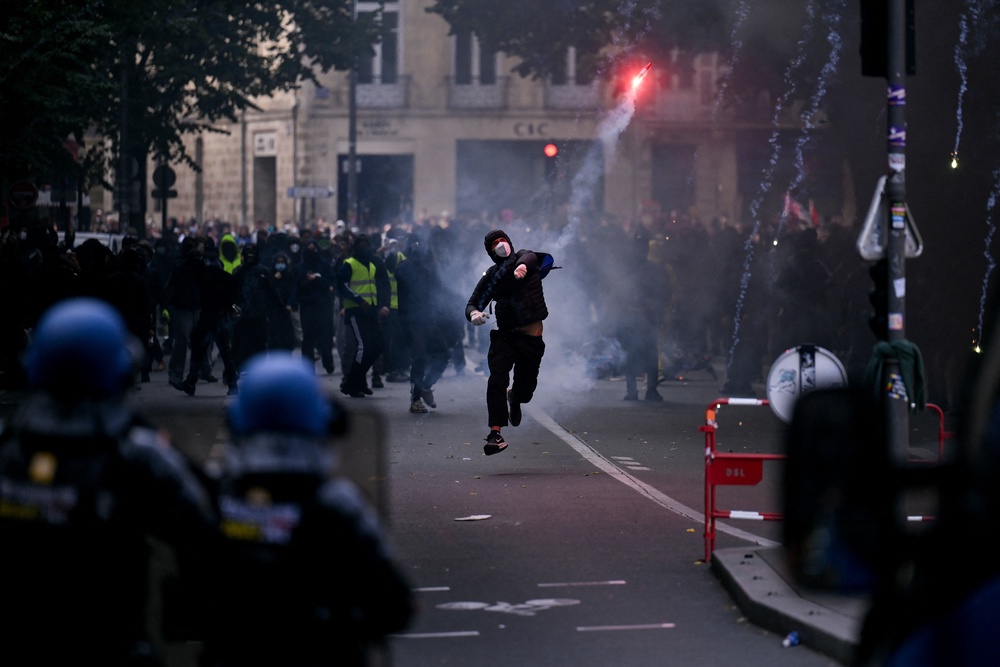
“Clearly, it is not tackling the far-left effectively,” he told France 2 TV.
And even former allies were openly scathing, tracing the country's current impasse to Macron's decision to call a snap parliamentary election in 2024 that weakened his authority.
“The end of this term is a slow agony,” said Loïc Kervran, a former lawmaker from Macron’s camp, on X. “The president paralysed the country with his absurd decision to dissolve parliament in 2024. Arguably the worst decision in the history of the Fifth Republic."
With the government in disarray, presidential hopeful Jean-Luc Mélenchon and his Left-wing party La France Insoumise have sided with the demonstrators and are seeking to capitalise on the protests to boost their own chances in April’s election, Dr Lees noted.
“Marine Le Pen, by contrast, is positioning herself yet again as the ‘law and order’ candidate, seeking to show leadership in a way that Macron, as yet, has been unable to demonstrate,” he said.
“Le Pen no longer needs to spend any money to campaign,” Mr Moreau told Reuters. “It's not just a clear path ahead of her — it's a six-lane highway.”
How Serbia's protesting students became key to the upcoming elections
All the European cities on fire after a weekend of violent protests
French mayor calls for Notre Dame-style rebuild after rioters set town hall ablaze
The mysterious cave emerging as one of the world’s most culturally significant places
Two killed and thousands evacuated after Storm Adam batters Spanish coast
Ukraine war live: Kyiv ‘has reclaimed more land than Moscow has captured in autumn’