
Unveiling the Political Mirage: Navigating the Labyrinth of Political Scams
In the intricate tapestry of politics, a disconcerting reality emerges—the existence of a shadowy realm known as political scams. This essay embarks on a profound exploration, delving into the depths of political deception, dissecting the mechanics behind these scams, unraveling the motives propelling them, questioning the governmental acquiescence, and finally, proposing a roadmap for society to break free from the chains of corruption.
I. The Anatomy of Political Scams:
Political scams, with their chameleon-like adaptability, manifest in various forms, each a testament to the craftiness of those seeking to exploit the democratic fabric. The Enron scandal, a stark example of corporate greed infiltrating political corridors, exposed the vulnerability of regulatory frameworks to financial malfeasance. Similarly, the Watergate affair revealed the erosion of ethical conduct at the highest levels of government, highlighting the betrayal of public trust
II. How Political Scams Happen:
Political scams find fertile ground in environments where power is unchecked and transparency is a rarity. The interplay between money and politics, exemplified by the "Cash-for-Votes" scandal in the Indian Parliament, exposes the vulnerabilities in campaign financing, turning political campaigns into financial battlegrounds where the highest bidder can influence legislative decisions.
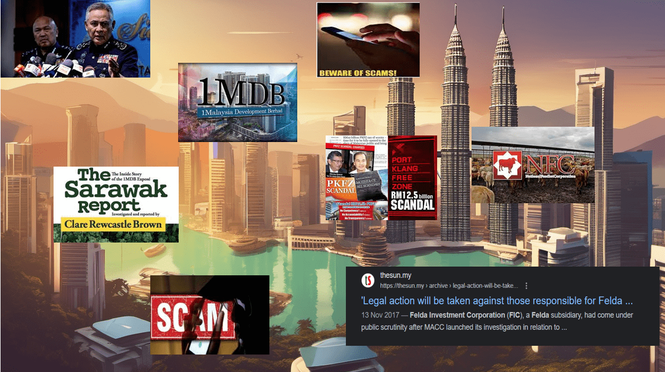
Malaysia has unfortunately witnessed several real-life political scandals and scams that have captured public attention and raised concerns about corruption and abuse of power. Here are a few notable examples:
1Malaysia Development Berhad (1MDB) Scandal:
Overview: The 1MDB scandal is one of the most infamous financial scandals in Malaysia. The state investment fund, 1Malaysia Development Berhad, was embroiled in allegations of embezzlement and misappropriation of billions of dollars.
Details: High-ranking officials, including former Prime Minister Najib Razak, were accused of siphoning off funds for personal gain, luxury purchases, and political contributions. The scandal involved international money laundering, and investigations revealed a complex web of financial transactions.
National Feedlot Corporation (NFC) Scandal:
Overview: The NFC scandal involved allegations of mismanagement and misuse of public funds in a government-backed cattle farming project.
Details: The National Feedlot Corporation, a company owned by a politician and his family, was granted a substantial loan by the government to develop a cattle farming project. However, reports emerged of financial irregularities, including the use of funds for personal expenses such as luxury property purchases.
Felda Investment Corporation (FIC) Scandal:
Overview: Felda is a government agency in charge of rural development, and its investment arm, Felda Investment Corporation, faced allegations of financial mismanagement.
Details: The FIC scandal involved questionable land deals and investments that led to financial losses. Investigations revealed that the funds meant for development and benefits for Felda settlers were misused, raising concerns about transparency and accountability.
Port Klang Free Zone (PKFZ) Scandal:
Overview: The PKFZ scandal revolved around the construction and financing of a port in Port Klang, which incurred massive cost overruns and financial irregularities.
Details: The project was marred by allegations of corruption and mismanagement, with reports of inflated land prices and questionable payments. The scandal led to investigations and legal proceedings against several individuals, including politicians and business figures.
One of the most common mechanisms behind political scams is the misappropriation of public funds. A classic example is the 'Bondgate scandal' in the United Kingdom, where it was revealed that members of parliament had abused their expenses system for personal gain. Falsifying invoices, creating fictitious organizations, and claiming unjustifiable allowances became the modus operandi of these politicians, causing public outrage and severely damaging the reputation of the political establishment.
III. Why Political Scams Occur:
Political scams in Malaysia, like in many other countries, are driven by a combination of complex factors that intertwine political, economic, and societal elements. Understanding why these scams occur requires a nuanced exploration of the motives that propel politicians into engaging in corrupt practices. Here are key reasons why political scams occur in Malaysia:
Corruption for Enrichment: One of the primary reasons behind political scams in Malaysia is the personal greed of some politicians. Opportunities for embezzlement, kickbacks, and misappropriation of funds may present themselves, enticing individuals to prioritize personal gain over public service.
Abuse of Authority: Political figures may engage in scams to consolidate and perpetuate their power. By using their positions to influence contracts, appointments, or resource distribution, they can secure political dominance and undermine democratic principles.
Nexus with Business Elites: Political scams in Malaysia often involve collusion between politicians and business elites. Crony capitalism, where political connections play a significant role in business dealings, can lead to scams that prioritize the interests of a select few over the broader population.
Dependency on Donations: Political campaigns in Malaysia require substantial funding, and politicians may resort to scams to finance their electoral pursuits. The pressure to amass significant resources can lead to questionable financial dealings and reliance on dubious sources of funding.
Securing Votes: Some politicians may believe that engaging in scams, such as providing financial incentives or favors, can secure votes during elections. The perceived need to maintain political support may drive individuals to compromise ethical standards.
Fear of Retaliation: A lack of robust whistleblower protection mechanisms in Malaysia can contribute to the perpetuation of political scams. Individuals with knowledge of wrongdoing may fear retaliation, discouraging them from coming forward with information.
Addressing the root causes of political scams in Malaysia requires a comprehensive approach that includes legal reforms, strengthening institutions, fostering a culture of transparency, and promoting public awareness. Breaking the cycle of corruption necessitates a collective effort from both governmental and societal stakeholders.
IV. Why Governments Let It Happen:
Real-life cases like the Petrobras scandal and the Lockheed bribery scandals serve as stark reminders that governmental complicity often stems from systemic deficiencies. The Ghislaine Maxwell case, with its revelations of legal gaps, underscores the urgency of bolstering regulatory frameworks to withstand the corrosive influence of political scams.
The reasons why governments may let political scams happen in Malaysia, or in any country for that matter, are often complex and multifaceted. It's important to note that not all governments are complicit in such activities, and explanations can vary. Here are several reasons that could contribute to governments allowing political scams to occur:
1. Corruption within Government Institutions:
- Compromised Officials: In some cases, high-ranking officials within government institutions may be complicit in political scams. Corruption at various levels of the bureaucracy can undermine the effectiveness of regulatory bodies, allowing scams to go unnoticed or unprosecuted.
2. Lack of Transparency and Accountability:
- Opaque Systems: If government systems lack transparency and accountability, it becomes easier for political scams to thrive. When financial transactions and decision-making processes are shrouded in secrecy, it provides fertile ground for corruption to flourish without adequate scrutiny.
3. Political Patronage and Nepotism:
- Favoritism: Political leaders may engage in patronage, appointing individuals based on loyalty rather than merit. This can lead to the placement of individuals who may prioritize personal gain over the public interest, facilitating the occurrence of scams.
4. Weak Legal and Regulatory Frameworks:
- Lax Enforcement: If legal and regulatory frameworks lack teeth or are inadequately enforced, wrongdoers may exploit these weaknesses. Governments may fail to implement or enforce stringent measures that could deter political scams, allowing the perpetrators to act with impunity.
5. Political Interference in Judicial Processes:
- Manipulation of Judiciary: Political interference in the judiciary can impede the fair investigation and prosecution of political scams. When the legal system is not independent and subject to external pressures, justice may be compromised, and wrongdoers may escape accountability.
6. Economic and Political Stability Concerns:
- Prioritizing Stability: Governments may prioritize economic and political stability over confronting corruption. Fear of destabilizing factors, such as public unrest or economic downturns resulting from investigations, may lead authorities to turn a blind eye to certain scams.
It's important to recognize that these reasons are not exhaustive, and the dynamics of political scams can vary. Combating political scams often requires a combination of legal reforms, strengthened institutions, and a commitment to transparency and accountability from both the government and the public. Public demand for good governance, backed by an independent and robust legal system, is crucial for preventing and addressing political scams.
V. Societal Overcoming:
Overcoming political scams demands a collective effort from society, drawing inspiration from historical examples. The Watergate scandal, with its subsequent investigations, underscores the power of an informed and vigilant citizenry in holding leaders accountable. Real cases like the Panama Papers illuminate the crucial role of investigative journalism in exposing political corruption, emphasizing the need for a robust and independent media.
The establishment of independent anti-corruption bodies, as exemplified by Hong Kong's Independent Commission Against Corruption (ICAC), provides a tangible roadmap for institutional reforms. Drawing from these examples, society can champion transparency, demand accountability, and actively participate in the democratic process to mitigate the impact of political scams.
Overcoming political scams in Malaysia requires a multi-faceted approach involving proactive measures from both the government and civil society. Here are several strategies that society can adopt to address and mitigate political scams:
Enhance Independence: Ensure that anti-corruption bodies, such as the Malaysian Anti-Corruption Commission (MACC), are independent and insulated from political interference. This involves securing their budgetary independence and protecting the tenure of key personnel.
Legislative Changes: Advocate for comprehensive legislative reforms that address loopholes contributing to political scams. This includes tightening campaign finance regulations, whistleblower protection laws, and strengthening penalties for corruption.
Effective Enforcement: Ensure that law enforcement agencies have the resources, training, and independence required to effectively investigate and prosecute cases of political scams.
Public Disclosure: Advocate for greater transparency in political funding, ensuring that all political donations and expenditures are disclosed to the public. This can be achieved through legislation requiring parties to publish financial reports regularly.
Asset Declarations: Encourage politicians and public officials to declare their assets regularly. This practice fosters accountability and makes it easier to identify unexplained wealth.
Promote Civic Literacy: Educate the public on their rights and responsibilities in a democracy. Civic education can empower citizens to make informed choices, critically assess information, and actively engage in holding politicians accountable.
Encourage Whistleblowing: Establish mechanisms to protect and encourage whistleblowers who come forward with information on corruption or political scams. Whistleblower protection laws should be strengthened to ensure individuals feel secure in reporting wrongdoing.
Support Independent Media: Advocate for a free and independent media environment. Independent journalism serves as a crucial check on political power, uncovering and publicizing instances of corruption and political scams.
Collaborate with Journalists: Support investigative journalism initiatives that delve into political scandals. Encourage collaboration between civil society organizations and journalists to ensure a thorough examination of corruption cases.
Campaign Finance Regulations: Push for stricter regulations on campaign financing to prevent undue influence by special interest groups. Transparent reporting of political donations and expenses should be a legal requirement.
Fair and Free Elections: Advocate for reforms that ensure fair and free elections, reducing the potential for electoral fraud and manipulation.
Cross-Border Collaboration: Engage in international cooperation to combat corruption, especially when it involves transnational elements. Collaboration with international organizations and other countries can facilitate the investigation and prosecution of cross-border political scams.
By implementing these strategies, Malaysian society can work towards building a more transparent, accountable, and ethical political landscape, resilient to the corrosive impact of political scams. It requires a collective effort involving citizens, civil society organizations, the media, and the government to bring about meaningful change.
Unveiling the political mirage demands a concerted effort from citizens, institutions, and the media. Real-life incidents serve as cautionary tales, urging society to remain vigilant against the encroachment of political scams. By learning from these cases, implementing robust reforms, and fostering a culture of transparency and accountability, society can navigate the labyrinth of political scams. In doing so, the ideals of democracy can stand strong against the deceptive forces that seek to undermine them, ensuring a resilient and ethical political landscape for generations to come.
Anjana is a content creator under the Newswav Creator programme, where you get to express yourself, be a citizen journalist, and at the same time monetize your content & reach millions of users on Newswav. Log in to creator.newswav.com and become a Newswav Creator now!
The User Content (as defined on Newswav Terms of Use) above including the views expressed and media (pictures, videos, citations etc) were submitted & posted by the author. Newswav is solely an aggregation platform that hosts the User Content. If you have any questions about the content, copyright or other issues of the work, please contact Newswav.
