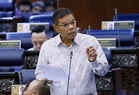
PETALING JAYA: Malaysia is at risk of being exploited as a transit route for international drug smuggling and distribution syndicates, given its strategic geographical location and extensive transportation networks, said Home Minister Datuk Seri Saifuddin Nasution Ismail.
He said intelligence findings and enforcement operations by the Royal Malaysia Police (PDRM) had identified the threat, with syndicates potentially using the country’s air, land and maritime networks to transport drugs to local and international markets.
“Malaysia has been identified as facing the threat of being exploited as one of the transit routes for international drug smuggling and distribution activities,” he said in a written parliamentary reply.
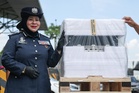
He was responding to Kota Melaka MP Khoo Poay Tiong, who asked about measures to strengthen security protocols at Kuala Lumpur International Airport (KLIA) following a sixfold increase in drug seizures to RM108.35 million in the first seven months of 2026, and whether Malaysia had become a transit hub for international drug syndicates.
Saifuddin said the Cabinet had approved a joint memorandum by the Home Ministry and Transport Ministry on Aug 19 to implement a phased action plan to strengthen security controls and screening at KLIA and other international entry points.
“The plan comprises 17 recommendations under three main pillars: aviation security, national and border security, and physical security and protection.
“Its implementation would be divided into three phases, covering short-term measures of up to six months, medium-term measures of six to 24 months, and long-term measures exceeding 24 months,” he added.
Saifuddin said that under the first phase, the government would tighten e-Vetting procedures for security passes, conduct random drug tests on pilots and flight crew, introduce regular staff rotations in restricted areas and increase police presence at KLIA.
“Other measures include relocating police officers and Customs Department Narcotics K9 units to special clearance zones and high-risk baggage areas, as well as integrating traveller intelligence through the National Immigration Command Centre (NICC).”
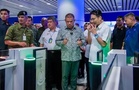
For the medium-term phase, Saifuddin said the government planned to acquire high-powered baggage scanners and body scanners, install artificial intelligence-enabled CCTV systems, strengthen the police K9 unit and improve specialised training for personnel.
“The long-term measures include replacing existing baggage and body scanners with next-generation AI-powered equipment, upgrading terminal and cargo infrastructure based on risk assessments and expanding standardised security controls across all air, land and sea entry points,” he said.
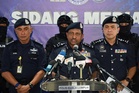
Saifuddin said the police, through the Narcotics Criminal Investigation Department, would also intensify intelligence gathering and enforcement operations targeting the entire syndicate network, including suppliers, movement coordinators, financiers and distributors.
He added that cooperation with international law enforcement agencies would be strengthened, alongside tighter controls at airports, ports and land borders to curb drug smuggling.