PETALING JAYA: Malaysia is exploring partnerships with the US, France and Russia, as it studies the possibility of introducing nuclear energy, says deputy prime minister Fadillah Yusof.
Fadillah, who oversees the energy transition and water transformation ministry, said Malaysia was looking to sign a memorandum of understanding (MoU) with Russian nuclear energy corporation Rosatom.
“We are going to sign a ‘123 Agreement’ with the United States,” he said in an interview with FMT, referring to a civilian nuclear cooperation pact under Section 123 of the US Atomic Energy Act of 1954.
The agreement would allow the US to transfer nuclear materials, equipment, technology and expertise to Malaysia for peaceful purposes, including electricity generation, research and medical applications.
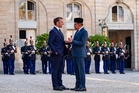
Fadillah said Malaysia was also exploring a similar arrangement with France, whose president, Emmanuel Macron, began a two-day visit to the country yesterday at the invitation of Prime Minister Anwar Ibrahim.
The visit, Macron’s first to Malaysia since taking office in 2017, is expected to elevate bilateral ties to a strategic partnership, with civil nuclear energy among the key areas of cooperation identified by the French presidency, Bernama reported.
Fadillah said Malaysia had visited France, the UK, China, South Korea, Russia and the US as part of its exploration of nuclear energy.
He said Malaysia was studying Russia’s floating nuclear plant, which generates electricity from a reactor onboard a vessel.
Fadillah said one potential advantage of the technology was that the vessel could be brought to Malaysia to supply electricity and taken away at the end of the contract.
“So we don’t have to manage waste, and so on — that’s the advantage.
“But can we do it in Malaysia? We have to evaluate it in detail.”Fadillah said Malaysia was examining both large nuclear plants and small modular reactors (SMRs), and could eventually consider a mix of both.
He said the SMRs could serve smaller communities and islands, while a larger reactor could be considered for the mainland.
However, Fadillah said the more pressing question was whether Malaysia was ready to adopt nuclear energy, including in terms of public acceptance, human capital, safety, policy and regulation.
“What is more important? Number one, are we ready?” he said.
Fadillah said site suitability surveys have already been conducted and potential locations “more or less identified”, although he did not name them.
He also said a survey indicated that about 70% of respondents were prepared to accept nuclear energy, although some may object to a facility being built near their homes