Malaysia’s Automotive High-Tech Valley has realised RM7 billion in investments since 2018, while its workforce has grown from around 2,000 to 9,300 people.
MALAYSIA’S Automotive High-Tech Valley (AHTV) in Tanjong Malim has recorded RM 7 billion in realised investments since 2018, with its workforce growing to 9,300 people, according to The Star.
Deputy Investment, Trade and Industry Minister Sim Tze Tzin told the Dewan Rakyat that the RM 7 billion includes investments from companies such as Geely, and represents 23.3% of the RM30 billion estimated for the overall development of AHTV through 2035.
Importantly, the RM30 billion should not be read as money already committed or invested. According to Sim, the figure covers investments that have already been realised, projects currently underway and developments planned for the future.
Employment has also grown considerably. AHTV had around 2,000 workers in 2018, rising to 9,300 this year, with the figure projected to reach 22,800 by 2030.

The number of companies operating within the ecosystem has also increased, from 11 in 2022 to 35 today, comprising automotive component suppliers, logistics companies and other supporting businesses.
Among the investments already completed are upgrades to Proton’s manufacturing facilities in Tanjong Malim, covering increased production capacity as well as metal stamping, painting, body assembly and final vehicle assembly.
Proton has also expanded its capabilities to produce new-generation engines and transmissions at the site. The company said in 2023 that it had already invested more than RM1.8 billion in Tanjong Malim since 2019, including a new engine assembly line, stamping facility and additional assembly lines.
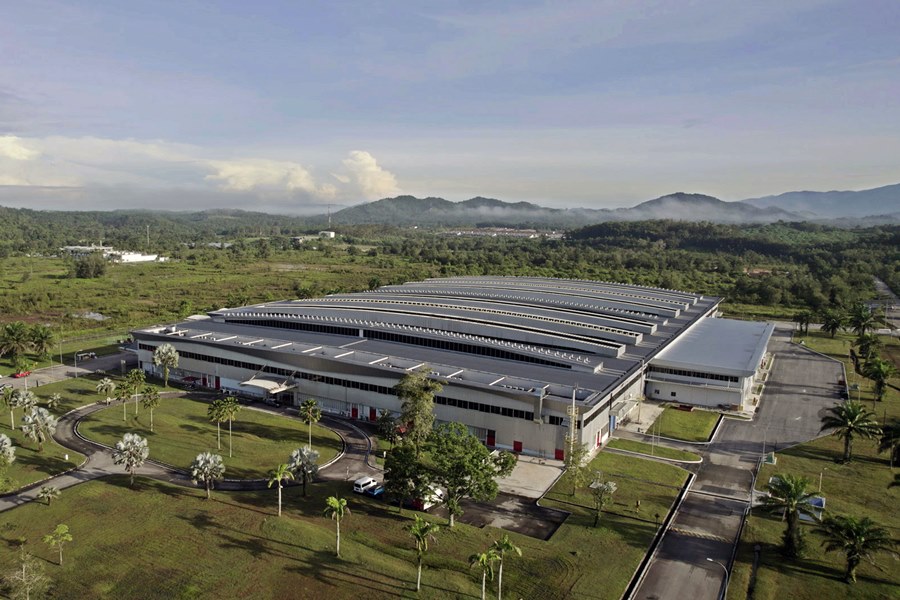
More recently, AHTV became home to Proton’s dedicated EV assembly plant, which began full-scale operations in September 2025. The facility has a maximum annual capacity of 45,000 vehicles and currently assembles the Proton eMas 7, with the eMas 5 also planned for production there.

Other developments between 2025 and 2026 include increased engine production capacity, new logistics centres and warehouses, EV manufacturing facilities and research and development testing laboratories.
A 12-megawatt peak solar farm has also been developed within Proton’s manufacturing complex as part of efforts to improve energy efficiency.
AHTV itself was formally unveiled by DRB-HICOM in 2022, with Proton acting as its anchor tenant.
The wider development covers automotive manufacturing, suppliers, research and development, logistics and other supporting industries, with Geely and DRB-HICOM playing central roles in attracting additional investors.
Interestingly, earlier plans had placed the investment target at around RM32 billion over 10 years.
DRB-HICOM clarified in 2023 that this was never meant to represent investment solely from itself and Geely, but the combined amount expected from multiple local and international companies joining the wider AHTV ecosystem.
The figure now given by MITI is RM30 billion through 2035, of which RM7 billion has so far been realised.
Sim said the longer-term measure of AHTV’s success will not be investment figures or vehicle production alone.
The government also wants the project to strengthen local technological capabilities, increase the use of locally produced components, reduce dependence on imports and grow exports of higher-value automotive products.