
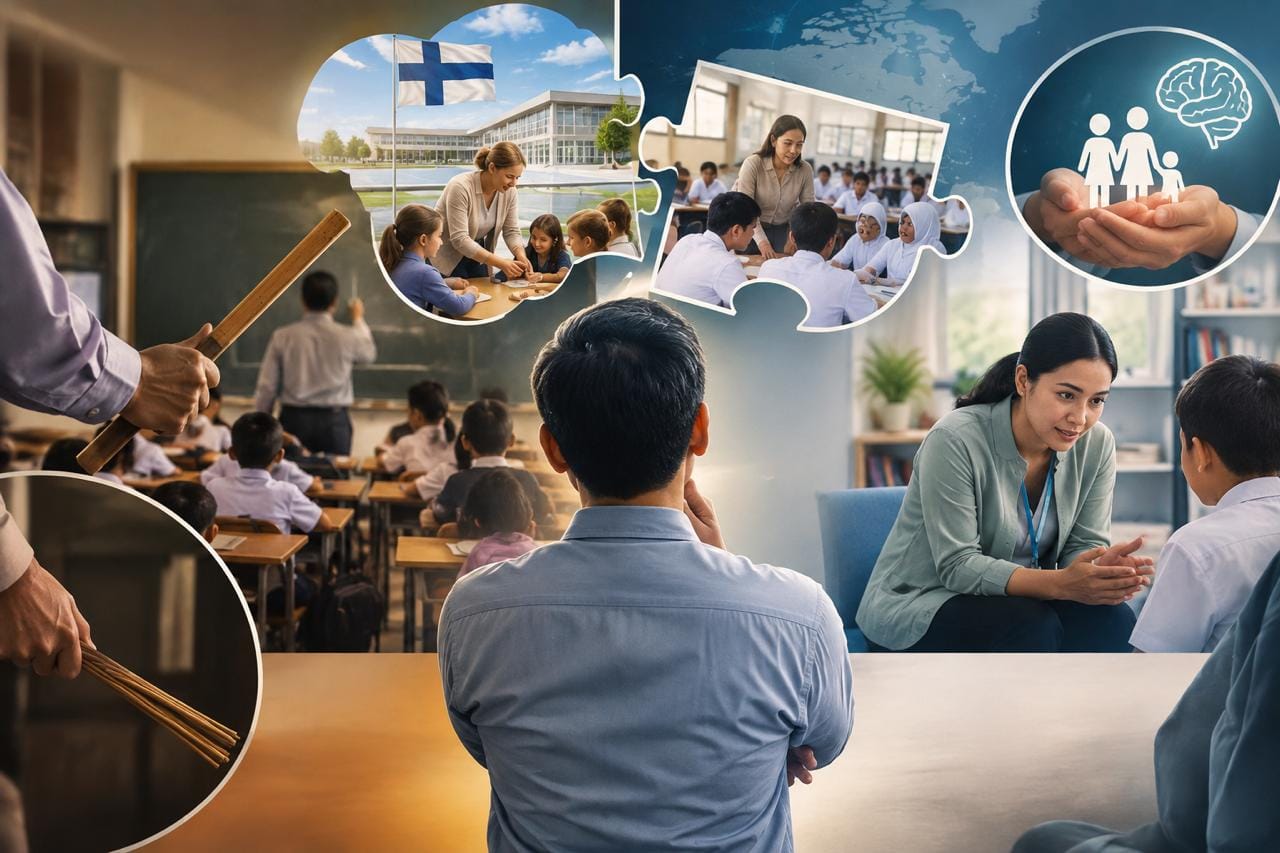
As Malaysia continues to strengthen and reform its education system, it is natural for the country to look to the practices and experiences of developed nations for reference and comparison.
This extends to the way student discipline is addressed, as well as the approaches used to guide, support and shape students’ behaviour.
One notable shift has been towards psychological approaches such as counselling, constructive advice and behavioural guidance, while reducing reliance on physical punishment such as caning.
However, the question remains whether such approaches can be effectively applied within the realities of Malaysian schools.
According to education expert Dr Anuar Ahmad, Deputy Director of the Institute of Inclusive Development and Advancement Malaysia (MINDA), Universiti Kebangsaan Malaysia, this reflects a broader dilemma within Malaysia’s education system.
He argues that there is nothing inherently wrong with learning from more developed education systems, including countries such as Finland. The problem arises when Malaysia adopts selected elements of those systems without taking into account the wider ecosystem that allows those approaches to work.
Finland, for example, generally has smaller class sizes, with around 20 to 25 students in a classroom. This gives teachers greater opportunity to understand their students, listen to their problems and provide individual guidance when behavioural issues arise.
The situation can be very different in Malaysia, where a teacher may have to manage classes of up to 40 students. Under such circumstances, approaches that rely heavily on individual counselling, psychological intervention and prolonged engagement with students can place considerable demands on teachers.
This difference in context, Anuar argues, helps explain why traditional disciplinary measures such as caning were once more widely used in Malaysian schools. Such measures provided teachers with a relatively immediate form of discipline in managing large numbers of students.
However, caning has not been abolished in Malaysia. Rather, its implementation has been subject to stricter procedures, partly because of concerns that physical punishment could be misused or carried out in anger rather than for educational purposes.
The authority to administer caning, which was once more widely exercised among teachers, has therefore been restricted. Teachers must now follow specific procedures, obtain the appropriate authority or mandate and comply with reporting requirements.
While such safeguards are intended to prevent abuse, the increasingly complex procedures have also contributed to the declining use of caning in schools.
For Anuar, the issue is therefore not simply whether caning should or should not be used. He views it as one possible disciplinary and guidance mechanism, provided it is implemented responsibly, proportionately and only by teachers who have been properly authorised.
The larger concern, however, is whether Malaysia has developed sufficient alternatives to replace traditional disciplinary methods.
If the education system moves away from physical punishment and towards psychological and counselling-based approaches, teachers must also be given the time, resources, training and classroom conditions necessary to make those approaches effective.
Ultimately, Malaysia’s education dilemma may not be about choosing between old and new methods of discipline. It is about ensuring that when the country adopts an approach from elsewhere, it also understands and adapts the wider ecosystem that makes that approach work.
Azzman Mantoya (azzman.tvpertiwi@gmail.com) is a content creator under the Newswav Creator programme, where you get to express yourself, be a citizen journalist, and at the same time monetize your content & reach millions of users on Newswav. Log in to creator.newswav.com and become a Newswav Creator now!
The User Content (as defined on Newswav Terms of Use) above including the views expressed and media (pictures, videos, citations etc) were submitted & posted by the author. Newswav is solely an aggregation platform that hosts the User Content. If you have any questions about the content, copyright or other issues of the work, please contact creator@newswav.com.
