
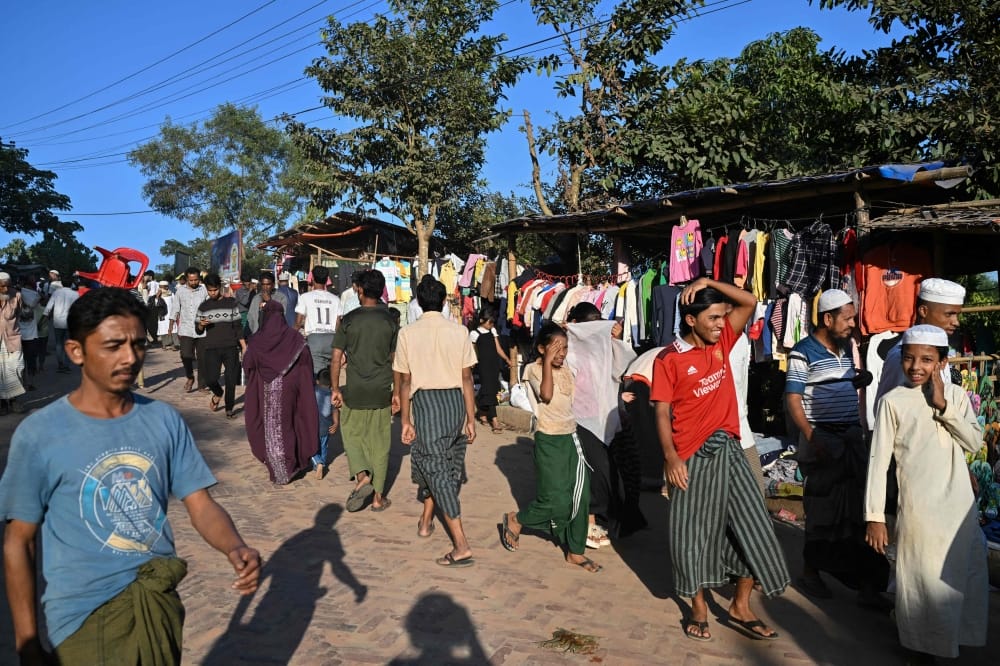
It began with local complaints about waste disposal and municipal hygiene, but it rapidly transformed into a nationwide referendum on sovereignty. Following a localized community ritual in early June, where rows of cattle were prepared for slaughter, images went viral across Malaysian social media. What might have passed as standard community friction in decades past instead triggered a staggering public backlash. Within days, an online petition demanding the immediate removal of Rohingya refugees surged past 130,000 signatures, exposing a deep, raw nerve within the Malaysian collective consciousness. This explosive event, heavily covered by international observers like The Straits Times, highlights a fundamental shift in public sentiment: the hospitality of the past is being firmly replaced by an unyielding demand for systemic boundaries.
For decades, Malaysia maintained a reputation as a compassionate, albeit informal, safe haven for displaced populations fleeing regional conflict. From the historical influx of Vietnamese "boat people" in the 1970s to the waves of Muslim minorities escaping systematic persecution in Myanmar’s Rakhine State, local communities routinely provided informal support. However, social media platforms have increasingly become digital lightning rods where economic anxieties meet geopolitical realities. Everyday citizens, grappling with escalating post-pandemic living costs, look at expanding informal settlements and perceive a threat to their resources, municipal order, and social fabric. Analysis of these digital spaces reveals that the underlying fear is no longer just about temporary resource consumption; it is about displacement. The core of modern Malaysian anxiety centers on the long-term, irreversible occupation of physical space.
The Sacred Ground: Real Estate as the Ultimate Boundary
In the heart of this national debate lies an absolute legal reality that many external critics fail to grasp: in Malaysia, land is not merely a commodity; it is the ultimate symbol of sovereign citizenship. Under the National Land Code, property ownership is tightly restricted, and the legal framework completely bars non-citizens especially those without legal immigration status from acquiring land. This strict dynamic is rooted in a profound institutional philosophy. Land ownership represents permanence, political leverage, and historical legacy. The prevailing public consensus, often echoed in fierce parliamentary debates and community town halls, states that if a nation begins ceding its physical foundation to transient populations, it compromises the very meaning of citizenship.
Our socio-cultural analysis indicates that this resistance to permanent integration is driven by a domestic fear of economic displacement. In commercial hotspots like Selayang or the industrial hubs of Penang, local businesses regularly voice frustration over informal markets operated entirely by undocumented networks. When foreign enclaves begin establishing long-term commercial roots, renting out entire blocks of apartments or dominating retail spaces, local residents view it as a de facto annexation of their neighborhoods. While property lawyers clarify that landlords are technically permitted to rent premises to documented United Nations High Commissioner for Refugees (UNHCR) cardholders, as highlighted in historical legal reviews by The Malaysian Insight, the line between temporary tenancy and commercial dominance has blurred significantly. To the average Malaysian voter, preventing non-citizens from obtaining land is the final, non-negotiable firewall protecting indigenous economic sovereignty.
Bureaucracy Over Sovereignty: The Failure of Parallel Systems
The institutional friction driving Malaysia's firm stance is largely born out of a broken global migration system. Because Malaysia is not a signatory to the 1951 Refugee Convention or its 1967 Protocol, domestic law operates on a binary model: you are either a legal migrant with a valid employment visa, or you are an undocumented immigrant subject to detention and deportation under the Immigration Act 1959/63. For years, the UNHCR operated as a parallel administrative body on Malaysian soil, conducting independent refugee status determinations and issuing identification cards. However, this arrangement created severe systemic friction, with the government frequently accusing the international agency of maintaining a parallel database hidden from local law enforcement oversight.
This institutional disconnect reached its breaking point when the government decided to reclaim administrative control over its borders. Home Minister Saifuddin Nasution Ismail recently announced that the domestic apparatus would no longer rely on external entities to manage populations within its territory. To enforce this, the state rolled out the Dokumen Pendaftaran Pelarian (DPP), a national refugee registration system designed to completely replace the UNHCR framework, as documented by Human Rights Watch.
This major institutional overhaul, extensively analyzed by regional human rights monitoring groups like Fortify Rights, demonstrates that the state is shifting away from informal tolerance. By enforcing the DPP as the sole legally recognized document for displaced persons, Malaysia is sending a clear message to the international community: humanitarian assistance will not be used as a backdoor route to permanent local integration or citizenship.
The Great Enforcement Push and the Cost of Survival
This shift toward national preservation has manifested as an aggressive, multi-agency domestic enforcement campaign. Dubbed by immigration officials as the "year of enforcement," the government has dramatically scaled up its tactical operations against undocumented networks. Sudden, large-scale raids targeting factories, wholesale markets, construction sites, and residential complexes have surged dramatically. According to independent migration assessments, authorities arrested nearly 92,000 irregular migrants in a single calendar year a massive spike from previous periods leaving thousands of unregistered families living in a state of high anxiety, as reported by Human Rights Watch.
From a broader regional perspective, Malaysia’s tough stance is heavily influenced by geopolitical shifts across Southeast Asia. The fallout from the February 2021 military coup in Myanmar continues to trigger waves of displaced persons fleeing across regional borders, packing into smuggling vessels and overland transit routes, as documented by Vietnam News. Simultaneously, global humanitarian funding has dwindled due to competing geopolitical crises worldwide. At a recent town hall, UNHCR Representative Louise Irene Aubin openly acknowledged that international resettlement pathways have shrunk dramatically, with fewer than 2,000 refugees successfully resettled from Malaysia over a twelve-month period, as reported on the official Refugee Malaysia platform. With western nations closing their borders and international agencies reducing financial aid, Malaysia faces the very real prospect of temporary guest populations turning into a permanent, unrecognized underclass.
What do you think? I’d love to hear your opinion in the comments section.
The debate over migration and land security ultimately forces Malaysia to confront a challenging question about its own identity. How can a nation uphold its sovereign right to protect its borders, land, and citizens while safely managing the complex humanitarian crises at its doorstep? The rollout of strict biometric tracking systems and the absolute ban on non-citizen land acquisitions are structural safeguards designed to ensure that Malaysia’s generosity does not compromise its national stability.
A nation without secure borders and distinct privileges for its citizens loses its foundational identity. Yet, as the enforcement raids continue and communities adapt to these firm new measures, the real challenge will be managing this transition with a systematic approach that maintains public safety, respects national law, and protects state interests. The choice is clear: Malaysia must protect its homeland, but it must do so through a unified, legally sound framework that leaves no room for administrative ambiguity.
The conversation around our national borders, land preservation, and economic stability is far from over. It requires every citizen to think deeply about what the future of our country should look like.
AM World (tameer.work88@gmail.com) is a content creator under the Newswav Creator programme, where you get to express yourself, be a citizen journalist, and at the same time monetize your content & reach millions of users on Newswav. Log in to creator.newswav.com and become a Newswav Creator now!
The User Content (as defined on Newswav Terms of Use) above including the views expressed and media (pictures, videos, citations etc) were submitted & posted by the author. Newswav is solely an aggregation platform that hosts the User Content. If you have any questions about the content, copyright or other issues of the work, please contact creator@newswav.com.