.jpeg)

In the complex arena of global diplomacy, where every word reverberates across borders, Malaysian Prime Minister Anwar Ibrahim’s call to expel Israel from the United Nations resonates like a thunderous declaration. This bold demand, stunning in its audacity, challenges the very structure of the international order and forces a reckoning with global values.
It is a call grounded in historical struggles for justice, yet it faces a formidable clash with entrenched political powers that often place alliances above accountability. The question arises: is Anwar’s demand a rhetorical statement, or does it carry the weight of serious intent?
To explore Anwar’s seriousness is to engage with the complexities of morality, pragmatism, and the possibility of genuine reform within an institution traditionally governed by the status quo.
Recent Support: The Arab-Islamic Extraordinary Summit
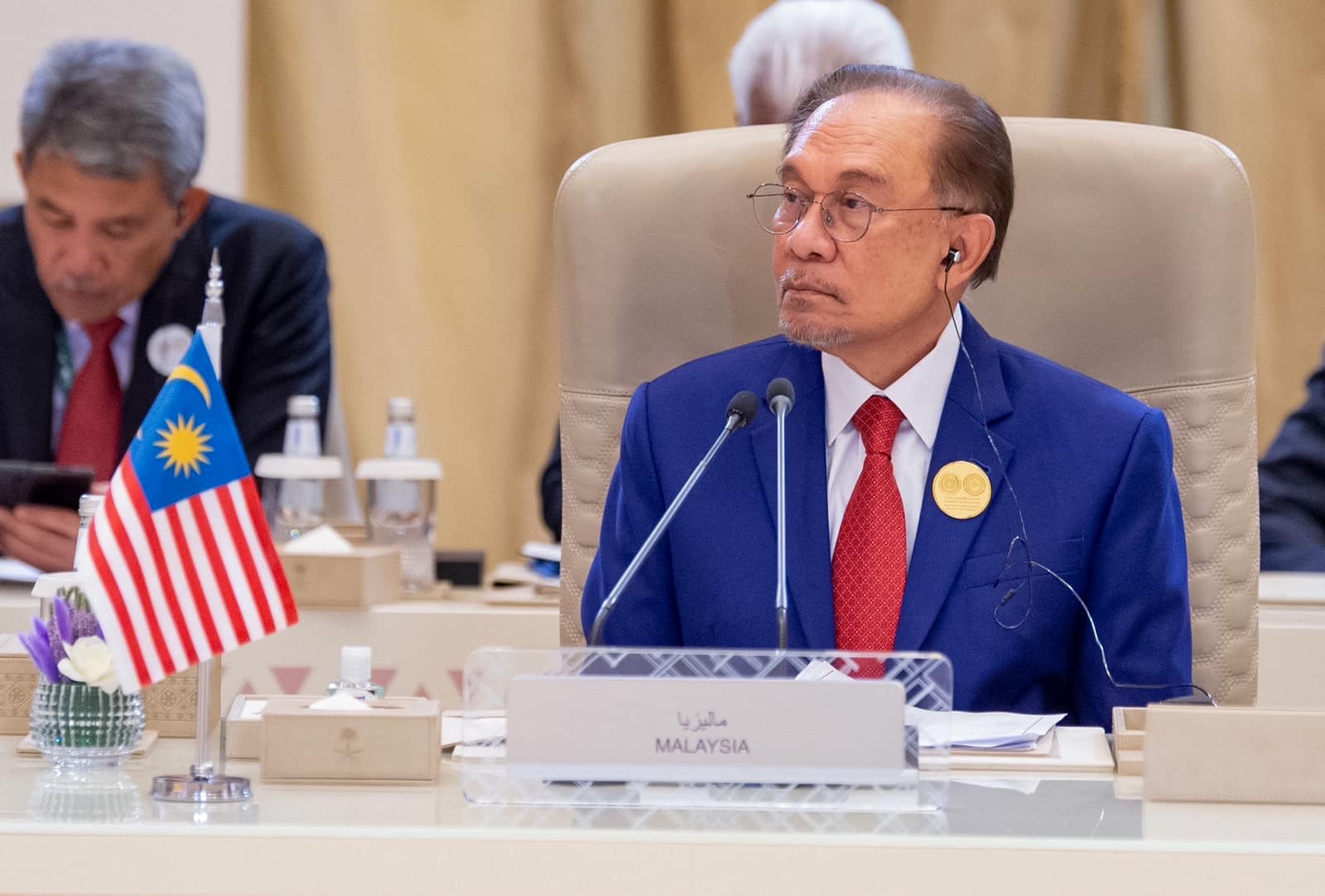
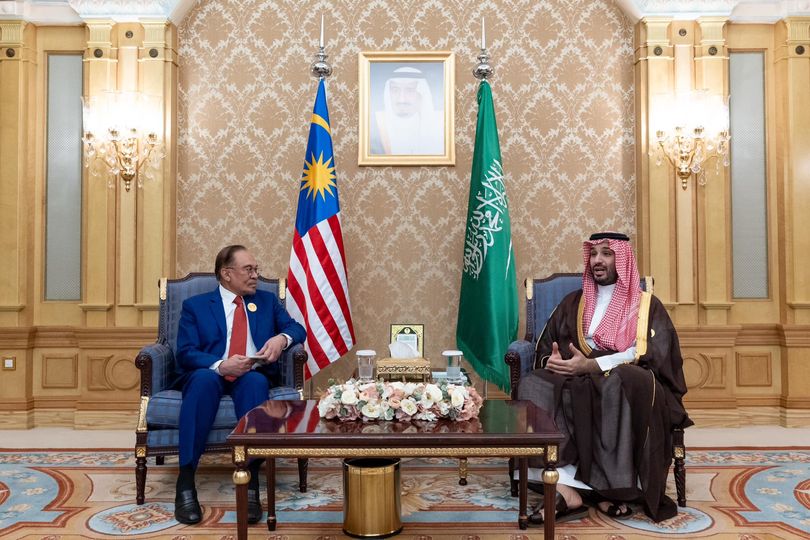
Anwar’s stance received notable support at the Arab-Islamic Extraordinary Summit in Riyadh on 11 November 2024, where leaders from across the Arab and Islamic world gathered to address Israel’s policies.
In a rare show of unity, the summit called for the enforcement of UN resolutions regarding Israel, highlighting the shared sense of urgency and accountability for Israel’s actions in occupied territories. This consensus adds weight to Anwar’s proposal by reinforcing the broader regional alignment, suggesting that his call is not isolated but part of a growing movement pushing for greater accountability within the United Nations framework.
Echoes of the Past: Expulsion as a Last Resort
Anwar’s demand recalls the rare instances when the UN faced pressure to expel member states over violations of its principles. A notable example is the international campaign against apartheid South Africa in the 1960s and 1970s. Nations worldwide condemned South Africa’s racial policies, urging its expulsion as a moral necessity.
However, despite extensive support, South Africa retained its UN membership, protected by the backing of powerful allies. It was only through comprehensive sanctions and sustained pressure that apartheid ultimately ended, underscoring the immense difficulty of achieving expulsion even amid severe rights violations.
This historical precedent underscores the limitations Anwar faces. While his appeal aligns with the moral responsibilities of the United Nations, the political realities within the organisation present a formidable barrier. The five permanent Security Council members wield veto power, which can shield even the most contentious members from expulsion.
In Israel’s case, strong alliances—particularly with the United States—fortify its position, suggesting that Anwar’s call risks stumbling against the same obstacles that maintained the status quo during the apartheid era.
Philosophical Foundations: Idealism versus Realpolitik
Anwar’s demand reveals a tension between idealism and realpolitik. On one hand, his stance represents an uncompromising moral idealism, advocating that the international community must uphold human rights and justice above political convenience.
For Anwar, expelling Israel is not merely procedural—it is a philosophical assertion that the UN must act according to its own values. Malaysia’s longstanding support for the Palestinian cause further solidifies this position, reflecting not only a political stance but also a deeply held ethical conviction.
However, the practical realities cast a long shadow over Anwar’s ambition. Israel’s strategic alliances, particularly with the United States, grant it a degree of protection within the UN. Any vote for expulsion would almost certainly face a US veto in the Security Council, effectively nullifying the attempt.
In this sense, Anwar’s call, while morally resonant, confronts the stark pragmatism that often governs international relations, where alliances frequently outweigh ideals.
Anwar’s position can thus be seen as both courageous and somewhat quixotic—a bold stand that may not change Israel’s status but nonetheless calls the UN to examine its own contradictions. By raising the prospect of expulsion, Anwar poses a broader question: can an institution shaped by political power genuinely serve as a moral authority? If not, what role should the UN play in upholding justice?
The Symbolic Weight of Expulsion: Justice Amid Power Dynamics
Demanding Israel’s expulsion is not merely a political move; it is a symbolic gesture that challenges the UN to uphold its foundational principles. For Anwar, expelling Israel would signal that the UN is willing to prioritise justice over geopolitics, proving that it can hold members accountable for their actions. In this sense, expulsion becomes a metaphor for cleansing—a purge of hypocrisy that would reinforce the legitimacy of international law.
Yet, the symbolic power of expulsion is not without complexity. Defenders of Israel may argue that targeting one nation risks politicising the UN’s mission, turning it into a tool of selective justice rather than impartial accountability.
Furthermore, the practical consequences of expelling Israel could push it further from constructive dialogue, hardening its sense of isolation and potentially reinforcing more rigid policies. While powerful in symbolism, expulsion could risk counterproductive outcomes that complicate the cause it seeks to support.
Anwar’s proposal thus confronts the paradox of idealism in a pragmatic world: how does one pursue justice without provoking deeper conflicts? Though unlikely to succeed practically, his demand highlights the moral dilemmas faced by the UN, challenging it to reconcile its high ideals with political realities that often prevent their fulfilment.
A Realistic Prospect or a Call for Reform?
While Anwar’s call for expulsion faces daunting obstacles, it may serve a purpose beyond immediate action. His demand can be viewed as a rallying cry for reform—a push to address the structural and political biases within the UN that allow certain nations to avoid accountability.
Instead of focusing solely on Israel’s expulsion, Anwar’s stance could spark a broader dialogue about the need to reform the UN’s governance, particularly the Security Council’s veto power, which frequently impedes consensus on issues of justice.
Historical examples highlight the importance of such reform. Calls for structural changes in the UN have grown for decades, particularly from the Global South, which often views the organisation as disproportionately aligned with Western interests. Anwar’s demand strengthens this argument, revealing how the current system limits the UN’s capacity for impartial action. By framing his call as a moral imperative, Anwar implicitly questions whether the UN can claim legitimacy if it continues to protect power over principle.
While Israel’s expulsion may be unrealistic, Anwar’s demand symbolises an appeal to higher standards within the UN. His position resonates with advocates who argue that the UN must evolve if it is to fulfil its mission, not merely as a platform for diplomacy, but as a genuine force for human rights and international law.
An Unyielding Pursuit of Justice
Anwar Ibrahim’s call to expel Israel from the United Nations is a bold statement and a complex moral challenge. Although the political realities make expulsion improbable, Anwar’s demand transcends the immediate goal, serving as an appeal for accountability and as a reminder of the UN’s mission to promote peace, dignity, and justice. By challenging Israel’s membership, Anwar forces the UN to confront its identity—whether it is a true moral authority or merely a platform for political interests.
In drawing on historical parallels and framing his demand within a philosophical dialogue of idealism and pragmatism, Anwar’s challenge invites deeper reflection on the UN’s future. His call, though unlikely to succeed in its literal objective, endures as a potent reminder that the pursuit of justice cannot be ignored, even in the face of resistance. Anwar’s stance may seem idealistic, but it is a necessary reminder of the ideals upon which the UN was founded, and a call to revitalise the pursuit of justice in a world where it is often compromised by power.
Abdullah Bugis is a content creator under the Newswav Creator programme, where you get to express yourself, be a citizen journalist, and at the same time monetize your content & reach millions of users on Newswav. Log in to creator.newswav.com and become a Newswav Creator now!
The User Content (as defined on Newswav Terms of Use) above including the views expressed and media (pictures, videos, citations etc) were submitted & posted by the author. Newswav is solely an aggregation platform that hosts the User Content. If you have any questions about the content, copyright or other issues of the work, please contact Newswav.
