
KUALA LUMPUR: Malaysia’s shift towards a more digital and data-driven tax system must be accompanied by greater certainty, practical implementation and sustained collaboration among authorities, taxpayers and tax professionals.
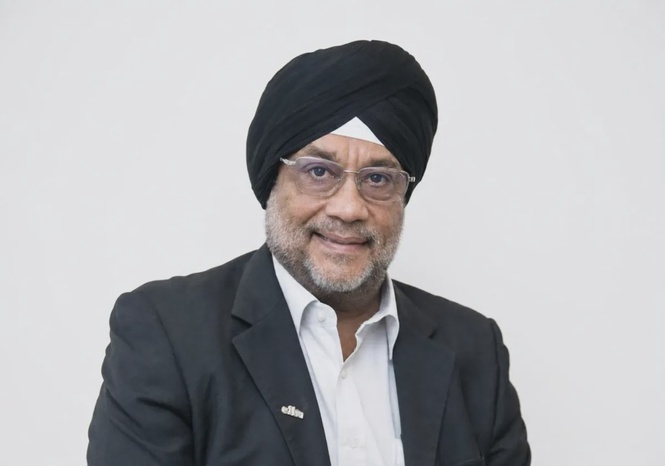
Newly elected Chartered Tax Institute of Malaysia (CTIM) Council member Datuk Harjit Singh Sidhu said the nation is entering an important new phase in tax administration as e-Invoicing, self-assessment, expanded reporting requirements and greater use of transactional data change how businesses meet their obligations.
“A modern tax system should make compliance easier for those who want to comply and make deliberate evasion harder. Achieving that balance requires clear rules, workable systems and consistent administration,” he told SunBiz when met at an industry event recently.
“Most taxpayers want to comply. However, they must be able to understand what is required of them, how the rules will be applied and what they should do when genuine differences in interpretation arise.”
That certainty depends not only on the design of tax rules and systems but also on the quality of professional advice available to taxpayers. As tax administration becomes more complex, tax practitioners have an increasingly important role in helping businesses understand new requirements and meet their obligations.
“Tax practitioners do more than prepare returns or represent clients in disputes. They also support revenue collection by reminding clients to file accurately, pay taxes on time and avoid unnecessary penalties,” said Harjit, who is also an independent non-executive director of Malaysia Digital Economy Corporation.
He said when taxpayers receive sound advice and understand what is expected of them, voluntary compliance improves, and the entire system works better.
With that responsibility, Harjit believes there is a strong case for a more structured regulatory framework for the tax profession.
At present, approved tax agents operate under the provisions of the Income Tax Act 1967 and its related approval requirements.
A clearer framework – supported by common standards of competence, ethics, continuing education and accountability – could strengthen confidence in tax practitioners and enhance the credibility of the wider tax system.
“Such a framework would then provide taxpayers, businesses and the authorities with greater confidence that those providing tax advice meet recognised professional and ethical standards,” Harjit said.
Greater certainty should also extend to tax audits and investigations.
Harjit favours a structured and proportionate approach that distinguishes between deliberate evasion and mistakes arising from unfamiliarity or weak administrative systems.
For SMEs undergoing an audit for the first time, an educational approach could be considered where appropriate.
Officers could identify shortcomings, explain the correct treatment and help businesses improve their records and future compliance, while continuing to apply the law consistently.
“The first audit of an SME can also be an opportunity to educate. Helping a business correct genuine mistakes can produce stronger compliance over the longer term,” Harjit said.
Technology could further reinforce this approach.
Better integration and lawful information-sharing among relevant government agencies could reduce duplication, improve risk assessment and help bring activity in the shadow economy into the formal system. This should be accompanied by safeguards for data accuracy, confidentiality and responsible use.
CTIM could help ensure that tax policies and administrative changes worked effectively in practice by listening to taxpayers and practitioners, identifying recurring difficulties and engaging constructively with Malaysia’s Inland Revenue Board (IRB), Ministry of Finance, Royal Malaysian Customs Department and other relevant agencies.
“CTIM can serve as a bridge between the profession, taxpayers and the authorities. Our role is to bring practical issues to the table early and help find solutions that support revenue collection while easing the cost and complexity of doing business,” said Harjit.
The same collaborative principle should apply to tax disputes.
Harjit said more cases could be resolved at the IRB level through early engagement, a clear assessment of the facts and the proper application of tax law.
Licensed tax agents could help taxpayers provide the necessary records, clarify technical issues and determine the appropriate tax treatment and amount lawfully payable.
Earlier resolution would give taxpayers certainty, help the government collect revenue more efficiently and reduce the cost and delay of litigation.
“Court proceedings will remain necessary where there is a genuine question of law requiring judicial determination. But where an issue concerns facts, documentation or the application of established law, the better outcome is generally one achieved through informed engagement with IRB,” he said.
Harjit, founder and CEO of HSS Advisory, has more than 35 years of experience in tax advisory, compliance, audit and investigation.
His priorities on the CTIM Council include strengthening professional standards, supporting practitioner development and deepening engagement among the institute, policymakers, regulators, businesses and taxpayers.