
Malaysia to regulate carbon asset exports with eligibility whitelists and dynamic sales limits while protecting its climate commitments and NDC targets
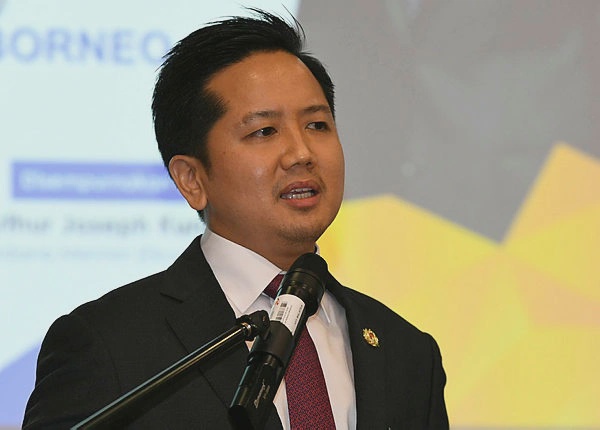
KOTA KINABALU: Malaysia will manage its carbon asset exports responsibly by establishing eligibility whitelists and setting dynamic sales limits, said Natural Resources and Environmental Sustainability Minister Datuk Seri Arthur Joseph Kurup.
He said the measures would safeguard Malaysia’s carbon assets and ensure international transfers did not compromise the country’s own unconditional Nationally Determined Contribution (NDC) commitments.
To ensure the country’s roadmap is grounded in hard evidence, the National Carbon Market Policy was built directly upon Malaysia’s first comprehensive, empirically modelled National Marginal Abatement Cost Curve, said Arthur.
“Our findings show that Malaysia has the technical potential to reduce emissions by 56 million tonnes of CO2 equivalent by the year 2030.
“Approximately 70 per cent of this abatement potential – around 39 million tonnes – can be achieved through negative or low-cost solutions below RM100 per tonne,” he said at the Sabah Carbon Market Forum: Unlocking Carbon Market Opportunities for Sabah here today.
Arthur said these domestic quick wins include industrial waste heat recovery in cement and steel plants, energy efficiency upgrades across commercial and residential buildings, and small-scale renewable energy.
He emphasised that these must be captured domestically through our own building codes, energy regulations, and efficiency standards.
Arthur said the National Carbon Market Policy, which was launched on April 21 this year, serves as Malaysia’s comprehensive carbon market blueprint.
He said the policy establishes high-integrity voluntary and compliance carbon trading, mandates a National Carbon Registry with harmonised monitoring, reporting, and verification (MRV) frameworks to prevent double counting, and structures Article 6 authorisation pathways.
It also aligns carbon market development with sectoral decarbonisation strategies across energy, forestry, agriculture and industry, said the minister.
Internationally, Arthur said his ministry has operationalised Malaysia’s host-party participation framework under Article 6.4 and advanced bilateral agreements under Article 6.2 with partners like Singapore and South Korea.
Arthur said Malaysia is also preparing for mandatory CORSIA compliance for international aviation starting in 2027, ensuring Malaysian-generated credits can meet international aviation demand while aligning with the Malaysian Aviation Decarbonisation Blueprint.
“Concurrently, our close collaboration with the Malaysia Carbon Market Association on the ASEAN Common Carbon Framework will ensure our domestic standards achieve cross-border interoperability across the region,” he said.
Arthur said the National Carbon Market Policy was introduced to support businesses to transition and decarbonise, enabling the country as a whole to strategically use offsets or carbon credits to achieve its climate ambition, namely the NDC.
He said Malaysia, like all other parties to the Paris Agreement, is obliged to formulate its own NDC, with its updated NDC 3.0 submitted in October 2025.
It includes Malaysia’s committed to peak its greenhouse gas emissions between 2029 and 2034, followed by an absolute emissions reduction target of 15 to 30 million tonnes of CO2 equivalent (MtCO2e) by 2035 relative to peak levels.
“This includes an unconditional reduction of 20 MtCO2e through domestic efforts, and a conditional reduction of an additional 10 MtCO2e supported by international carbon markets, technology transfer, and climate finance,” he added.