
Standards and Accreditation Summit 2026 advances Malaysia’s quality infrastructure to support industry, innovation and international market access
KUALA LUMPUR, 15 October 2026 – Malaysia is strengthening standards and accreditation as strategic drivers of economic competitiveness, industry confidence and global market access, with the Ministry of Investment, Trade and Industry (MITI) providing strategic direction and support through the Department of Standards Malaysia (JSM), Malaysia’s national standards and accreditation body.
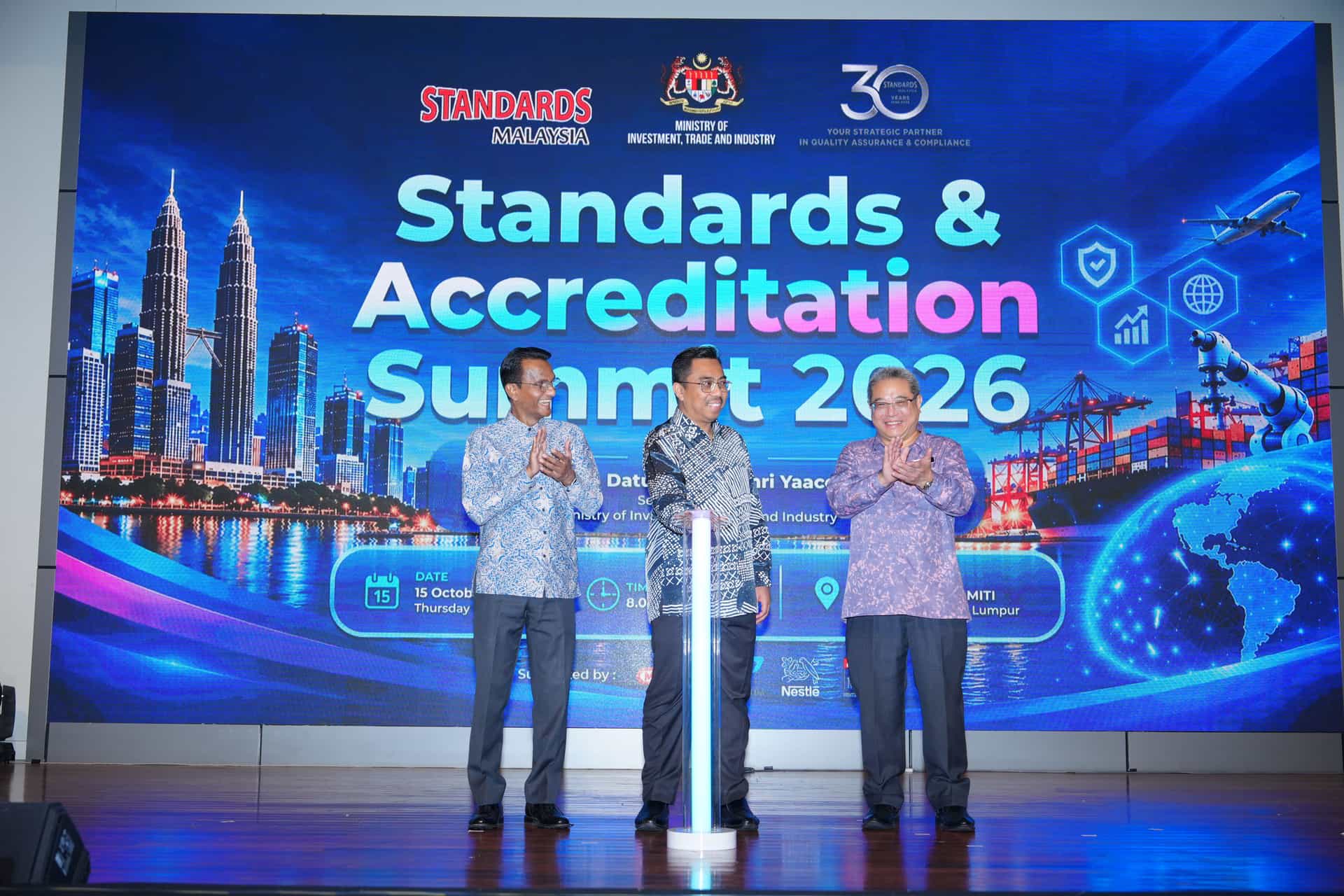
The commitment was highlighted at the Standards and Accreditation Summit 2026, held today at Dewan Perdana MITI, Menara MITI. The Summit was officiated by YBhg. Datuk Hairil Yahri Yaacob, Secretary-General of the Ministry of Investment, Trade and Industry (MITI), who delivered the officiating address on behalf of YB Datuk Seri Johari Abdul Ghani, Minister of Investment, Trade and Industry.
Held in conjunction with the World Standards Day 2026, observed on 14 October under the theme “Shared Vision for a Better World: Spotlight on SDG 7 – Affordable and Clean Energy”, the Summit reinforced the role of standards and accreditation in supporting a more connected, resilient and sustainable economy.
Jointly organised by MITI and JSM, the Summit brought together stakeholders from the government, industry, conformity assessment bodies, standards and accreditation communities, as well as international organisations and experts, to strengthen Malaysia’s National Quality Infrastructure (NQI) and its role in supporting a more resilient, innovative and globally competitive economy.
From Compliance to Competitive Advantage
In the officiating address delivered on behalf of the Minister of Investment, Trade and Industry, YBhg. Datuk Hairil Yahri Yaacob emphasised that standards and accreditation should be viewed not merely as compliance requirements, but as strategic economic assets that strengthen business confidence, facilitate market access and support Malaysia’s competitiveness in global value chains.
“We must view Malaysia’s national quality infrastructure not merely as a compliance requirement, but as a critical economic asset.”
The Secretary-General also underscored the importance of strengthening Malaysia’s role in the development of international standards, particularly as industries respond to rapid advances in artificial intelligence, digitalisation, sustainability, cybersecurity and evolving global supply-chain requirements.
Through MITI and JSM’s continued engagement with the industry and international standards communities, Malaysia can strengthen its ability to anticipate emerging market requirements, enhance industry readiness and contribute more actively to the development of standards that shape global trade and industry practices.
Turning Standards into Industry Opportunity
A key highlight of the Summit was the launch of the MS 2765:2026 series on Business Events, comprising three Malaysian Standards covering business event venues, Professional Congress Organisers (PCOs) and Professional Exhibition Organisers (PEOs).
These standards established clearer and more consistent benchmarks covering physical environment, technology, services, competency, liability and sustainability. They are intended to strengthen quality, professionalism and credibility across the business events industry, while supporting Malaysia’s position as a leading destination for domestic and international business events.
Developed with input from multiple stakeholders and supported through strategic collaboration with the Malaysia Convention & Exhibition Bureau (MyCEB), the MS 2765 series demonstrated how Malaysian Standards can respond directly to industry needs and national economic priorities.
The business events industry is projected to generate a cumulative economic impact of RM34.97 billion by 2030, further highlighting the strategic value of standards in strengthening the sector’s quality, competitiveness and long-term sustainability.
Expanding Malaysia’s Accreditation Ecosystem
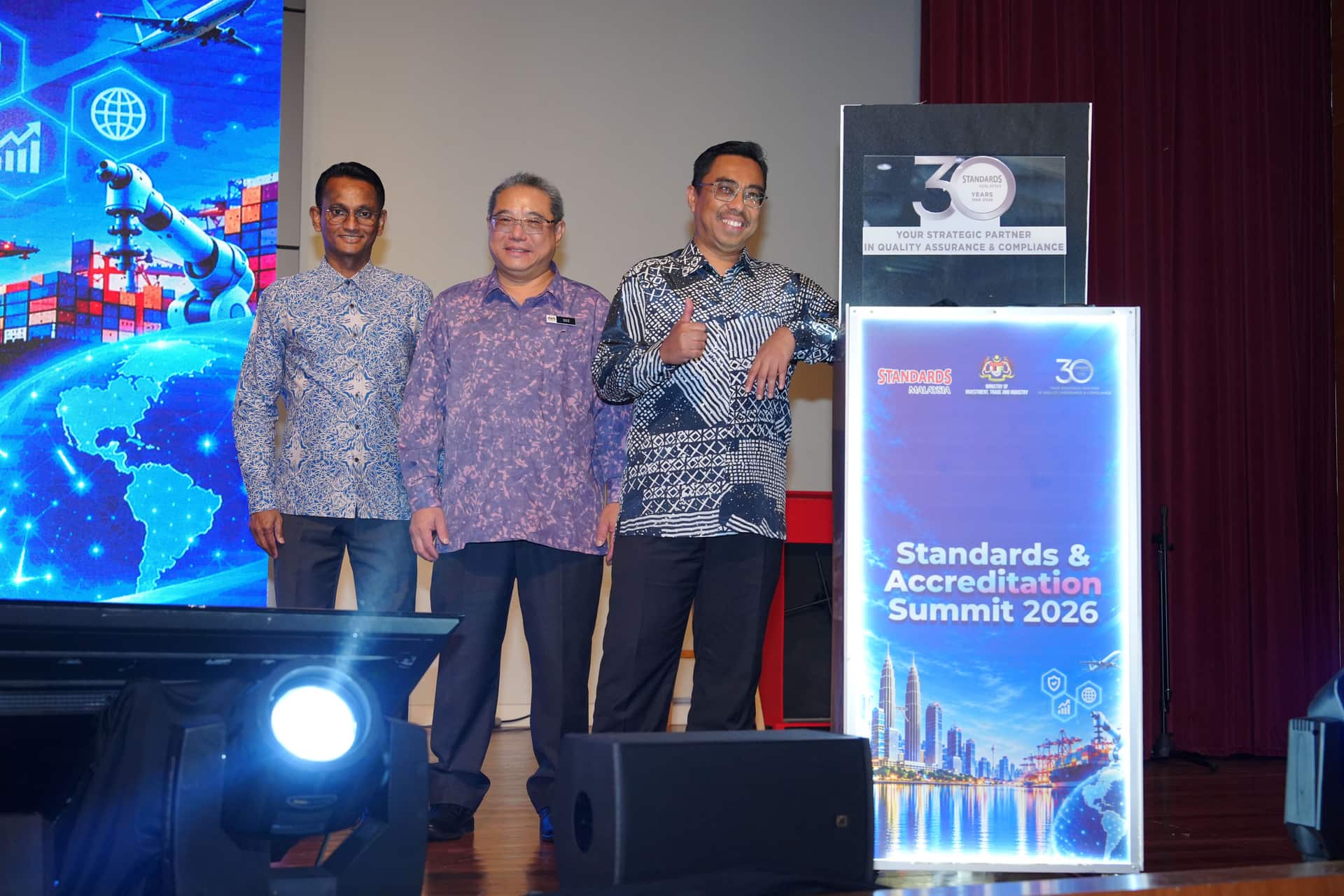
The Summit also marked the launch of three new accreditation schemes and programmes, extending Malaysia’s accreditation framework into areas with growing economic and societal significance.
The Reference Material Producer (MyRMP) Accreditation Scheme, based on MS ISO 17034, strengthens confidence in the quality, reliability and metrological traceability of reference materials used by testing and calibration laboratories. It also supports the development of local reference material producers, helping to strengthen national capability and reduce reliance on imported reference materials.
The Education Organisation Management System (EOMS) Accreditation Programme, based on MS ISO/IEC 17021-1:2015 and ISO/TS 21030:2023, strengthens the competence and credibility of certification bodies providing certification services for education organisation management systems.
The Halal Certification Accreditation Programme, based on OIC/SMIIC 2:2019 and OIC/SMIIC 34:2020, further strengthens Malaysia’s halal accreditation infrastructure and supports JSM’s participation in the Multilateral Recognition Arrangement (MRA) framework under the Islamic Forum for Halal Accreditation Bodies (IFHAB).
Together, these initiatives strengthened national competence, support internationally recognised conformity assessment services and contribute to greater confidence in Malaysian products, services and capabilities.
Building Trust That Travels
Director-General of JSM, See Chee Kong, highlighted the role of NQI in connecting standards, metrology, conformity assessment and accreditation to create confidence in products, services and systems.
“Standards make quality solutions repeatable. Accreditation makes trust portable across global markets. National Quality Infrastructure makes national progress scalable.”
An effective NQI provides the foundation for businesses and organisations to demonstrate quality and competence, strengthen market confidence and facilitate access to opportunities across borders.
The Summit also featured discussions on digital standards, industrial competitiveness and the future of accreditation, bringing together perspectives from government, industry, international standards organisations and conformity assessment bodies.
Discussions explored how standards and accreditation can support digital transformation, responsible AI, sustainable business practices, industrial resilience and stronger participation of Malaysian businesses in the global value chains.
Making Quality Visible
The Summit’s exhibition brought the practical application of standards and conformity assessment closer to industry and the public, featuring products and services related to halal compliance, food standards including Hazard Analysis and Critical Control Points (HACCP) and Good Manufacturing Practice (GMP), laboratory testing and inspection.
The programme also featured Conformity Assessment Body (CAB) clinics and business matching activities at the JSM Pavilion, providing opportunities for stakeholders to engage directly with Malaysia’s quality infrastructure ecosystem.
A live vehicle inspection demonstration by PUSPAKOM, an inspection body accredited by JSM under the Malaysia Inspection Bodies Accreditation Scheme (MIBAS), further demonstrated how accreditation supports competent, consistent and standards-based inspection practices.
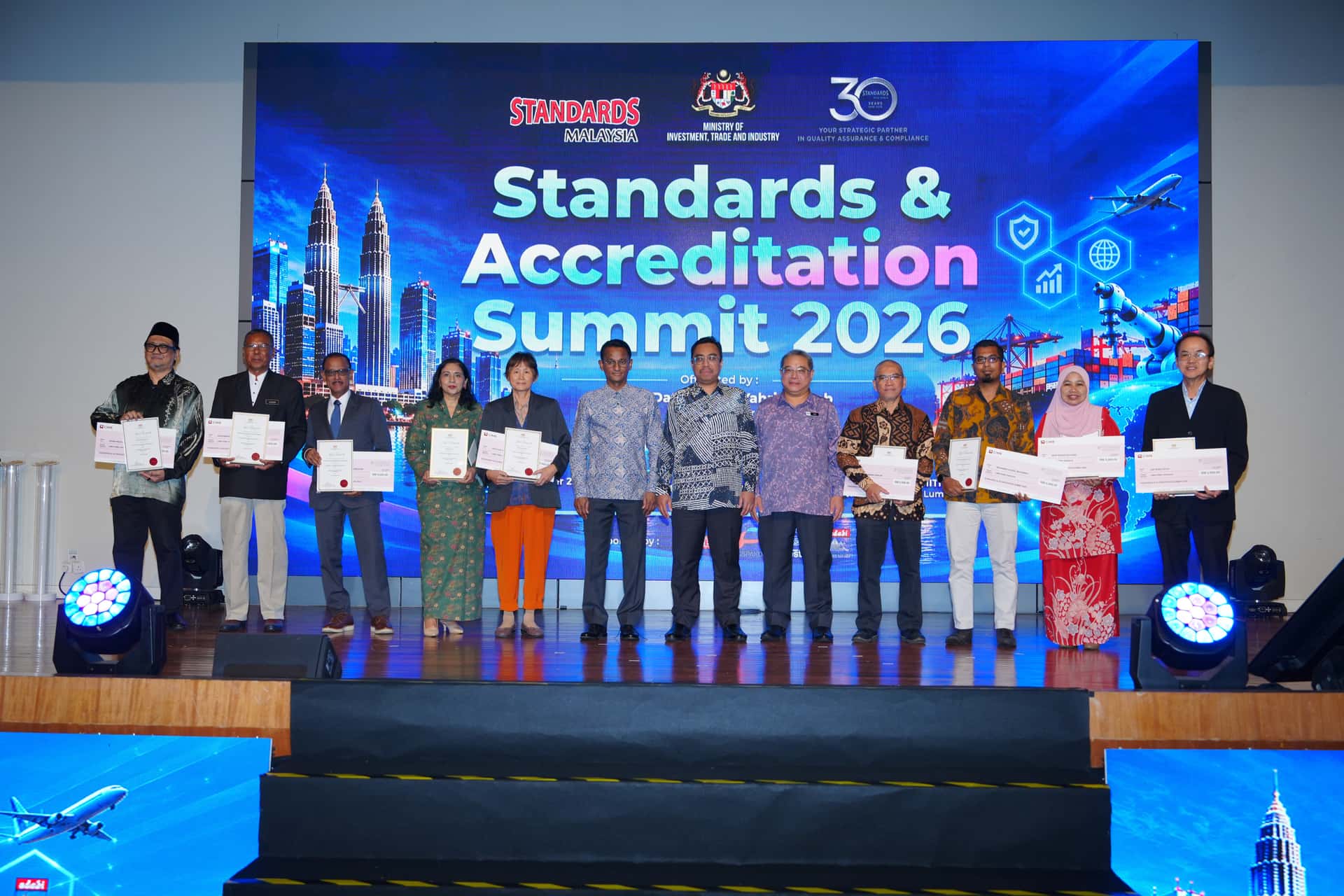
The Summit also recognised outstanding contributions to Malaysia’s standards and accreditation ecosystem through the presentation of the Standards and Accreditation Awards 2025 and accreditation certificates.
Shaping Malaysia’s Next Chapter
The Standards and Accreditation Summit 2026 reaffirmed that Malaysia’s quality infrastructure is not an end in itself, but an important foundation for economic growth, innovation, market confidence and international competitiveness.
MITI, through JSM, will continue to strengthen collaboration with the industry, government agencies, conformity assessment bodies and international partners to ensure that Malaysia’s standards and accreditation ecosystem remains responsive to emerging technologies, evolving market requirements and the needs of businesses competing globally.
As Malaysia advances towards a more technology-driven, sustainable and globally connected economy, standards and accreditation will remain fundamental to building quality, trust and competitiveness.
The ambition is clear: to strengthen Malaysia’s capacity not only to meet global standards, but to help shape them, enabling Malaysian businesses to compete with greater confidence and creating stronger pathways to global markets.


