Malaysia to inspect a second decommissioned US Coast Guard cutter before deciding on the vessel, with unseaworthiness or high refurbishment costs grounds for rejection
PUTRAJAYA: Malaysia will conduct a technical inspection of a second decommissioned United States Coast Guard cutter before deciding whether to accept the vessel, with the government prepared to reject it if it is deemed unseaworthy or too costly to refurbish.
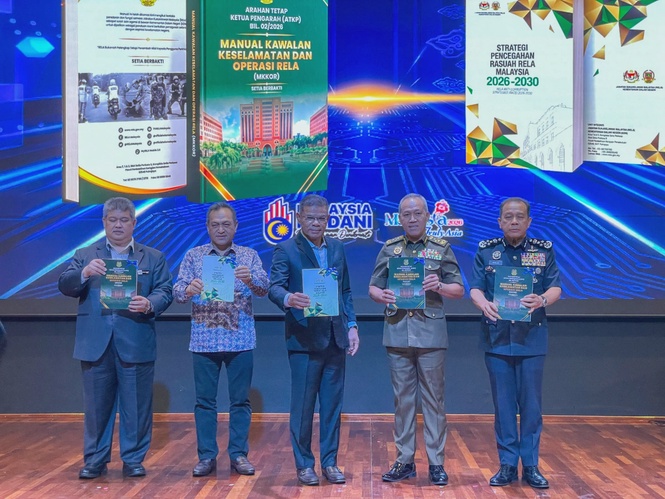
Home Minister Datuk Seri Saifuddin Nasution Ismail said Malaysian Maritime Enforcement Agency (MMEA) director-general had been instructed to lead a team of specialists and engineers to assess the vessel.
“They can make an offer, but we must be satisfied that the vessel is seaworthy.
“After inspecting it, our team must submit a recommendation on whether the government should accept the offer.
“If its seaworthiness is poor and the costs we have to bear are too high, it will become a burden and we will not agree,” he told reporters after the Home Ministry’s monthly assembly today.
Saifuddin said the proposed transfer would be the second from the US Coast Guard after Malaysia received the former USCGC Steadfast, now known as KM Bendahara, last year.
The cutter is currently operating in Sabah.
He said Malaysia and the US had shared the cost of upgrading the first vessel, with the combined expenditure remaining substantially lower than the cost of purchasing a new asset.
The United States announced in October last year that Malaysia had been selected to receive a second decommissioned cutter, together with US$7 million in Foreign Military Financing.
Earlier in his speech, Saifuddin said MMEA needed more vessels given Malaysia’s extensive territorial waters and the range of threats confronting maritime enforcement agencies.
These included the smuggling of weapons, drugs and people, the movement of undocumented migrants and refugees, as well as incursions by foreign fishing vessels and other ships.
“How do we obtain these assets? One way is to buy them, but that depends on our means because it comes under development expenditure.
“The other is to receive them from countries with which we cooperate. Japan, for example, has given us several vessels, two or three of which we are now using. The United States has also given us a vessel.
“The cooperation we establish may involve the contribution of assets, the provision of training, joint operations or intelligence sharing. Whatever form that cooperation takes, we will examine it and make a decision,” he said.
Separately, Saifuddin said he would travel to Istanbul at the end of this month to inspect the construction of two multi-purpose mission ships for MMEA.
He said construction by Turkiye’s Desan Shipyard was progressing ahead of schedule, with the first vessel expected to arrive in Malaysia around March next year, before the Langkawi International Maritime and Aerospace Exhibition 2027.
The second ship is targeted for delivery by the end of next year.
“Less than two years after the agreement was signed, the first ship is nearly ready.
“We are confident the Home Ministry made the right decision. The construction period is short, the price is reasonable and its progress is ahead of schedule,” he said.
Saifuddin said the new vessels would enhance MMEA’s capabilities while boosting the morale of its personnel.