
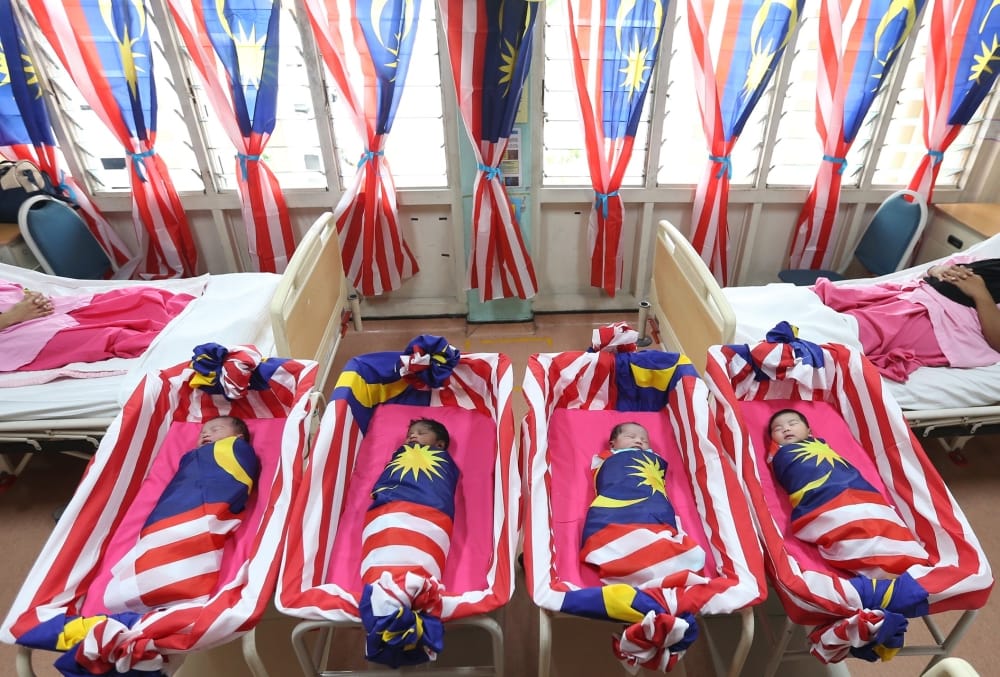
Imagine growing up beneath the vibrant skyline of Kuala Lumpur or among the tranquil oil palm estates of Perak, singing Negaraku every morning at school, speaking fluent Bahasa Malaysia, and knowing no other home than the soil beneath your feet. Yet, upon turning 12, the document that defines your existence is amended with a single, crushing label: "Non-Citizen". This is not a hypothetical premise; it is the lived reality for two individuals, known in court documents as J and D. Both were born in Malaysia, raised exclusively by their biological Malaysian fathers after their foreign-born mothers departed in their early childhood, and possess irrefutable DNA evidence of their biological heritage.
In a landmark decision delivered on July 22, 2026, the Court of Appeal ruled that children born in Malaysia to a Malaysian father and a non-Malaysian mother do not automatically acquire Malaysian citizenship if their parents were not legally married at the time of birth. According to Malay Mail's coverage of the ruling, a three-judge panel chaired by Datuk Azhahari Kamal Ramli upheld a previous High Court decision. The court held that under Section 17 of Part III of the Second Schedule of the Federal Constitution, an illegitimate child’s citizenship must strictly follow that of the biological mother.
For thousands of Malaysian families, this legal interpretation creates profound emotional and administrative friction. While the decision aligns with long-standing judicial precedent, it highlights the complex intersection between statutory definitions written decades ago and the modern realities of blended, non-traditional, or informal family structures. For Malaysian readers, this issue reaches far beyond courtroom arguments; it touches the core of national identity, social cohesion, and what it truly means to belong to a nation.
The Anatomy of Constitutional Frameworks and Legal Precedents
To comprehend why the appellate court reached this verdict, one must examine the intricate statutory scaffolding of the Malaysian Federal Constitution. Automatic citizenship by operation of law is primarily governed under Article 14(1)(b) alongside Section 1(a) of Part II of the Second Schedule. These provisions require a child to be born within the Federation and to have at least one parent who is a Malaysian citizen or permanent resident at the time of birth. However, as highlighted in reports by MCI Group, Section 17 acts as a decisive statutory pivot. It specifies that for children born out of wedlock, the term "parent" or "father" refers strictly to the mother.
This interpretation is rooted in the 2021 landmark ruling by the Federal Court in CTEB, where a 4-3 majority held that courts must adhere to the clear literal meaning of constitutional provisions rather than expanding definitions through judicial interpretation. According to legal analysis by MahWengKwai & Associates, appellate judges remain bound by this binding precedent unless the apex court revisits the issue or Parliament enacts explicit legislative amendments. Consequently, even when paternity is proven beyond doubt through modern scientific testing, the legal connection between a father and child remains unrecognised for automatic citizenship conferred at birth if legal matrimony was absent when the child was born.
Administrative Realities and the Everyday Struggles of Affected Youth
Beyond legal terminology lies a challenging daily struggle for affected individuals. Without a Malaysian identity card (MyKad), young adults face systemic hurdles in accessing higher education, public healthcare, banking services, and formal employment. As documented by IMI Daily's report on citizenship litigation, many affected individuals received Malaysian birth certificates or passports in early childhood, only to face document reclassifications upon applying for identity cards at age 12. The courts have consistently held that administrative documents issued in error do not grant constitutional citizenship status.
This dynamic creates a unique social dilemma. These individuals are culturally, linguistically, and socially Malaysian. They have known no other society, yet they navigate adulthood under temporary resident passes or in state of documentation uncertainty. Single fathers who have single-handedly raised their children must navigate complex bureaucratic channels to apply for discretionary citizenship under Article 15A of the Federal Constitution. However, Article 15A applications are subject to strict age limits and discretionary approvals, leaving many families in prolonged uncertainty as children approach adulthood.
Sociocultural Dynamics and the Evolving Definition of Malaysian Families
Malaysia’s rich cultural fabric is built on family values, community solidarity, and social responsibility. Historically, legal frameworks prioritized formal marital unions to safeguard registry integrity and familial structures. However, evolving societal structures present new practical challenges. In many rural areas or cross-border unions, formal legal registration of marriage may be delayed or hindered by administrative roadblocks, cross-border documentation issues, or financial hardship.
As noted in coverage by BFM Radio, legal scholars and civil society representatives point out that children bear no responsibility for their parents' marital status or delayed documentation. When foreign mothers leave the family unit early in a child's life, the child relies entirely on the Malaysian father. Cultural norms place heavy emphasis on filial piety and paternal care. When the legal system does not recognise this paternal bond for citizenship purposes, it can create an unintended disconnect between societal expectations of paternal responsibility and formal legal recognition.
Institutional Reform Efforts and Parliament's Role in Legislative Change
While judicial decisions remain anchored to existing constitutional text, Malaysia's legislative branch has shown a willingness to address gender disparities in citizenship laws. A notable milestone occurred when Parliament passed the Constitution (Amendment) Bill 2024, as reported by Astro Awani. This historical amendment allowed Malaysian mothers to automatically confer citizenship on children born overseas, granting them equal status with Malaysian fathers.
According to advocacy records published by Family Frontiers, this constitutional reform demonstrated that legislative updates are achievable when public awareness aligns with parliamentary will. However, as highlighted in commentary from The Star, the 2024 amendments focused primarily on children born abroad to married mothers, leaving the issue of children born out of wedlock to Malaysian fathers subject to Section 17. Legal experts note that because courts are bound to apply existing statutory language, long-term policy adjustments for children born out of wedlock ultimately rest with Parliament.
Comparative Jurisprudence and Institutional Frameworks in the Region
Malaysia is not alone in navigating the delicate balance between state sovereignty, lineage verification, and statutory definitions of citizenship. Across Southeast Asia and globally, legal systems take varying approaches to children born out of wedlock. Some jurisdictions rely on strict jus sanguinis (right of blood) tied strictly to registered marriages to manage immigration records, while others have updated their statutes to recognise biological paternity established through verified DNA testing, regardless of marital status.
As reported in Malay Mail's legal reports, legal scholars argue that adopting clearer statutory safeguards can prevent statelessness while maintaining secure identity verification standards. Striking a balance between national security priorities, institutional integrity, and social integration remains a central priority for policy makers. As Malaysia positions itself as an inclusive regional leader, developing streamlined administrative channels for verified biological children of Malaysian citizens remains an important policy consideration.
What Do You Think? I’d Love to Hear Your Opinion in The Comments Section.
The decision of the Court of Appeal underscores a fundamental legal truth: judges must interpret and apply the law as written by Parliament. Yet, behind every judicial decree are real human lives young men and women who speak our national language, share our local customs, and desire to contribute fully to the nation they call home. A nation's strength is reflected not only in its legal frameworks, but also in its capacity for empathy, legislative evolution, and administrative fairness.
As Malaysia continues to modernize its governance structures, open dialogue among lawmakers, civil society, and the public provides an opportunity to evaluate how our legal system can protect both constitutional principles and the well-being of every child raised on Malaysian soil. True belonging is rooted in mutual commitment, shared values, and compassionate governance. By working together to address these constitutional gaps, Malaysia can ensure that no child raised within its borders is left without a clear sense of identity and place.
AM World (tameer.work88@gmail.com) is a content creator under the Newswav Creator programme, where you get to express yourself, be a citizen journalist, and at the same time monetize your content & reach millions of users on Newswav. Log in to creator.newswav.com and become a Newswav Creator now!
The User Content (as defined on Newswav Terms of Use) above including the views expressed and media (pictures, videos, citations etc) were submitted & posted by the author. Newswav is solely an aggregation platform that hosts the User Content. If you have any questions about the content, copyright or other issues of the work, please contact creator@newswav.com.