

Siti Rahmah held her dark blue passport while staring at one by one the travel stamps from Singapore, Japan, and finally Europe. "I used to think: if I could only visit half the country without the hassle of a visa, it would be amazing," she said. But now, with its position at the top, its passport is no longer just an identity, but a symbol of freedom, mobility, and "power" globally. As recent reports show that Malaysian passports rank 12th in the world, a significant leap in the way the country views its citizens and its relationship with the world. (Malay Mail)
More than numbers, it's a story of veiled diplomacy, the strengthening of global positions, personal expectations, and the paradox of identity how a developing country finds itself in the ranks of the global elite of travel. During the twinkling lights of Kuala Lumpur airport, Siti stared at her phone screen: "What can I do now, I do without having to ask permission first." And there lies the meaning of freedom that is now achieved from the perspective of status.
This article will break down how Malaysian passports travel why they go up, what they mean, who benefits and who is left behind. In an organized structure: background and emotional lead; then the context – diplomacy & economy; social and cultural impact; challenges and questions that still hang; Ending with a reflection. Happy reading.
Over the past few years, what used to seem impossible has become a reality: according to the Henley & Partners Passport Index report, in the 2024 edition Malaysian passports will occupy the 12th position in the world with visa-free access to 183 out of 227 countries. (Sinar Daily)
This figure means that Malaysians can visit 183 places without having to go through the checkout process or at least, easier. In this regard, according to an article in Sinar Daily, Malaysia overtook countries such as Cyprus, Bulgaria, and Andorra. (Travel And Tour World)
This kind of jump is not a coincidence. Here are some of the basic factors that shape momentum:
- Diplomacy and bilateral relations Malaysia are actively expanding cooperation, visa agreements, and internal policy updates to meet international standards.
- Increased global mobility post-pandemic, many Malaysians began to "flee" abroad for education, freelance work, digital nomads, leisure; the country could not sit still.
- The context of ASEAN and Southeast Asia in this region, Malaysian passports now occupy the second position after Singapore. (BJAK)
When Siti crammed her suitcase into her luggage at KLIA, she didn't just imagine the destination. She imagined no longer being dependent on the temptation of visa bureaucracy, long queues, or "invisible" additional costs. For him: the passport is not just a book, but a "world permit".
Improved passport rankings mean improved access, the majority of which are achieved through visa-free agreements or visas on arrival. In the latest edition of Henley, Malaysia's position was recorded quite high due to access to 183 destinations. (Malay Mail)
Malaysia's foreign minister, on various occasions, said that the country's strategy is now not only to encourage citizens to go out, but also to strengthen Malaysia's reputation as a trusted partner in the global dialogue that encourages "travel liberalization". The belief eventually translated into more countries opening the door to dark blue passports.
Malaysia's economic expansion in the Asian region, strengthening the export-import sector, and involvement in global chains have given rise to the need for more flexible mobility. Malaysian companies operating in many countries demand that their staff be able to move more easily. In other words: not only ordinary tourists, but also businesspeople, professionals, and entrepreneurs benefit.
Malaysia is increasingly "visible" in the international arena: airport infrastructure, electronic visas (e-visas), tourism, and global campaigns. Siti said: "Now I can apply for an e-visa in 10 minutes, instead of having to go to the embassy." Indeed, this digital convenience also helps to improve mobility scores.
While blue passports used to feel hard to "go out", now for many people, the horizon is growing. Siti, who used to only dream of going to London for Instagram photos, is now really standing under Big Ben, without the hassle of visa matters. "In the past, we felt like second-class citizens when we took care of visas to Europe," she said. “Now we can say: 'World, here we come.'”
This freedom also sparked a change in the lifestyle and aspirations of Malaysia's young generation: remote work from Bali, studying in Barcelona, a vacation to Rio more than just a dream. High mobility also has an impact on culture: Malaysians are increasingly absorbing global experiences, and bringing home stories, connections and ideas that enrich local life.
When your country has a "strong" passport, there is a symbolic effect: Malaysia is considered a safe, stable, and credible travel partner. This is attractive to investors, tourists, and the Malaysian diaspora scattered abroad. The world's 12th ranking is not just any number it is a global visit card.
However, not all residents enjoy this positive effect equally. Mobility freedom does not guarantee that all people have equal access: the cost is still high, information is not evenly distributed, and the domestic economic effects can be limited to large cities. There is the potential that this "golden passport" will become something that is only felt by a handful of urban elites.
Although it has risen significantly, the 12th rank shows that many other countries are still superior, for example Singapore which occupies the first position in the world. (Malay Mail) To break into the "top 5", Malaysia must expand access to countries that have not yet opened visas, improve the speed and efficiency of e-visa processing, and strengthen diplomacy.
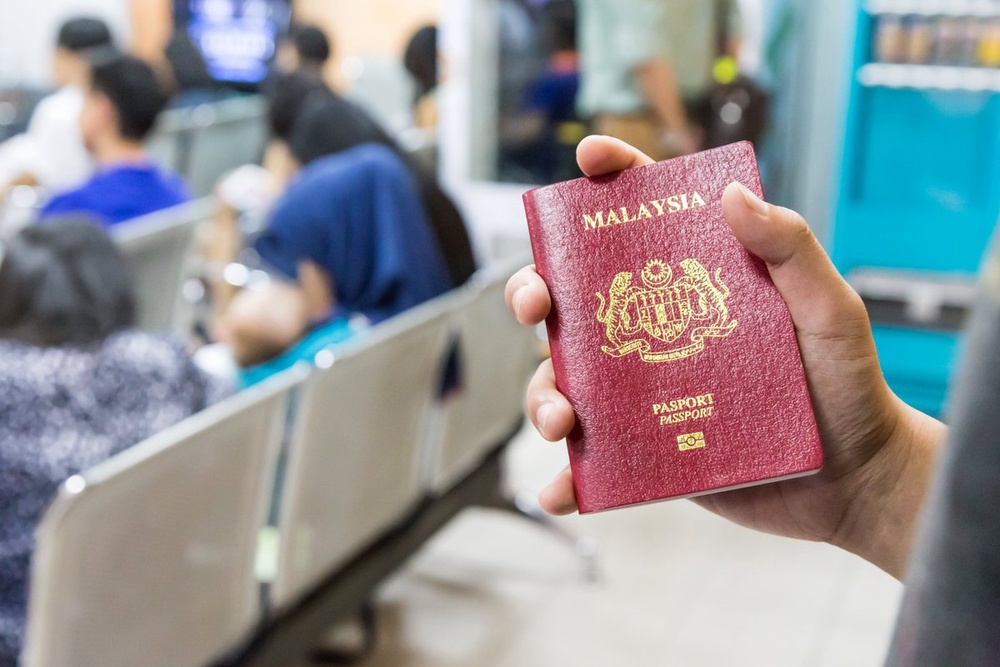
When the public already "feels" freedom of movement, there is pressure for the government to continue to maintain momentum. If policies that restrict mobility emerge later for example due to pandemics, security, or politics, what feels now can be retroactive to become a burden.
High mobility ideally goes hand in hand with social responsibility: citizens who are free to move must also be ready to compete on the global stage with competence, language, and cultural readiness. Otherwise, this freedom would only be "the ability to go," not the "ability to grow."
When one can be free to travel to many countries, the question arises: how do one stay connected to Malaysia's cultural roots? Global freedom must not erode local identity. For Siti, for example: "I still eat nasi lemak, speak in Malay, even though boarding in Frankfurt." This freedom must foster, not erode.
Siti still remembers the moment her passport (the new one) was sealed with Tokyo Narita's stamp. "I cried," she said with a laugh. "Not because I was happy, but because I remember waiting for hours in line for a visa there. Now I just scanned my passport, and I went in."
At the Kuala Lumpur departure terminal, the flowers are scattered in the storefront a typical Malaysian souvenir. Siti walks by the coffee stall, ordering a cappuccino designed in a minimalist style. She thought: "It's no longer me going out to prove I can. But I go out to learn, take it home, contribute."
From the express train to the airport, she stared at her phone screen with the boarding pass app open. "My passport is now like a global remote control," she said. "But I know the remote doesn't mean I can sit back and enjoy without effort. Precisely now, my responsibility is even greater: to represent Malaysia wherever I am." She said that many of her friends are now considering jobs abroad, cultural exchanges, and even cross-border startup ventures because the door is now open.
The world ranking 12th is not just a number for newsstands. This is an illustration of how the world now views one country, and how that country pays the price and effort for its citizens to move "freely". High mobility is a form of soft power: a country whose people can travel without barriers means that it is considered safe, trusted, and on good terms with many countries.
On the one hand, it strengthens Malaysia's position in the global network diplomacy, economy, culture. On the other hand, this demands that Malaysia is not only a "good traveler" but a "good ambassador". Every citizen who left, holding the passport, also held the name of the country. For governments, this means the need for sustainable investments: modern immigration policies, strengthening of the rights of citizens abroad, responsive consular services.
We live in an era where passports are not just paper, they are symbols of freedom, connection, identity. And when the passport goes up the ranks, we can read: the world has changed a little, and we have been part of it.
On a crowded Kuala Lumpur night, Siti sits by the airport lounge window. She saw planes take off, each carrying hope, a story, an opportunity. Her blue passport was lying on the table a little wrinkled from her suitcase, but she smiled proudly. "I now have a choice," she said. "But that choice also means responsibility."
The world 12th ranking is not the end. It is the beginning. How Malaysia organizes the mobility of its citizens, how its citizens use that freedom that will determine whether this passport is just a "tool" or a "gateway" to a better world.
When the door opens, we can choose to walk out or stay inside, designing a kind of "global home" and "local roots." For Siti and millions of others, the choice is already in hand: pack a suitcase or pack a skill, welcome the world or build it.
And for Malaysia, the question is a reflection: Will we be satisfied enough with this achievement? Or will we continue to organize so that the dark blue passport not only frees up travel but also frees up human potential, expands opportunities, and strengthens the nation?
Because when a passport rises, it's not just the country that wins, its people are also given the opportunity to win. But like all real victories, it comes with responsibility. And there lies real hope.
AM World (tameer.work88@gmail.com) is a content creator under the Newswav Creator programme, where you get to express yourself, be a citizen journalist, and at the same time monetize your content & reach millions of users on Newswav. Log in to creator.newswav.com and become a Newswav Creator now!
The User Content (as defined on Newswav Terms of Use) above including the views expressed and media (pictures, videos, citations etc) were submitted & posted by the author. Newswav is solely an aggregation platform that hosts the User Content. If you have any questions about the content, copyright or other issues of the work, please contact creator@newswav.com.

