A severe drought has been declared across parts of southern England after months of low rainfall.
Water supplies have been significantly impacted by record breaking temperatures this summer leaving reservoirs depleted.
Water companies have now been told to conduct daily monitoring of reservoir and river levels and the Environment Agency will increase checks on businesses that withdraw water from natural sources to ensure they are only taking permitted quantities of water.
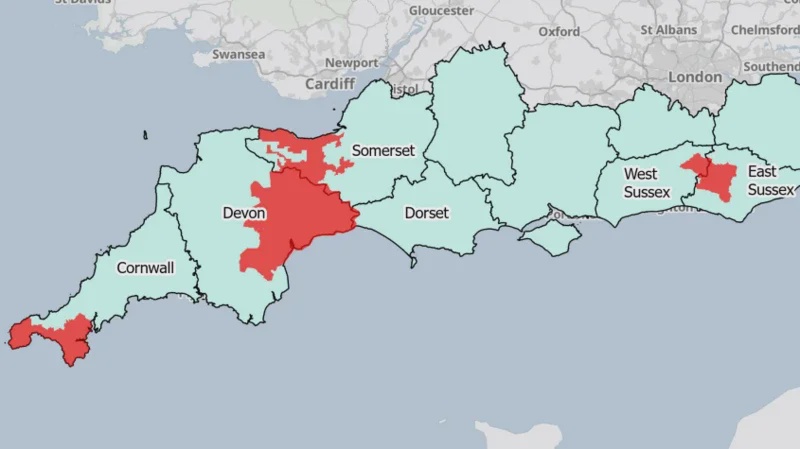
The announcement was made by the Environment Agency following a meeting of the National Drought Group and declared parts of Cornwall, Devon, Dorset, Somerset, East Sussex and West Sussex are in severe drought.
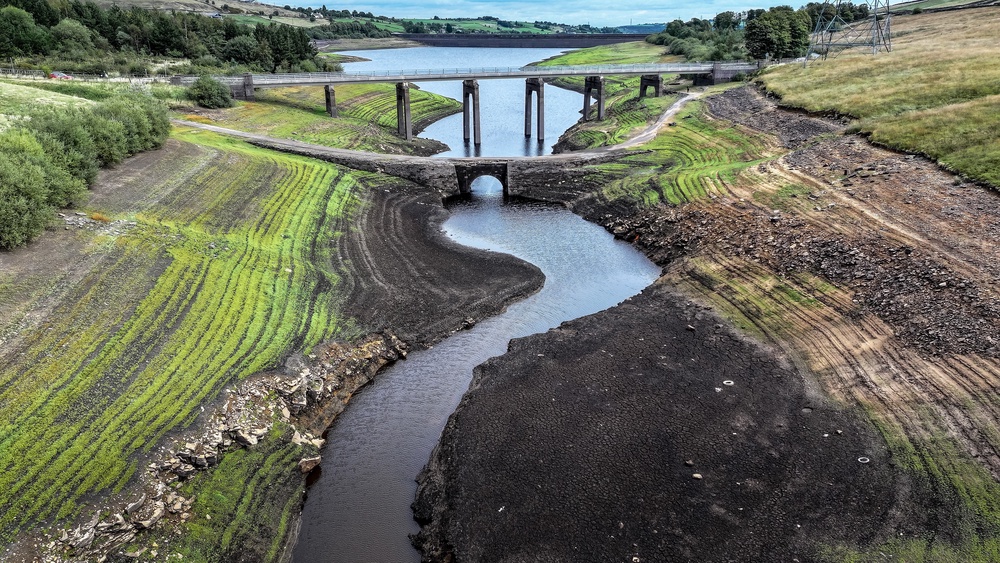
It comes as a reservoir that serves hundreds of thousands of people could run dry within weeks. Ardingly Reservoir, which serves 280,000 people in the West Sussex town of Haywards Heath and surrounding areas in East Sussex has fallen from 22.8 per cent full a week ago to just 20.2 per cent full.
Rainfall was 80 per cent lower than average in September in some areas raising the threat of dwindling water supplies.
In August, 71.3 per cent of England was in drought, while the North East and Yorkshire was under a “prolonged dry weather” status.
Yorkshire joined ten other regions in England currently in drought in October, leaving just the Northeast, Cumbria and Lancashire and Greater Manchester, Merseyside and Cheshire with prolonged dry weather status.
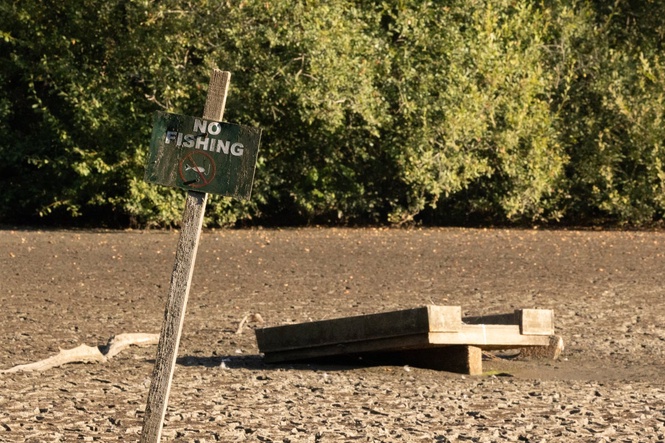
Persistent heatwaves over the summer left reservoirs and rivers depleted, revealing dry river beds as water levels sank.
Agricultural land, forests and fields turned brown in the heat. Farmers reported poorer yields as a result of the weather, with livestock farmers forced to use winter feed as a result of low grass growth.
But as drought persists into autumn, research by the Environment Agency shows England needs 20 per cent more rainfall than average until the end of April for all of the areas to emerge from drought status.
John Halsall, the chief executive set with the task of turning around South East Water following weeks if water cuts in Tunbridge Wells, said far more rainfall is needed.
He predicted that if rainfall continued at about 60 per cent below average, the reservoir could be left completely empty by mid-November, he told The Times.
If dry weather persists he said he would have to apply to Dame Angela Eagle, the environment secretary, to escalate the water company’s drought plan. That could lead to standpipes being used to provide water in streets and “rota cuts” that could see properties have water for only some parts of the day.
Environment Agency Chief Executive, Philip Duffy, said: “Record-breaking summer heat and severe drought have put our water resources under immense pressure.
“Recovery depends on both rainfall and how much water we use. We cannot change the weather, but water companies can act now. We expect them to follow their drought plans and take the steps needed to secure public water supplies.
“We are also asking everyone to use less water. That will leave more in our rivers and the environment, helping farmers and protecting wildlife and nature.”
What areas are in drought?
- East Anglia
- Hertfordshire and North London
- Thames
- Devon, Cornwall and Isles of Scilly
- West Midlands
- Wessex
- Kent and South London
- Solent and South Downs
- East Midlands
- Lincolnshire and Northamptonshire
- Yorkshire (from 9 October)
What areas are in severe drought?
Parts of Cornwall, Devon, Dorset, Somerset, East Sussex and West Sussex are now officially in a severe drought.
The South East and South West have experienced their driest April to September in over a century, impacting reservoir levels in that area.
While customer water supplies will be uninterrupted, the Environment Agency has declared a severe drought to make sure steps are taken to safeguard water before any disruption occurs.
How low are water levels in England’s reservoirs?
Almost all reservoirs except two are classed as below normal or lower for the time of year, while eight reservoirs or reservoir groups now have levels now classed as exceptionally low.
Just four reservoirs recorded an increase in storage in the week ending 6 October 2026, whilst all others decline. Overall, England storage was 54 per cent, having fallen by 1.3 per cent, and is now 21 per cent below average for the time of year.
The following eight reservoirs are classed as exceptionally low:
- Abberton reservoir operated by Essex and Suffolk Water
- Ardingly reservoir operated by South East Water
- Clatworthy reservoir operated by Wessex Water
- Colliford Reservoir operated by South West Water
- Dove Group operated by Severn Trent Water, where winter refill was impacted by water quality and operational issues
- Hanningfield reservoir operated by Essex and Suffolk Water
- Pennines Group operated by United Utilities Water
- Wimbleball reservoir operated by South West Water
Mapped: Which UK areas are in drought – and what does that mean?
Temperatures to hit 22C before dropping with overnight frost forecast at weekend
Golf clubs and private schools among businesses facing severe water use restrictions
Ex-DUP leader Jeffrey Donaldson given 15-year jail term for sex offences
MPs are under more threat than ever, says Farage, five years after Amess murder