In his final years, the late Matthew Perry described his hopes that Friends wouldn’t make up the entirety of his legacy. It was a big ask. Chandler Bing was a magnificent ball and chain, whose rhythms, phrasing and neuroses became a shared language across all of culture. Turn on any television set in any country in the world at any time of day and you’ll likely see him, sarcastic and in sweater vests.
Still, and unlike the bulk of superstars, Perry had hoped to be best remembered for his personal life – his demons and how he faced up to them – and how hard he tried not only to stay sober but to help others in a similar position to him.
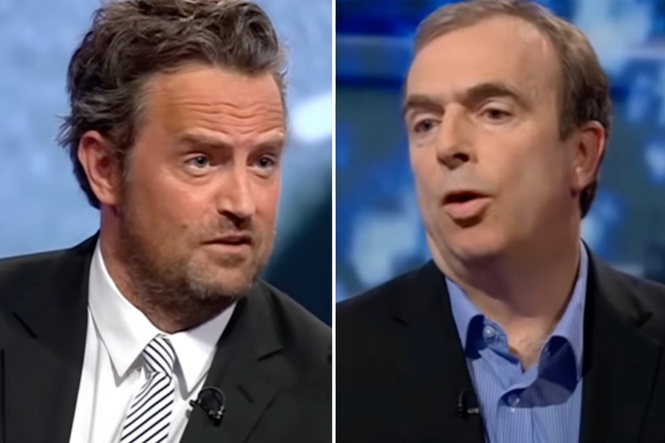
A new Netflix documentary series, The One About Matthew Perry, makes some effort to re-position Perry as a committed advocate for drug reform, whose decades of addiction informed a late-in-life shift in priorities and focus. Talking heads (including that of his younger sister Mia, though none of his Friends co-stars) discuss how much he cared, and how much he fought. (Perry ultimately died in 2023 at the age of 53, from the “acute effects” of ketamine.) But the documentary could have saved time by showing us the entirety of a conversation Perry had with the author and commentator Peter Hitchens in 2013, which summed Perry up far better than three hours of archive footage ever could – here, in scenes broadcast live on BBC Two’s Newsnight, Perry is open, vulnerable, firm and funny. Truthfully, it’s his greatest work.
Perry was invited onto the programme to discuss a think-tank call for more drug courts in the UK, which would see former addicts sitting as magistrates and presiding over addiction-related crimes. It would mean a shift in public spending from the criminalisation of drug addiction to treating it as a public health problem, which Perry believed was the smartest, most cost-effective, and importantly most humane response to the addiction crisis.
Also in the discussion was Baroness Meacher, chair of the UK All-Party Parliamentary Group on Drug Policy Reform, and Hitchens, who approached the conversation – and Perry specifically – with a sneering contempt. “You two people believe in this fantasy of addiction,” Hitchens said, “where people lose all power over themselves and become victims of this terrible, frightening disease after which they cannot stop taking drugs.” He advocated for a harsher approach to even minor acts of drug taking, suggesting – much in the way of those who believe the only way to combat teenage pregnancy is to promote celibacy rather than contraception – that drug addiction is only so bad because Britain is too lenient.
Hitchens, to his credit (I reluctantly admit), has never shied away from expressing slightly bananas opinions in public, and there’s a confronting shrug to how he conveys his stances that undeniably makes for fascinating viewing – even if, as in this moment, his stances are maddeningly, cruelly wrong. “I didn’t come here to be quiet,” Hitchens says as host Jeremy Paxman asks him to allow Perry some airtime. “Neither did I,” Perry adds. “I didn’t come here to listen to ludicrous things like that either.”
“Well, you tell me why it’s ludicrous if you’re so clever,” Hitchens shoots back.
Asked by Hitchens for evidence that addiction is a disease, Perry lays bare his soul. “My life [is evidence],” he says. “I’m a drug addict. I’m a person that if I have a drink I can’t stop.” When Hitchens responds to some of this with a weary shuffle and what appears to be a roll of his eyes, Perry grows exasperated. “We’re supposed to be grown men here and you’re making faces,” he says. “[Addiction is] an exception of your mind and an allergy of your body. What happens to me is that [when] I start thinking about alcohol, I can’t stop thinking about it.”
“I’m in control of the first drink,” Perry continues. “So I do all these things to protect myself from not having the first drink, but once I have that drink the allergy of the body kicks in. This is all documented proof of alcoholism.” Hitchens then makes an odd analogy, arguing that he is personally allergic to aspirin so deliberately avoids aspirin. “Your aspirin point was genius,” Perry replies, “but you don’t know what you’re talking about.”
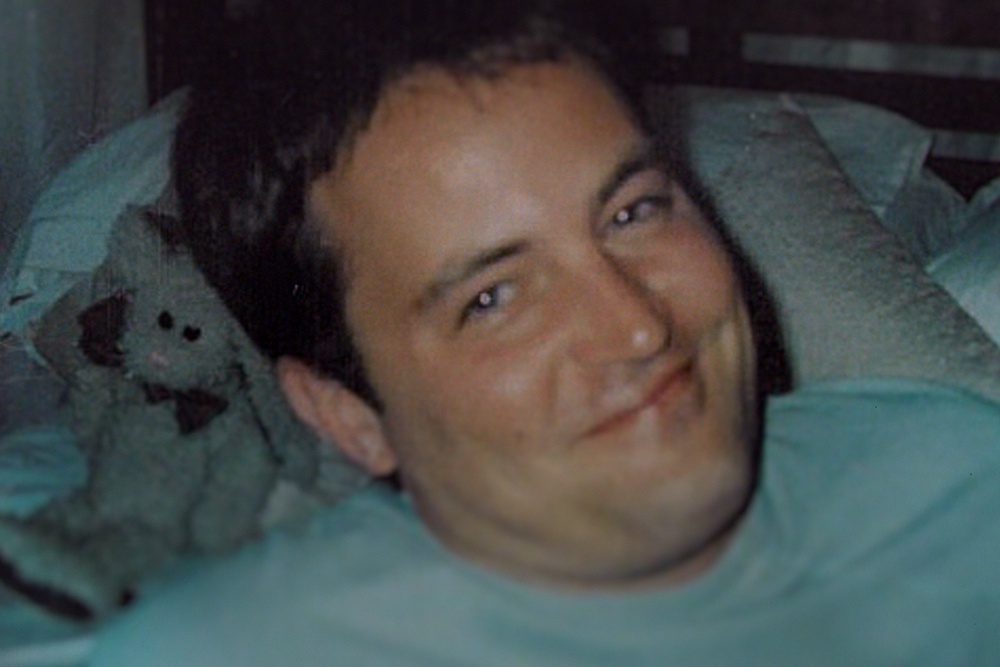
The pair go back and forth from there, Hitchens claiming that there is “an immense fashion at the moment for dismissing the ability of people to take control over their own lives, and to make excuses for them”. He seems not to understand that addiction is a lifelong problem, that there is no off switch to craving a vice, that it is managed rather than cured. (And that, as proven by the convictions of the people who distributed the ketamine that killed Perry, such toxic and often unnuanced conversation around drugs can fuel an industry composed of illicit dealers and unregulated medical professionals.) “How is it that people ever cease to be addicts if what you say is true?” he asks Perry.
“Well, Santa…” Perry jokes.
“Oh, you’re terribly clever,” Hitchens retorts. “This is a very serious subject and you treat it with immense levity … You so smugly and loftily advocate this policy which has led to disaster in Western countries for decades now.”
“You should read something other than your book,” Perry concludes, referencing Hitchens’ then-recent essay about the evils of drug decriminalisation, titled The War We Never Fought: The British Establishment’s Surrender to Drugs. “[Perry] cannot argue seriously,” Hitchens adds.
A short clip of Perry and Hitchens’ interaction is included in the new Netflix documentary, in an episode all about the actor’s spiralling addiction issues – to painkillers and booze – that would stretch across the majority of his fame. He would struggle, then improve, then struggle again. The documentary itself is merely fine, and nicely avoids any of the salacious messiness of so many of these sorts of Netflix treatments. But there’s a feeling throughout that it needn’t have actually been made, as it doesn’t state anything that Perry himself hadn’t already stated.
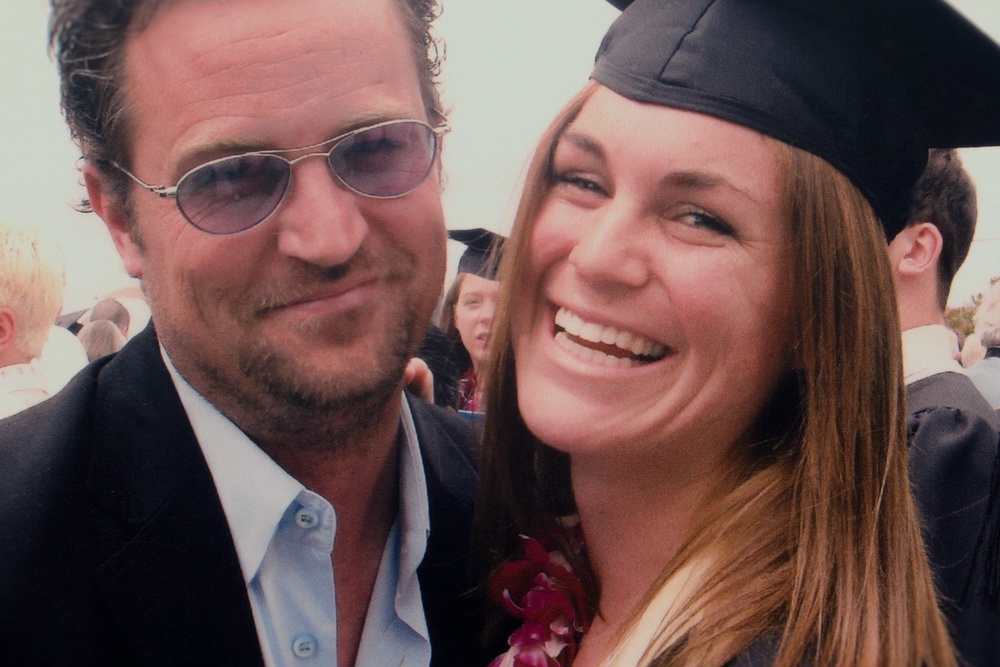
Perry lived his addiction publicly, and was never afraid of talking about his personal and professional screw-ups and the deep insecurity that seemed to be the source of it all. He was prone to beating himself up and thinking little of what he had to give. Every joke he told was a defence mechanism, or an aim to be liked or approved of. The most revealing section of his memoir Friends, Lovers, and the Big Terrible Thing, published little over a year before his death, was in his recounting of his mid-Nineties romance with Julia Roberts. They were infatuated with one another, but Perry broke it off suddenly as he couldn’t understand why someone like Roberts would be interested in him. He told GQ in 2022 that he convinced himself Roberts was “slumming it with TV Boy”, adding: “The reason I broke up with her is out of sheer fear. I was like, ‘She’s going to dump me any minute, so I should probably dump her first.’ And that was fear-based and probably stupid. But that’s what I did.” He never settled down, every one of his relationships coming to an end either due to personal insecurity or the resurfacing of his addiction.
What is glimpsed in that Newsnight appearance is not only a great sense of personal culpability, but also an explanation and a diagnosis and an incredible expression of empathy. He possesses a humanity that Hitchens seems to think of as a weakness, something that has made people and society as a whole worse-off. It’s an embarrassing spectacle, which Perry emerges out of with his head held high. And it’s exactly the way he ought to be remembered. I imagine he’d be happy with that, too.
‘The One About Matthew Perry’ is streaming on Netflix