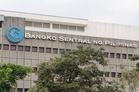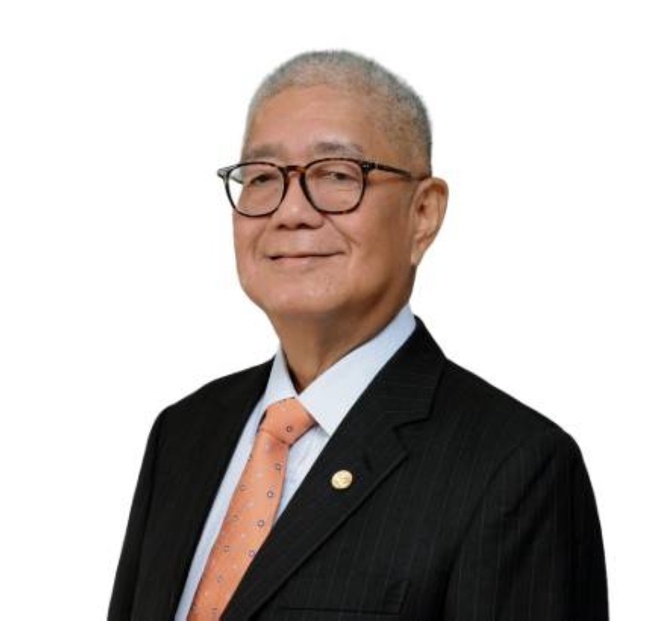
BANGKO Sentral ng Pilipinas (BSP) Governor Eli Remolona Jr. stirred public controversy when he testified in the Senate that the reason why the peso is depreciating and the economy is in the doldrums is because of our “consumption culture.” His remark in Filipino, “mayabang tayo” (we are boastful spenders) did not sit well with the public, given the stark reality that few Filipinos can afford a lavish lifestyle. The vast majority lives in a hand-to-mouth existence.
I can understand where Remolona is coming from given that economic data show that our savings rate is the lowest among our Asean peers and that consumption expenditure is the main driver of our economic growth. But outside of politicians and their relatives, the upper middle class, and families who have relatives working abroad sending monthly remittances, the vast majority of the Filipinos simply cannot afford to splurge with their meager incomes.
The current reality of our political economy manifests that it is not the ordinary Filipino consumers who are “mayabang.” The foremost “mayabang” in the country is the entity called the government.
Take for example the proposed budget in 2027 which is around P7.2 trillion, an increase of six percent over the 2026 appropriation. To meet this proposed budget, our finance officials admit that we need to borrow almost P2 trillion next year to cover its spending requirements. Instead of cutting unnecessary expenses and trimming down our deficits, the government opts to borrow more money to fund programs of questionable value.
A case in point is the plethora of subsidy programs extended by the government to the poor. We have the Pantawid Pamilyang Pilipino Program, which is allotted a budget of almost P100 billion. This is administered by the Department of Social Welfare and Development (DSWD), which also implements the Assistance to Individuals in Crisis Situation program allocated P33.3 billion next year.
Beyond the DSWD’s programs, the budget has seen a massive proliferation of non-conditional, discretionary cash assistance programs like the P11 billion provided for the Tulong Panghanapbuhay sa Ating Disadvantaged/Displaced Workers under the Department of Labor and Employment. Not to be outdone in the health sector, we have the P24-billion Medical Assistance for Indigent and Financially Incapacitated Patients program that has been increased to P49 billion next year.
In the agricultural sector, there is the P30 billion subsidy to the rice sector under the Rice Competitiveness Enhancement Fund (RCEF). Almost another P30 billion is provided to the National Rice Program, which will distribute free high breed seeds, fertilizer, fuel, etc., expenditures not covered by RCEF. On top of these two subsidy programs for rice is the P10 billion allotted to hopelessly continue distributing rice at P20 per kilo, a campaign promise made by the president.
Recently, the National Food Authority ( A) proudly announced that it intended to buy wet palay from our local farmers at P27 per kilo and P30 per kilo for dry palay. Since we need two kilos of palay to obtain a kilo of rice, this means that rice will be priced between P54-60 at the retail level. Surprisingly, the A’s announcement was made before the peak palay harvest season, which happens in October when palay farmgate prices are at their lowest.
Does this mean that it is now the official policy of the Department of Agriculture (DA) to keep rice prices above P50 per kilo? What happened then to the much-vaunted promise of the president to bring the price of rice to P20 per kilo? More recently, what happened to the earlier attempt to tame rice prices by imposing a ceiling of P50 per kilo of imported rice?
Assuming that the A can really afford to buy at its announced prices, how much budget should the agency realistically have to be able to procure enough stocks that can significantly affect the market? Note that its proposed budget for 2027 is just over P11 billion, not enough even to purchase two percent of total palay production. This means the A cannot effectively influence retail prices because of the very limited volume it can procure. What then is the purpose of announcing higher procurement prices for palay?
Again, recently DA announced that it would install rain water catchment basins, solar-powered irrigation facilities and shallow tubewells, engage in cloud seedings, etc. — measures that will mitigate the adverse impact of the severe El Niño that will hit the country starting this month till April next year.
The intentions are undoubtedly good but the problem is that such measures should have been planned and implemented a year ago because it takes time to initiate and complete such. Pre-feasibility and feasibility studies, detailed engineering works, the release of the budget, bidding and procurement process, etc. take at the very least more than a year before a project sees the light of implementation. Thus, for the DA to assure the public that the above measures will be undertaken a month before El Niño will hit us is nothing short of a PR stunt.
At the local level, more funds will be funneled to local government units (LGUs) as the national government proposes to increase the budget of the Local Government Support Fund to P58.5 billion from P57.9 billion in 2026. This is on top of the LGUs’ share of around P1.2 trillion from the National Tax Allocation.
The president has argued that the figures on our rising debt and debt-to-GDP ratio are not the true measures of the country’s economic health. Other countries like Japan, US, or Singapore, have registered higher numbers but they do not in anyway reflect the economic might of these countries.
He is right in his claim. But he failed to mention that while the figures are a secondary factor in assessing the economic health of the country, the manner by which debts incurred by the government is spent is critical in determining whether the country will further drown in a cesspool or seen a turnaround toward sustained recovery and growth.
Sadly, the current situation clearly shows that much of the government funds are being used to finance unproductive “ayuda.” Once these funds are consumed within the year, they will produce little impact on raising the country’s overall productivity.
The government seems to be spending funds like manna from heaven. It is undeniably living outside its means just to so secure the political support of the voters in the coming 2028 national election. It is obvious that the way government behaves is best described, in the words of the BSP governor, as “mayabang.”
fdadriano88@gmail.com