

In view that #GE15 is being held in November 2022 where the rakyat will be attending campaign trails and driving as well as walking to polling stations to cast their votes, in the midst of the period that MetMalaysia has forecasted that Malaysia will be striken by a more severe and destructive flood than that in December 2021 last year which had recorded the highest death toll of 54 persons in the nation's flood history, this article (a continuation of Part 1 and Part 2) aims to share some key observations regarding dangers of walking and driving in flood waters, share international best practices and outline recommendations for Malaysia (the present caretaker Government) to protect and enhance safety and survival of rakyat as well as those working, doing business and holidaying in Malaysia. Part 2 has outlined Recommendations 1 to 6 (part of).
Flood advices from international bodies
The CDC has warned that Floodwater can pose a drowning risk for everyone — regardless of their ability to swim. Swiftly moving shallow water can be deadly, and even shallow standing water can be dangerous for small children.
CDC advices to always follow warnings about flooded roads and don’t drive in flooded areas because cars or other vehicles won’t protect you from floodwaters as they can be swept away or may stall in moving water.
On the other hand, Autocar India advises drivers to Check Google Maps, talk to people on the road, follow traffic updates on social media or radio, and be alert while driving, to stay away from flooded roads and find alternate routes.
Road Safety Authority (RSA) advices if the road ahead is flooded, choose another route, do not attempt to drive through it. Flooded roads that appear shallow could be deeper than you think.
New York Times had reported that Gordon Giesbrecht, a professor at the University of Manitoba who has studied drownings and human responses to extreme environments estimated that about 350 to 400 people a year drown in their cars in the United States and Canada after their vehicle falls into a body of water or becomes stranded in flooding. He urged people to get out of their vehicle as soon as possible, saying there may be very little time before the water becomes inescapable. A vehicle that is carried away could also roll over, making escape virtually impossible. “Bottom line is if the car stalls out in water, get out and on the roof.
NYT reported that Michael Berna, an instructor with Rescue 3 International who trains military and emergency personnel on water rescues. Advices Never drive into a flooded roadway if water is covering it, period.” Many people, he said, “continue to drive into it believing they will make it to the other side. Before they know it, it’s too late.”
American Safety Council had advocated that if you find yourself in your car during a flood or flash flood, avoid large puddles of ground on the water, and, if necessary, leave your car and seek higher ground on foot. If you’ve exited your vehicle, don’t stand in the moving water, if possible, as just six inches of moving water can knock a person over. The Council also advised drivers to be wary of fallen power lines, which will make the flood water deadly.
What can you do if you're in a flood?
Thus the Malaysia government must prepare and provide posters, TV alerts, adverts, news articles and sms to highlight these dangers such as that advocated by the CDC, Smart Driving UK, Autocar India, RSA and the American Safety Council to include the following information:
- Follow warnings about flooded roads and don’t drive in flooded areas (see Fig 3).
- Check Google Maps, talk to people on the road, follow traffic updates on social media or radio, and be alert while driving, to stay away from flooded roads and find alternate routes (see Fig 3).
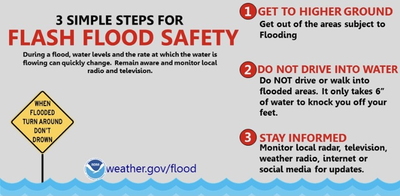
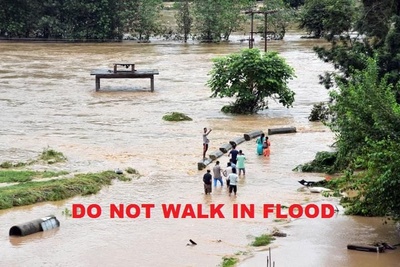
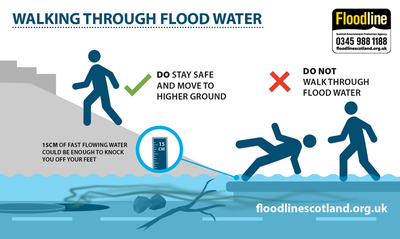
- Do not attempt to walk through flood waters as it takes only 6 inches of moving water to knock you off your feet. Move to higher ground or the highest possible point if you are trapped by moving water - floodlinescotland (see Fig 4 and Fig 5).
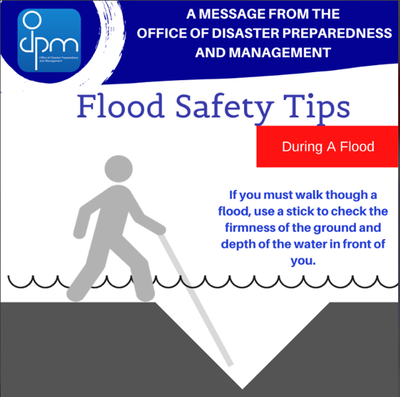
- Use a stick to wade through the flood check as it can help check firmness of the ground as well as the depth of water in front of you-ODPMTT (see Fig 6).
- Six inches of water will reach the bottom of most passenger cars; this depth can cause loss of control or possible stalling as water is sucked into the exhaust or washes into the air intake. Also six inches of swiftly moving water can also knock a person off their feet (see Fig 7 and Fig 8).
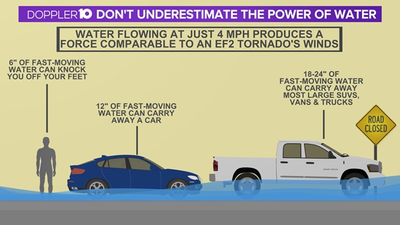
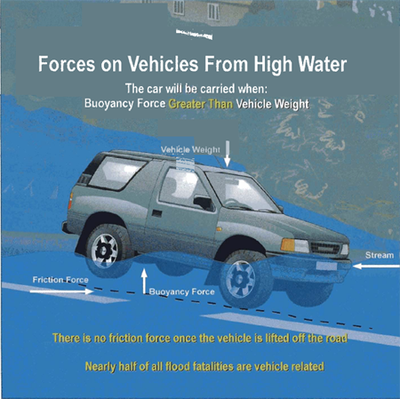
- Many cars will start to float in as little as one foot of water - this can be extremely dangerous because as the wheels lose grip, you lose control.
- Two feet of flowing water can sweep away most vehicles — including large four-wheel drive cars including pick-up trucks as well as SUVs (sports utility vehicles). Don't try driving through fast-moving water, for example approaching a flooded bridge – your car could easily be swept away (see Fig 7 - Fig 9).
- If the car stalls and is trapped in running water, stay inside car to avoid getting swept away. However, if water is entering the car which is still partly submerged in flood water, get out and stay on car's roof . Roll down your window to climb out, since the water pressure will make it difficult or even impossible to open your door (see Fig 10 and Fig 11). - Esquire Magazine Philippines
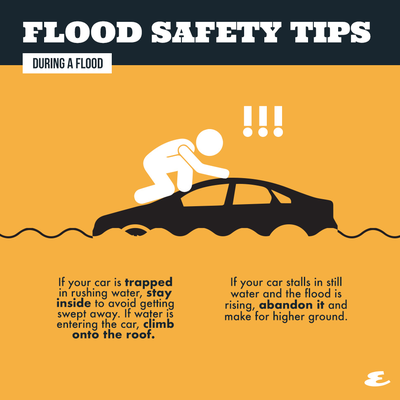
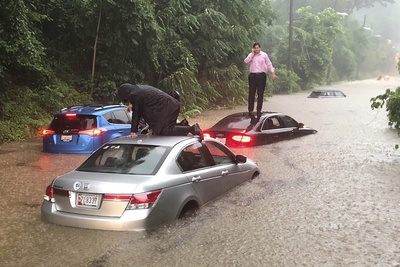
- If your vehicle stalled in still water and partly submerge during a flood or flash flood and water is still rising, abandon your car immediately and look for and go to higher ground. Do not wait for the water to continue to rise as it may be difficult or impossible to open your door and escape the vehicle (see Fig 10)
- If you’ve exited your vehicle, don’t stand in the moving water, if possible, as just six inches of moving water can knock a person over.
- Lastly as it is understandable that if there is opportunity and situation warrants it, car owners would wish that both their vehicles and lives are protected. But if the situation warrants leaving the car in order to be safe, and it is indeed difficult for car owners to just abandon their vehicles just like that in view of the cost of and sentimental value of the car. However, it is better and safer to risk losing the car than to risk losing your life (see Fig 12).
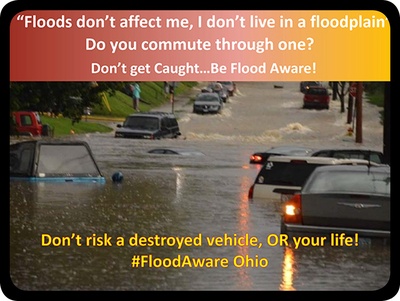
Thus it is critical that these key information above must be disseminated by the Government to the rakyat as well as to all staying, studying, doing business and holidaying in Malaysia via Posters, TV and radio alerts and adverts , news articles and social media to highlight these dangers and share ways for all to protect and keep safe in and during this flood hazard.
It is hoped that with these recommended measures Malaysians can attend political campaigns and walk or drive to poll stations to cast their votes safely.

Share your experiences, dreams and hopes for #GE15 and stand a chance to win cash prizes up to RM16,500! Find out how you can participate here.
Sheriffah Dato Syed is a content creator under the Newswav Creator programme, where you get to express yourself, be a citizen journalist, and at the same time monetize your content & reach millions of users on Newswav.
Log in to creator.newswav.com and become a Newswav Creator now!
Newswav is solely an aggregation platform and hosts the content. The views expressed and content above including media (pictures, videos, etc) were provided by the author. If you have any questions about the content, copyright or other issues of the work, please contact Newswav.

