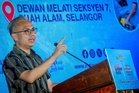
KOTA KINABALU: The media plays a vital role beyond reporting government policies and programmes, serving as a strategic partner in bridging the gap between the Government and the public.
Sabah Federal Secretary Datuk Mohd Razali Wahab said the media was crucial in ensuring that government development initiatives were clearly understood and their benefits felt by the people, while also providing a platform for the public to voice their concerns and views.
“We can have good policies, good programmes and implement major projects, but if the public does not understand what we are doing or cannot feel the benefits, there is still something we need to improve.
“This is where the media’s role is important. The media is not merely an entity that covers the government, but a strategic partner that acts as a bridge connecting policy with the people,” he said.
He was speaking at the 2026 Sabah Federal and Media Strategic Networking Night (Jaspem), held at the Banquet Hall of the Sabah Legislative Assembly (DUN) on Thursday.
Razali, who is also Chairman of the Jaspem 2026 organising committee, said civil servants must be open to feedback and criticism from the media while ensuring that accurate information and clear explanations were provided to the public.
“Sometimes the news pleases us, sometimes it might not, but as civil servants, we must be ready to listen.
“If there are good things, we continue them; if there are shortcomings, we rectify them; and if there is constructive criticism, we take it as an opportunity to become better because, ultimately, we are all working for the same party, which is the public,” he said.
He also highlighted the importance of the Semai approach, which encompasses Santuni (care and consideration), Empati (empathy), Muafakat (consensus), Amanah (trustworthiness) and Integriti (integrity), as the foundation for a more caring, effective and trusted public service.
He said Sabah’s geographical challenges and diverse population required civil servants to go beyond relying on reports and engage directly with communities to better understand their needs, particularly in rural areas.