.jpg)
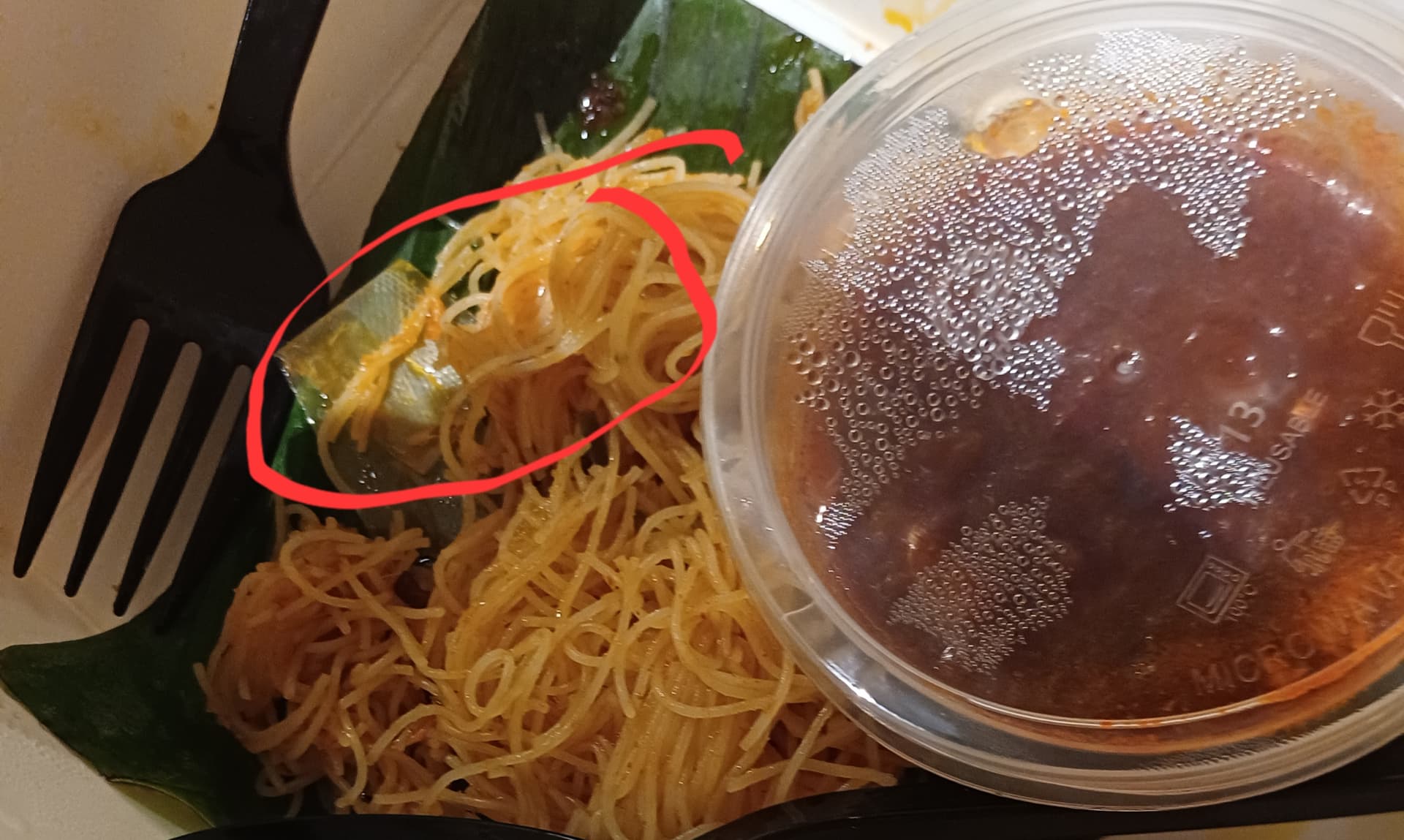
The Mee Siam Came With a Little Extra
By Mihar Dias August 2026
There are some things in life you don't expect to find in your food.
A little coriander, perhaps. A stray chilli. The occasional bone when you are eating chicken. Even a piece of eggshell can be forgiven as one of those occupational hazards of eating out.
But plastic?
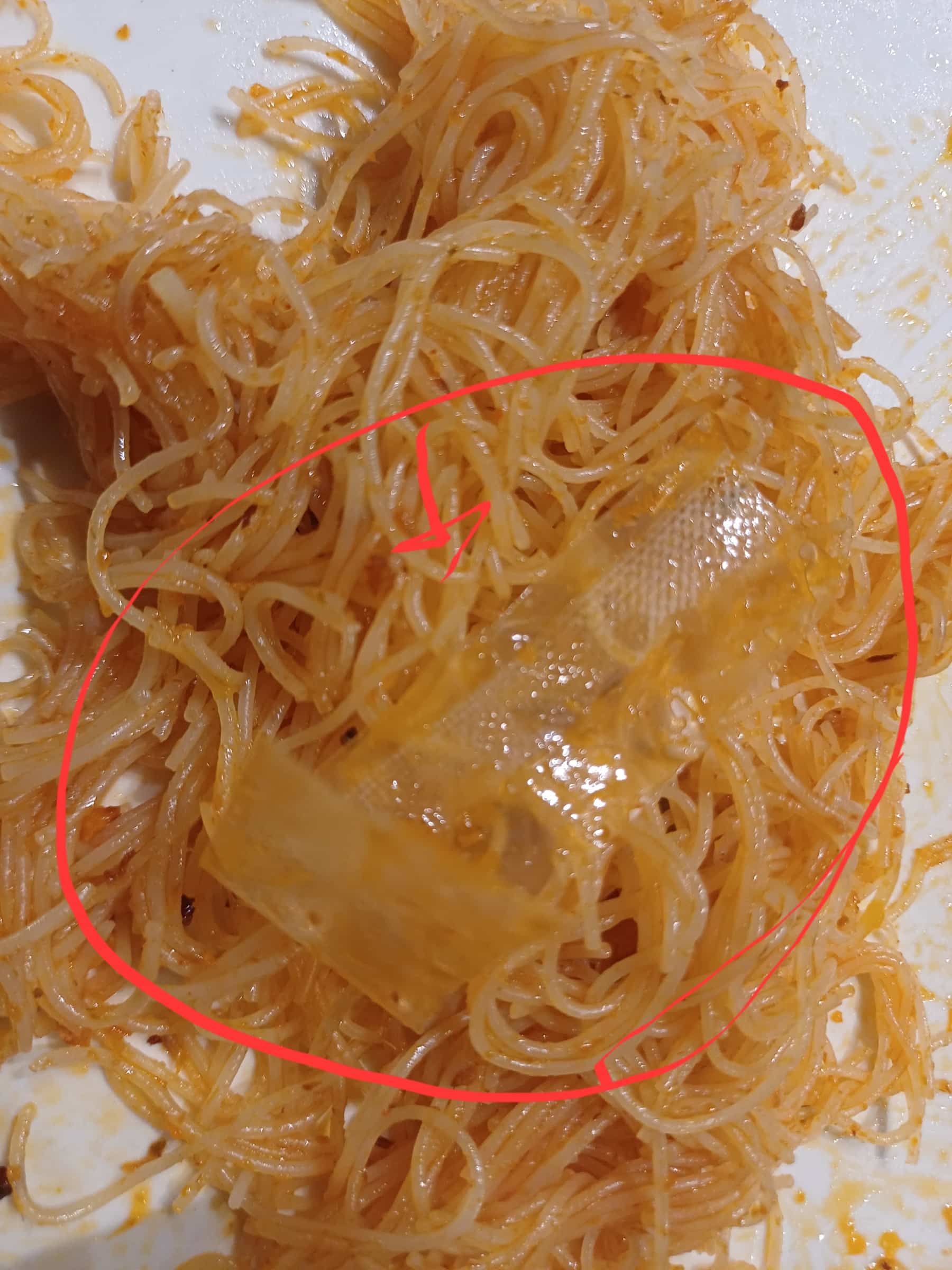
That is pushing the concept of value-added dining a little too far.
We have been frequenting this particular kopitiam since it opened in late 2025. It has become one of those places we casually regard as part of our routine. The service is good, the food satisfactory and, most importantly, my wife likes the chicken rice.
And we have never had a complaint about the chicken rice.
So, on 28 August, in a moment of culinary adventure, we decided to try something different. Mee Siam with chicken wings.
Why not?
After all, when you have eaten the same chicken rice often enough, even a retired food critic like me occasionally feels the need to demonstrate courage.
The Mee Siam arrived looking perfectly innocent. The noodles were nicely dressed in chilli sauce, the chicken wings looked inviting and nothing on the plate suggested that there was anything remotely sinister lurking underneath.
We ate.
And ate.
And ate.
It was only when we reached the last few spoonfuls that we discovered the restaurant's little surprise.
Hidden among the noodles and chilli sauce was a shiny, sliced piece of plastic.
Not a microscopic fragment.
A proper piece.
The sort of thing that catches your eye precisely because your brain suddenly asks:
“Why is there plastic in my Mee Siam?”
It was, I suppose, the restaurant's interpretation of a chef's special.
Except I don't think the chef planned it.
I am quite sure nobody in the kitchen woke up that morning and announced:
“Today, gentlemen, we shall give our loyal customers something to remember.”
Nor do I believe the chef had any intention of upsetting anyone, much less giving a regular customer the opportunity to discover how efficiently the human digestive system can deal with plastic.
Fortunately, I noticed it before swallowing it.
I took the offending "bonus" back to the counter and showed it to the staff.
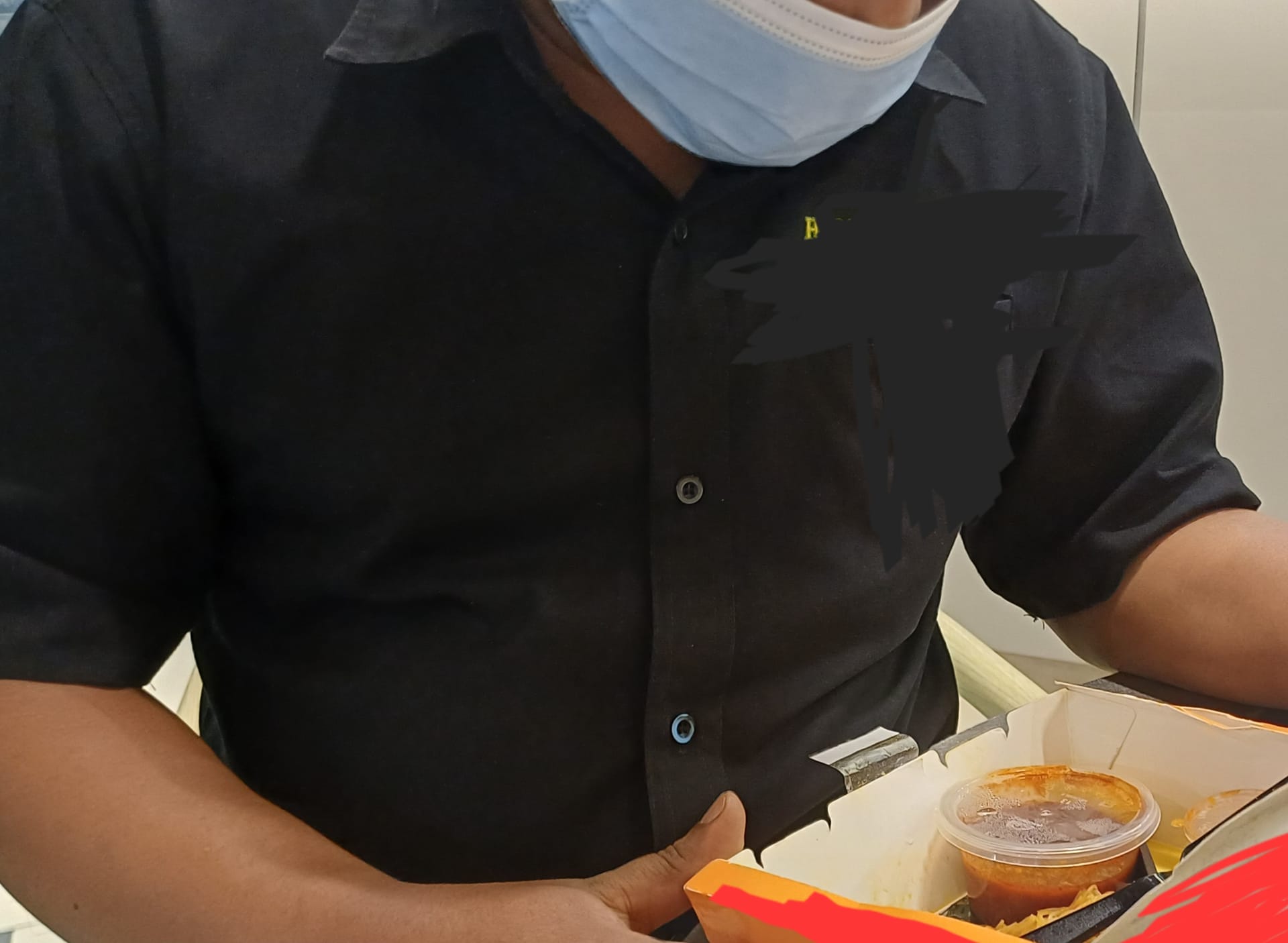
Mihar Dias with staff examine Mee Siam
To their credit, they were genuinely apologetic. There was no argument, no attempt to suggest that perhaps I had brought the plastic along myself, and certainly no suggestion that it was an exotic ingredient I had failed to appreciate.
They immediately offered to prepare another plate of Mee Siam.
That was the right response.
Unfortunately, by then my stomach had already entered into negotiations with my brain.
The appetite had disappeared.
Still, I accepted the replacement dish—but rather than eat it myself, I offered it to the condominium security guard on duty.
He accepted it.
He may have been braver than I was.
And that is where the strange psychology of eating out begins.
For months, we had eaten at this kopitiam without giving much thought to whether the food was safe. We simply assumed it was.
One piece of plastic changed that.
Suddenly, every plate becomes an investigation.
Is that chilli a chilli?
Is that noodle a noodle?
Why does that bean sprout look suspicious?
And, most importantly, what else is hiding underneath?
That is the unfortunate thing about trust.
It takes months to build and approximately three seconds to destroy.
A restaurant can serve you 100 perfectly good meals. You remember the one that contained the unexpected ingredient.
The staff can be polite.
The service can be good.
The food can be satisfactory.
But once you have discovered a piece of shiny plastic hiding beneath your Mee Siam, the next meal comes with an invisible side dish called suspicion.
And suspicion is not very good for business.
I don't blame the staff. They apologised.
I don't even necessarily blame the chef. Mistakes happen, especially in busy kitchens where food is being prepared at speed.
But somewhere between preparation, plating and serving, a piece of plastic found its way into my noodles.
That is the part that bothers me.
Because eating out is ultimately an act of trust.
We hand over our money and, more importantly, we hand over responsibility for what enters our stomachs.
We don't stand over the kitchen counter inspecting every ingredient.
We trust.
Until something happens to make us stop trusting.
And today, unfortunately, I lost my appetite—not only for the Mee Siam, but for the kopitiam itself.
We will probably stay away for a while.
Perhaps eventually we will return.
Perhaps my wife will insist that the chicken rice is still perfectly good.
And perhaps, after a suitable period of mourning, I will once again summon the courage to eat there.
But for now, the memory of that shiny little piece of plastic has done something no advertising campaign can repair overnight.
It has turned a perfectly ordinary kopitiam into a place where, before taking the first bite, I might actually examine the plate.
Which is rather unfortunate.
Because I went there to eat Mee Siam.
Not to conduct a forensic investigation.
Mihar Dias (mihardias@gmail.com) is a content creator under the Newswav Creator programme, where you get to express yourself, be a citizen journalist, and at the same time monetize your content & reach millions of users on Newswav. Log in to creator.newswav.com and become a Newswav Creator now!
The User Content (as defined on Newswav Terms of Use) above including the views expressed and media (pictures, videos, citations etc) were submitted & posted by the author. Newswav is solely an aggregation platform that hosts the User Content. If you have any questions about the content, copyright or other issues of the work, please contact creator@newswav.com.