
In the global theater of modern governance, the friction between central authorities and local communities has reached a boiling point. From the passionate regional protests across Western Europe against standardized agricultural mandates to the fierce local resistance against federal economic overreach in North American provinces, a clear signal is emerging: local populations are increasingly resistant to being treated as mere administrative footnotes by centralized powers.
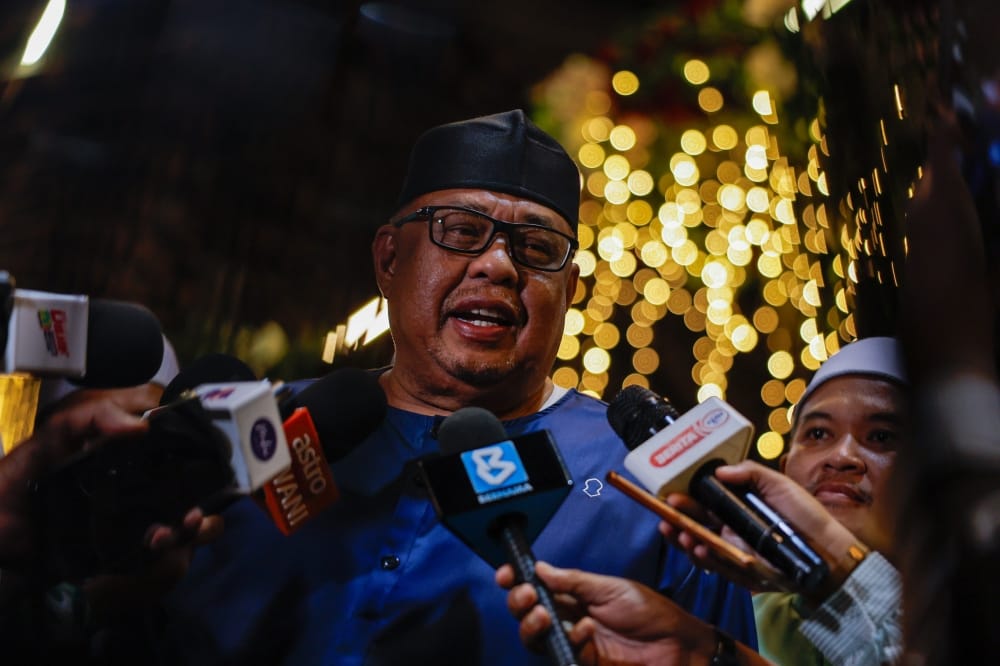
In Malaysia, this global undercurrent of local resistance has found a compelling voice along the historic shores of the Straits of Malacca. The state of Melaka, under the leadership of its 13th Chief Minister, Datuk Seri Ab Rauf Yusoh, is charting an independent path. Instead of quietly accepting the standardized policies of the federal government in Putrajaya, Melaka is asserting its regional rights. This political stance represents a calculated gamble on state autonomy that challenges the traditional balance of power in Malaysian federalism.
The Architecture of defiance
At the heart of this tension lies a fundamental constitutional debate. Malaysia’s governance structure is governed by the Federal Constitution, which outlines specific boundaries between central authority and state rights through the Federal, State, and Concurrent Lists. Historically, however, the practical application of power has often favored Putrajaya, leaving individual states with limited financial options and high dependence on federal allocations.
Melaka's current stance can be interpreted as an effort to challenge this dynamic. Rather than functioning as a passive recipient of central planning, the state leadership is actively leveraging its unique economic strengths. Legal analysts suggest that while Article 75 of the Federal Constitution establishes that federal legislation takes precedence in cases of conflict, the administrative and operational execution of development policies remains a powerful tool for state governments to exercise self-determination. By maximizing its regulatory powers over land use, local government licensing, and heritage zoning, Melaka is working to establish its own economic priorities.
The Economic Engine and the Sovereignty Gamble
Melaka's political confidence is closely tied to its recent economic performance. According to data released by the Ministry of Investment, Trade and Industry (MITI) and the Malaysian Investment Development Authority (MIDA), Melaka achieved a historical milestone by recording RM14.68 billion in approved investments across 312 projects. This marks the state's highest investment inflow in 22 years, bolstering its financial position.
This influx of private capital provides the state administration with significant political leverage. With major international conglomerates maintaining operations in the state for over half a century, the local government has argued that its economic ecosystem is self-sustaining. This financial independence allows the state leadership to negotiate with federal authorities from a position of economic stability rather than financial dependence.
Cultural Capital and the Tourism Lifeline
Beyond manufacturing, Melaka’s leverage is rooted in its status as a UNESCO World Heritage site. Tourism functions as a vital economic pillar for the state, but managing this success requires balancing preservation with rapid development. Local planning agencies, such as the State Economic Planning Unit (UPEN), have frequently noted that central transportation models do not always align with the spatial realities of an ancient, narrow-streeted maritime city.
When federal agencies propose standard national infrastructure models, Melaka has frequently opted for localized alternatives. For example, the state has actively pursued custom public transport frameworks, including tailored green technology initiatives and specific monorail feasibility studies, rather than waiting for integration into federal rail networks. Academic research published via SHS Web of Conferences underscores that sustainable development in heritage zones relies heavily on local community satisfaction and precise regional management, which can be disrupted by generic, top-down federal planning.
Political Realignment and the Upcoming Polls
The relationship between Melaka and Putrajaya is further complicated by internal political dynamics within the ruling coalitions. Political analysts note that the upcoming Melaka state election is set to shape the future path of major parties. The state leadership has explicitly positioned Melaka as an independent model for governance, asserting that its administration stands firmly on its own feet rather than operating merely as a local branch of the national unity government.
This political positioning became evident during recent internal party challenges, such as the high-profile discussions surrounding Dr. Akmal Saleh's conditional resignation offer. By managing these sensitive internal disputes locally rather than deferring to federal party leaders, the Chief Minister has signaled an intention to keep Melaka's political affairs under state control. This strategy aims to build a localized brand of political stability to appeal to voters in the upcoming state polls.
A Regional Phenomenon across the Federation
Melaka’s push for administrative autonomy is part of a broader trend across Malaysia. Observers point out that the desire for decentralized authority is shared by several states. In East Malaysia, leaders like Sarawak's Deputy Minister in the Premier's Department, Datuk Sharifah Hasidah Sayeed Aman Ghazali, have consistently argued that strengthening state rights under the Malaysia Agreement 1963 (MA63) directly supports national progress rather than undermining it.
This perspective suggests that a strong nation is built on strong, self-sufficient states. Melaka’s insistence on managing its own industrial training programs, particularly through localized Technical and Vocational Education and Training (TVET) initiatives, reflects this philosophy. By training a workforce tailored specifically to the needs of its own 312 approved industrial projects, Melaka seeks to build a resilient local economy that contributes to the federation on its own terms.
Balancing Cooperation and Competition
Despite the clear focus on state rights, Melaka's administration maintains a pragmatic approach to communication with the federal government. The state frequently utilizes national platforms, recognizing that federal agencies like the Malaysian National News Agency (Bernama) remain vital for communicating state policies and maintaining transparency with the broader public.
This creates a dual strategy: Melaka actively participates in the national framework when it aligns with its goals, while defending its administrative boundaries when federal plans overlook local needs. Analysts view this balance as a sophisticated form of regional diplomacy, where cooperation and self-assertion are balanced to maximize benefits for the state.
The Constitutional Stakes of the Autonomy Drive
The ongoing negotiation of power between Melaka and Putrajaya highlights unresolved questions within Malaysia's federal system. Historical precedents, such as the regional administrative variations observed during past national health crises, show that state governments often modify or delay federal directives to better suit local conditions and avoid public dissatisfaction.
As Melaka heads toward its next legislative elections, this focus on autonomy serves as both a governance strategy and a political platform. The administration's approach rests on the premise that those closest to the land are best equipped to manage it. Whether this strategy yields long-term benefits or leads to administrative bottlenecks depends on the state's ability to maintain its economic momentum without straining its relationship with federal funding sources.
What do you think? I’d love to hear your opinion in the comments section.
Melaka’s trajectory reflects a fundamental truth about modern governance: a shared national identity does not require uniform local policies. The state's historic streets, which have witnessed centuries of shifting empires and global trade, are now the testing ground for a contemporary balance of regional power.
This effort to assert state authority is more than a temporary political disagreement; it represents a deliberate approach to local governance. By linking its political arguments to measurable economic outcomes, such as its recent investment achievements, the state leadership is attempting to show that regional self-reliance can complement national development.
The success of this strategy will be watched by observers across the country. If Melaka can maintain its economic growth while preserving its cultural heritage and managing its political transitions independently, it may provide a template for other states seeking greater administrative flexibility. The upcoming state elections will offer local voters an opportunity to evaluate this approach.
The ongoing discussions between the historical coast and the federal center remind us that federalism is an evolving relationship. In this dialogue, Melaka has made its position clear: it seeks to contribute to the nation's progress while maintaining control over its own path. The outcome of this effort will help shape the next chapter of regional governance in Malaysia.
AM World (tameer.work88@gmail.com) is a content creator under the Newswav Creator programme, where you get to express yourself, be a citizen journalist, and at the same time monetize your content & reach millions of users on Newswav. Log in to creator.newswav.com and become a Newswav Creator now!
The User Content (as defined on Newswav Terms of Use) above including the views expressed and media (pictures, videos, citations etc) were submitted & posted by the author. Newswav is solely an aggregation platform that hosts the User Content. If you have any questions about the content, copyright or other issues of the work, please contact creator@newswav.com.