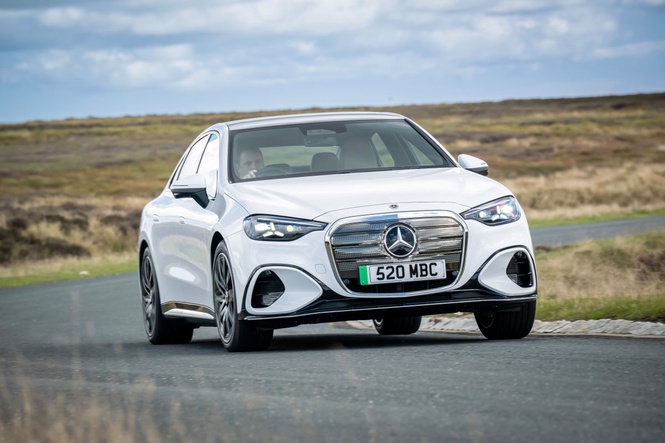
There’s something very reassuring about a Mercedes that feels like a Mercedes – they haven’t always done that of late, but the new C-Class Electric does it rather well. It has that comfortable gait and those nicely judged road manners that make you understand what all the fuss about the three-pointed star is supposed to be about.
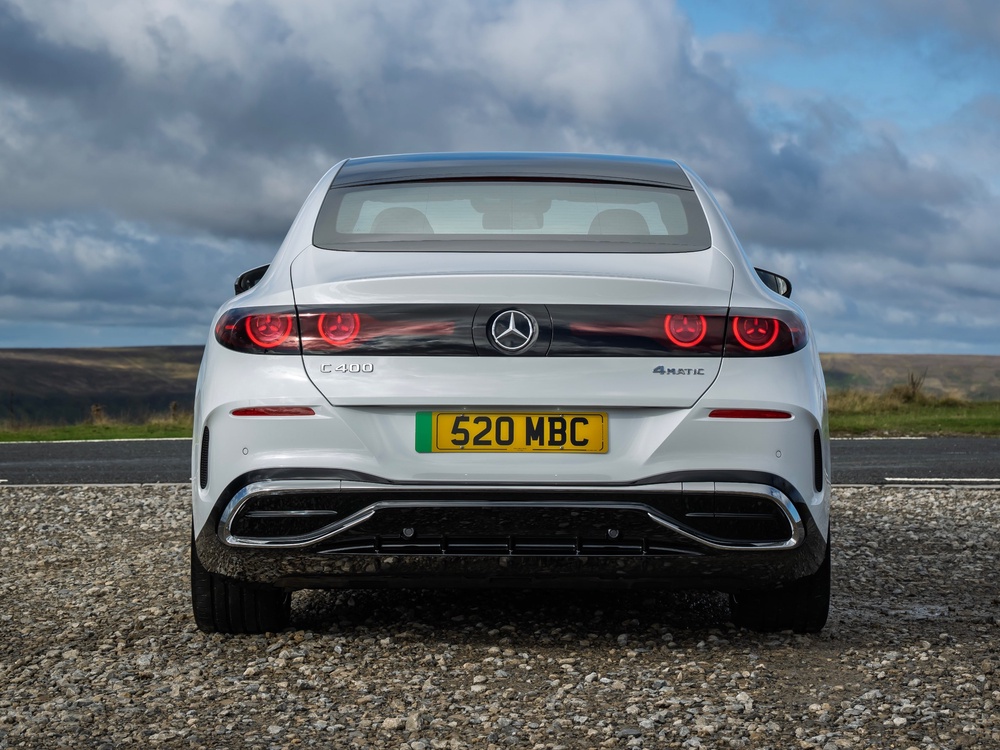
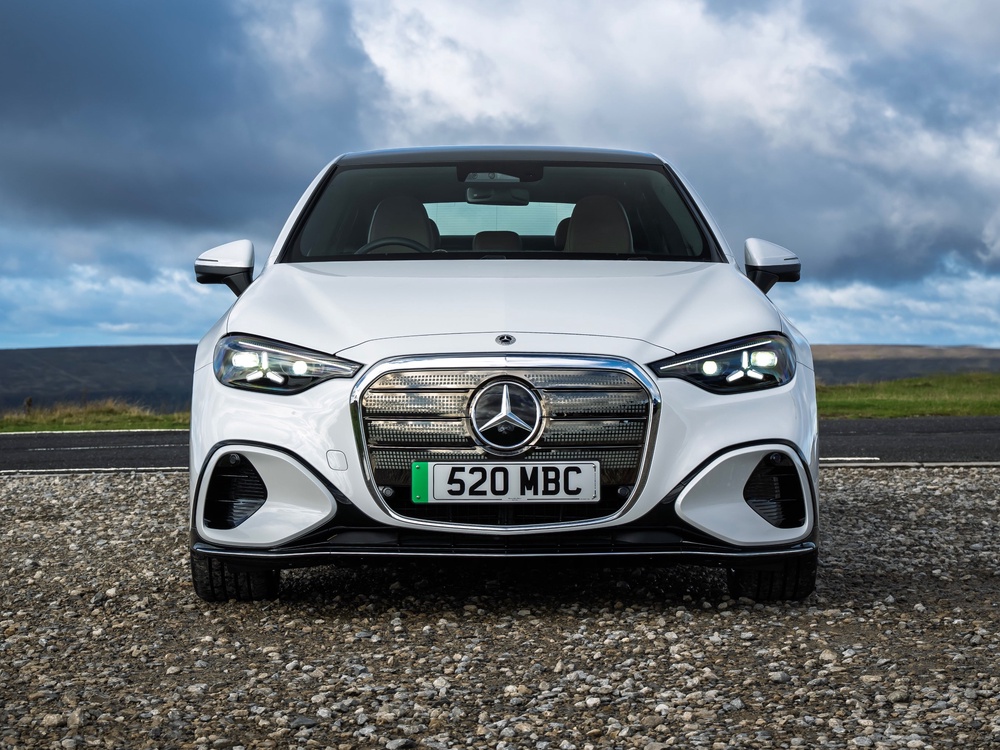
Unfortunately, Mercedes seems to think we need rather more reminding about the star itself. There are stars in the headlights, stars in the rear lights and, with the right options, another 162 of them glowing above your head. I’m not sure anyone getting into this car is going to forget who made it, but Mercedes clearly isn’t taking any chances.
This is the first fully electric C-Class, built on a purpose-designed electric platform rather than being a petrol car with its engine swapped for batteries. The launch model is the C 400 4MATIC, which has four-wheel drive, a 94kWh battery and a maximum claimed range of 452 miles. UK prices start at £57,995.
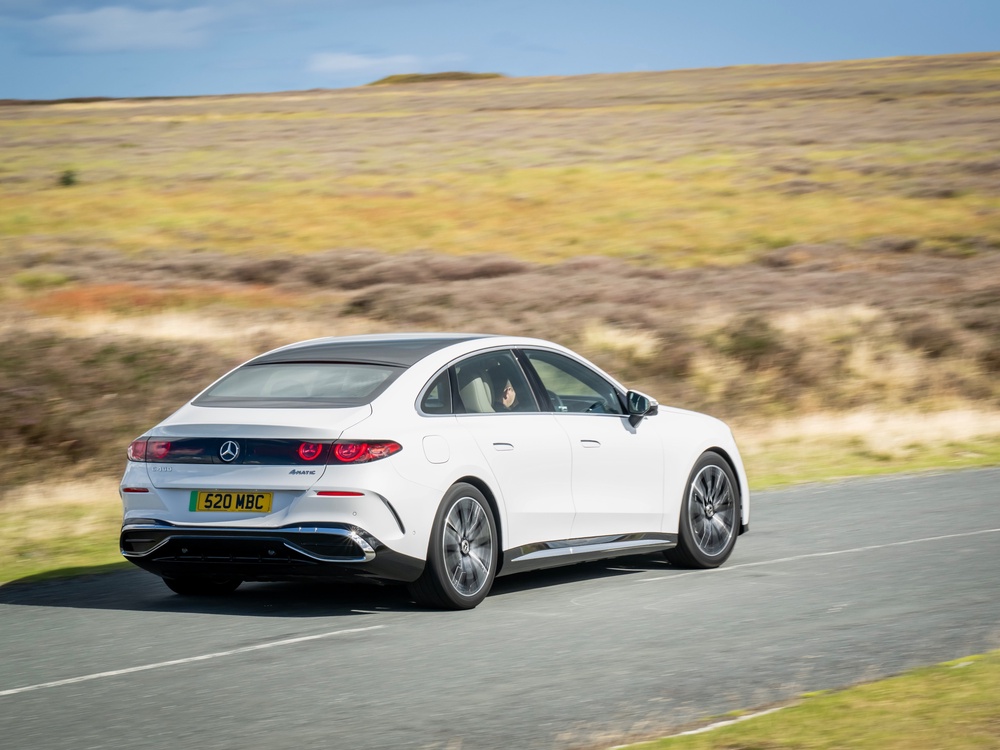
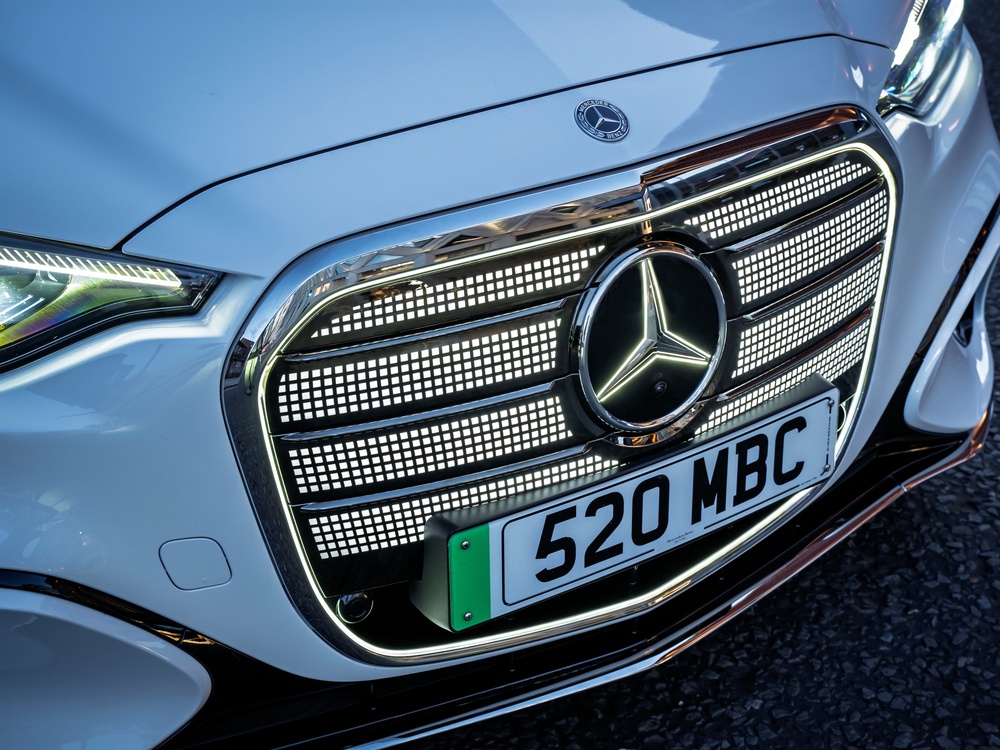
It looks different from the familiar combustion-engined C-Class, too, with a low nose, short overhangs and a roofline that runs into a rounded, coupé-like rear. The grille has a broad chrome surround and can be illuminated with 1,050 dots (at least they’re not stars), while four round, red rear lights contain yet more stars. There’s a serious purpose to the smooth shape, though: a drag coefficient starting at 0.22 helps the car use less energy pushing its way through the air.
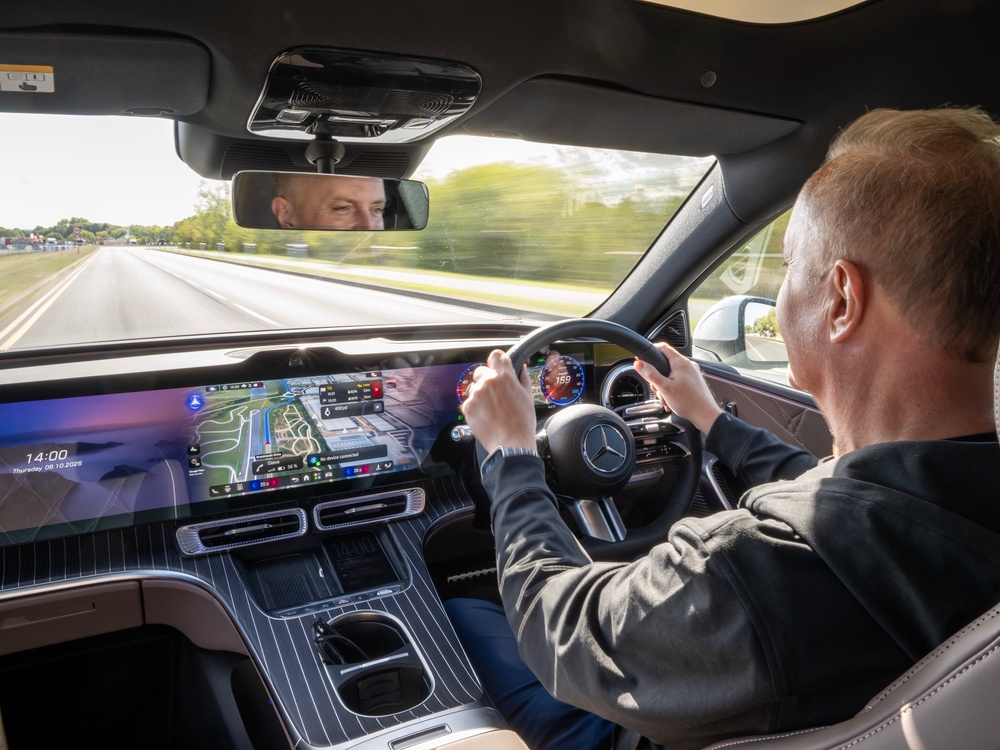
Inside, the quality is impressive, but the presentation is a rare combination of tech and tacky. The screens are clever and there’s plenty to personalise, although the overall effect is rather more brash sports bar than the restrained luxury I’d hoped for.
I drove the C 400 extensively on roads near Mercedes-Benz World in Surrey, and the contrast between how it looks and how it drives became the story. There’s a genuinely good Mercedes underneath all the visual excitement, although the BMW i3, Polestar 4, BYD Seal and Tesla Model 3 give buyers plenty of alternatives to consider.
How we tested
I drove the C 400 extensively on varied local roads near Mercedes-Benz World in Surrey, assessing comfort, handling, refinement, technology, audio and practicality, alongside my usual Fowler supermarket car park test.
Mercedes-Benz C-Class Electric: from £57,995, Mercedes-Benz.co.uk
Independent rating: 8/10
- Pros: Lovely ride comfort, nicely weighted steering, impressive refinement and quality, generous standard equipment, fast rapid charging
- Cons: Over-the-top interior, restricted rear foot space, lots of technology to learn, beaten on range
Mercedes C-Class Electric specs
- Price: from £57,995
- Battery size: 94kWh
- Maximum claimed range: 452 miles
- Charging : 330kW DC, 10 to 80 per cent in 22 minutes
Battery, range, charging, performance and drive
The important thing about the C 400 I drove is that it had the Refinement Package, which combines adaptive Airmatic air suspension with four-wheel steering. It’s a worthwhile investment and the genuinely makes it feel like a little S-Class – and it deserves to be mentioned before getting carried away with the performance figures. The standard car has a different suspension set-up, using conventional comfort suspension with dampers that respond to the size of the bumps.
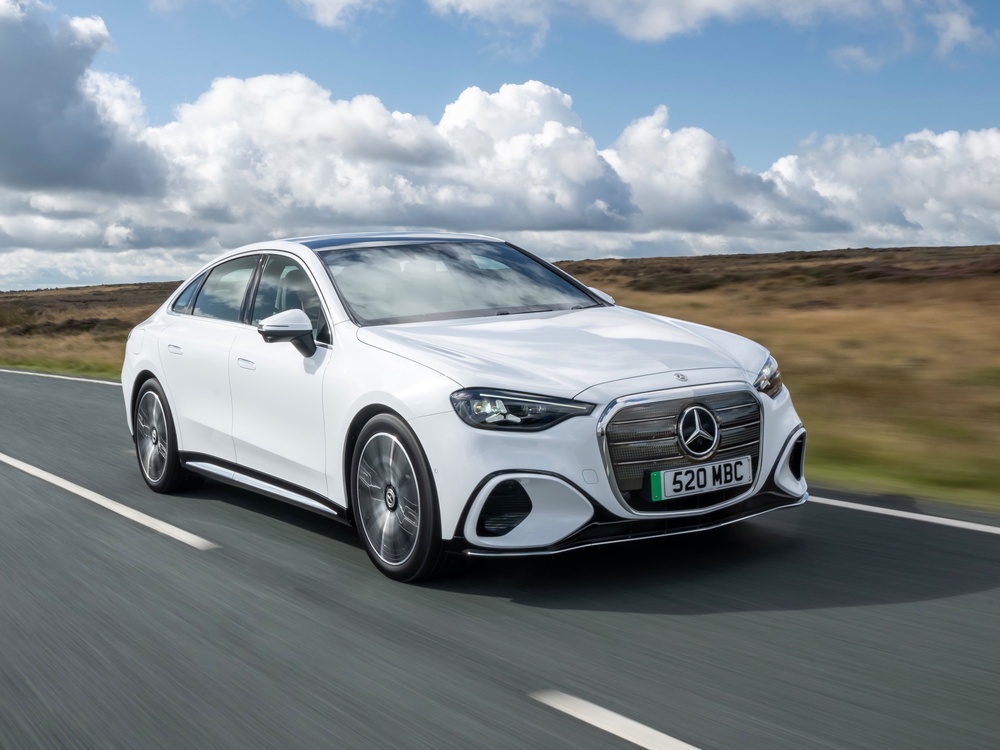
With the Refinement Package fitted, the ride is very nicely judged in the normal Comfort setting. It soaks up bumps without allowing the body to become too floaty, so you get the comfort without the sense that the rest of the car is still deciding what to do after the wheels have passed over something. Body control is good, and switching to Sport doesn’t spoil things: the ride remains pretty comfortable rather than suddenly making you wish the road had been resurfaced.
The steering is nicely weighted, too, and the combination makes this a really good car to drive. The four-wheel steering helps it feel sharper, while the air suspension provides the comfort that makes the whole thing feel properly Mercedes. It’s a balance I really enjoyed, and it’s left me looking forward to the more performance-focused versions that are apparently on the way.
There’s an occasional noise from the suspension, although the rest of the car is so quiet that I suspect you’re simply more aware of it. Otherwise, refinement is impressive. Mercedes has made a good choice of tyres for comfort, efficiency and quietness, while extensive insulation, noise-reducing front side glass and measures to isolate the suspension from the body all contribute to keeping unwanted sounds outside.
The rear wheels can turn by up to 4.5 degrees, reducing the turning circle by 900mm to 11,200mm. At speeds above about 43mph, they turn in the same direction as the fronts, by up to 2.5 degrees, to help stability. The air suspension lowers the car in Sport and uses map information to keep it low on motorways, even when traffic slows.
The car’s predictive damping can also prepare for certain bumps using information shared by other Mercedes cars – at one point the car even shouted ‘bump’ at me because a jolt had been registered by another C-Class on the same route earlier. That’s clever stuff. That means there’s a lot going on in the car’s brain, but the comfortable, controlled result is the bit you actually appreciate from the driver’s seat.
As for the performance figures, this is a quick car. The C 400’s two motors produce a combined 483bhp and 800Nm of torque and Mercedes quotes 0–62mph in four seconds and a top speed of 130mph. There’s a two-speed transmission on the rear axle, with a lower gear for acceleration and a higher one for efficient motorway running – occasionally you can detect the very slightest movement in the transmission as it shifts from one gear to the other, but you really have to focus. The front motor can also be disconnected when it isn’t needed, reducing drag within the drivetrain, then brought back into play when extra power or traction is required.
The 94kWh battery gives the car a maximum claimed range of 452 miles; BMW does outpunch Mercedes here: the new i3’s maximum claimed range reaches 566 miles. Anyone who puts range above everything else will find that difficult to ignore. Mercedes plans further rear- and four-wheel-drive versions in 2027, including a rear-wheel-drive model targeting approximately 497 miles, but that’s a little while off.
Charging is handled by an 800-volt electrical system, with a maximum DC rate of 330kW and a claimed 10 to 80 per cent time of 22 minutes. Mercedes also quotes up to 202 miles of additional claimed range in ten minutes under the right conditions. An additional DC converter enables charging at many of the UK’s 400-volt rapid chargers, at up to 100kW rather than the headline 330kW.
Regenerative braking can apparently recover energy at up to 300kW, with the level adjustable using steering-wheel paddles, and can slow the car all the way to a stop. It worked well for me and is useful engineering rather than another light show, which is rather more my sort of Mercedes technology.
Interior, practicality and boot space
The quality inside the C-Class Electric is impressive. That’s worth making clear, because my reservations about the way it looks inside aren’t the same as saying it feels poorly made. There are good materials and carefully finished details here; I just worry that those enormous screens will date more quickly than the rest of the cabin.
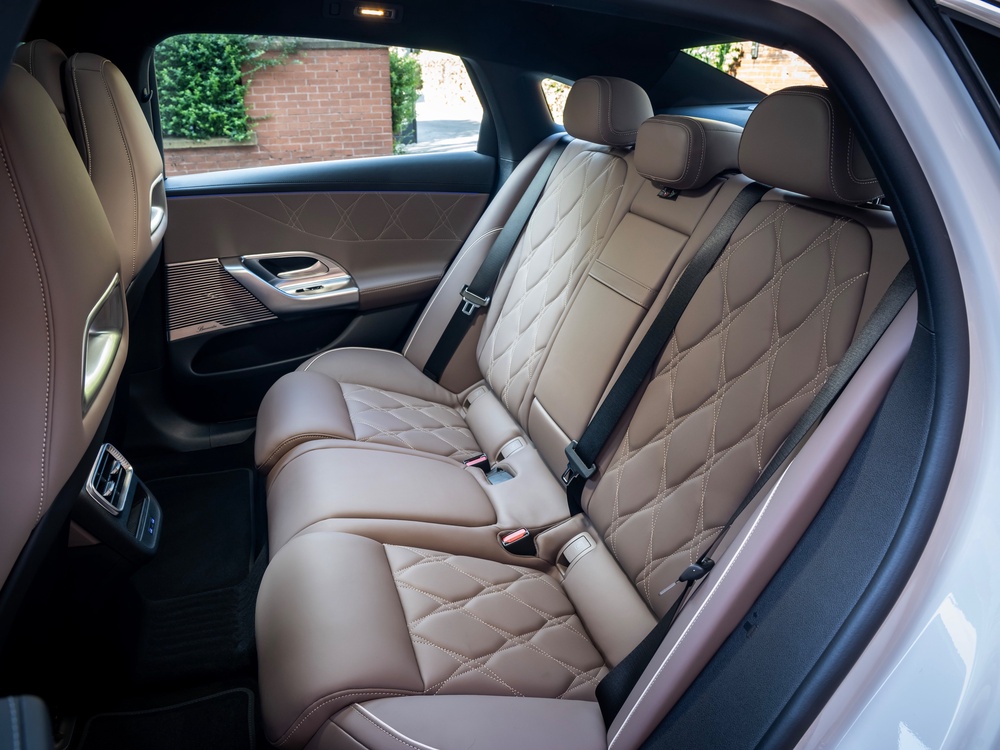
Mercedes offers quite a choice of finishes, from open-pore wood and natural-fibre trim to leather and a separately certified vegan interior. The latter isn’t simply a leather-free seat covering: the Vegan Society certification extends to the soft-touch materials used for the seats, headlining, pillars, door panels and carpets. Depending on specification, the colour choices include black, brown and beige, with more elaborate stitching and Nappa leather among the alternatives.
The standard front seats are heated and electrically adjustable, while the more elaborate seat options add memory settings, ventilation and massage. The high-end seats have adjustable lumbar support and can provide massage across the backrest, while sports seats offer more lateral support. There’s plenty of scope to change the seating specification without assuming every feature is included on every version.
Space in the back is less generous than I’d hoped, particularly for your feet. Put the front seats in a low position and there’s nowhere to slide your toes underneath them, leaving rear passengers with a more restricted seating position than I’d like. It’s the sort of detail that doesn’t show up in a photograph of a spacious-looking cabin, but does when you actually sit in it.
That’s despite a 2,962mm wheelbase, which is 97mm longer than in the combustion-engined C-Class. Mercedes quotes an extra 12mm of front legroom, together with 22mm more headroom in the front and 11mm in the rear. The standard panoramic roof contributes to those headroom figures, but extra space above you doesn’t solve the problem down by your feet.
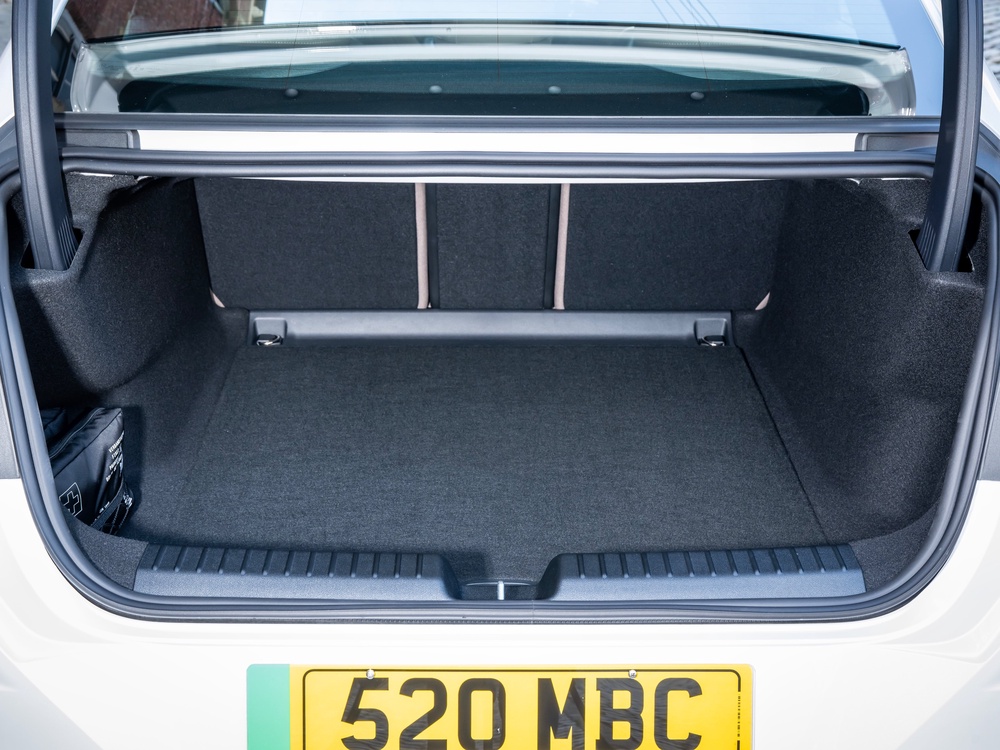
The boot is okay rather than anything more remarkable, with 470 litres of capacity and a through-loading facility for longer items. There’s also a useful front compartment under the bonnet, which Mercedes measures at 101 litres. That provides somewhere separate for charging cables or a small bag, rather than having to put everything in the main boot.
In Sport form, the car measures 4,883mm long, 2,066mm wide and 1,503mm high – useful numbers to have in mind for your own garage or parking space. The optional rear-wheel steering helps with manoeuvring, but it doesn’t make the body any narrower.
Up front, there are two separate cupholders and, depending on trim level, up to two ventilated wireless phone-charging trays. The optional Sky Control roof lets you switch nine individual sections between clear and opaque, so there’s a practical side to the glass above your head as well as the opportunity to illuminate all those stars. I’m rather more interested in controlling glare than adding to Mercedes’ collection of logos.
Technology, stereo and infotainment
There’s a distinction to make between technology that’s difficult to use and simply having an awful lot of it. The C-Class Electric falls into the second category. Its screens and systems are relatively easy to operate, and easier than many I’ve used, but the number of themes, driving modes, colour schemes and soundscapes means you could spend a day getting to know everything.
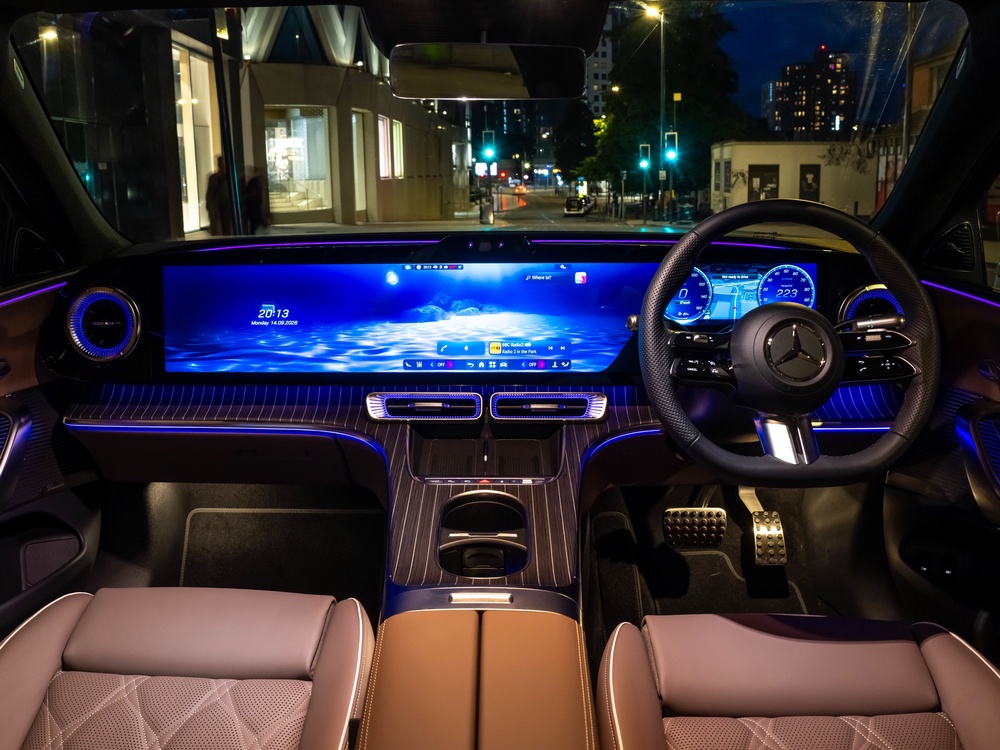
The headline option is the 39.1-inch MBUX Hyperscreen, a single display stretching across the dashboard. Mercedes also offers the MBUX Superscreen, which puts three separate displays beneath one continuous glass surface. They’re different arrangements, despite names that sound like successive levels in a computer game.
The Hyperscreen uses more than 1,000 LEDs for its backlighting and allows the brightness of the driver and passenger areas to be adjusted separately. Camera-based technology can also shield passenger entertainment from the driver’s view. It’s all very clever, but I still find myself asking whether a Mercedes really needs quite this much screen.
At least there are useful physical controls alongside it. The centre console has buttons and a volume roller, while the steering wheel gets another roller and a rocker switch for the cruise control and speed limiter – technology is easier to live with when there are straightforward ways of doing the things you use most often.
Then there’s the decorating. Eleven display themes coordinate the graphics and ambient lighting, while the optional active lighting can react to your music turning your Mercedes into a mobile disco. Really?
Specify the appropriate roof and lighting equipment and 162 stars overhead join in with your chosen colour scheme. Add the stars in the exterior lights and the whole thing starts to feel as though Mercedes has, yet again, gone star crazy.
I know you can turn the disco lights off, but should a Mercedes have them in the first place? Luxury needs a degree of restraint, and the combination of screens and coloured lighting makes this cabin feel more tacky than techy.
There are plenty of noises to choose from as well, inside and outside the car, including sounds accompanying the welcome and goodbye sequences. Again, it feels like rather too much. Calm down, Mercedes; the car underneath doesn’t need all this help.
One sound I did enjoy was the Burmester system with Dolby Atmos. It’s one of the best Burmester installations I’ve heard, with good separation, a gentle presentation and plenty of punch when required. The bass is a little too dominant for my liking, though, which stops it joining the very best systems. You’ll enjoy it, but I’d prefer the lower notes to share the room rather than take it over.
The Burmester 4D system also uses two sound transducers in each front-seat backrest, allowing occupants to feel the music, with speakers close to their ears as well. Careful with that – it can rumble all the way through to your tummy. I quickly turned it off.
Other comfort programmes combine sound, lighting and seat functions, including a 15-minute Power Nap setting. The Energizing Comfort programmes can, at least, run without their accompanying sounds, leaving you free to use your own music or podcast instead.
Behind everything sits Mercedes’ MB.OS operating system, which links infotainment, comfort, charging, driving functions and assistance systems. Over-the-air updates can add or improve software without a workshop visit. The latest “Hey Mercedes” voice assistant uses artificial intelligence to handle more complex, multi-part conversations and retain the context of what you’ve just asked.
Navigation is based on Google Maps, with Mercedes’ Electric Intelligence planning charging stops around energy use rather than simply the distance remaining. It accounts for traffic and changes in driving style, can choose between different charging-stop strategies and prepares the battery for rapid charging as you approach. The excellent augmented-reality head-up display adds navigation guidance to your view of the road, while Surround Navigation shows a digital representation of nearby vehicles, cyclists and pedestrians.
There’s wireless Apple CarPlay and Android Auto, and four USB-C sockets, split between the front and rear. The entertainment includes more than 40 apps, with personal folders for organising them, while there’s even an in-car payment system that can use the interior camera to identify you.
The safety equipment is extensive, too. Depending which model you go for, the car uses up to 27 cameras and sensors and has up to 11 airbags, including a standard front centre airbag. Distronic adaptive cruise control is standard, while the assistance packages cover steering, lane keeping, lane changes, braking and parking. These remain driver-assistance systems, not permission to stop paying attention.
Pre-Safe can tighten your seat belt to warn that you’re approaching a bend too quickly when navigation is active. Optional Digital Light headlights use micro-LED technology, with Mercedes claiming a larger high-resolution lighting area and lower energy use than its previous system. There’s no shortage of useful technology here. My frustration is that the useful bits arrive surrounded by so much unnecessary theatre.
Prices and running costs
The C-Class Electric range starts with the C 400 4MATIC Sport at £57,995, followed by AMG Line at £60,995. AMG Line Premium costs £65,995, AMG Line Premium Plus is £68,495 and the Premier Edition tops the range at £70,995. They share the 94kWh battery and 483bhp four-wheel-drive powertrain, so moving up the trim ladder isn’t buying a different motor or a bigger battery.
Even the base models are very well equipped, with heated, electrically adjustable front seats, a panoramic glass roof, LED headlights and adaptive cruise control among the features. The heat pump and 11kW onboard AC charger are included, too. There’s no need to assume that choosing the least expensive version means missing out on the basic comfort and convenience equipment.
The more elaborate screens, seat functions, audio systems and lighting are specification-dependent, so the equipment list deserves a careful look. In particular, don’t confuse the standard suspension with the optional Refinement Package, priced at £2,500, which adds the excellent Airmatic air suspension and rear-wheel steering behind that little S-Class feeling I enjoyed.
The maximum claimed range is 452 miles, but wheel and equipment choices can affect that figure. The car is designed for bidirectional charging, allowing its battery to supply energy outside the vehicle, but using it depends on compatible equipment, energy-provider arrangements and local requirements. It isn’t simply a case of plugging the car into any household socket and having it power your home.
There’s a three-year new-car warranty, with separate high-voltage battery cover lasting eight years or 100,000 miles, whichever comes first. It’s also worth checking the duration of any included Digital Extras. Some connected services are like subscriptions and need paid renewals after their initial period, while entertainment can involve separate subscriptions or data requirements.
The verdict: Mercedes C-Class Electric
The C-Class Electric has the comfortable gait and good road manners that make it feel like a proper Mercedes, especially with the Refinement Package. Quality is impressive, too, but rear foot space disappoints and the interior’s screens, lights and sound effects just need calming down. There’s a lovely luxury saloon here; I’d just rather it didn’t look like a tacky sports bar.
Mercedes-Benz C-Class Electric rivals
- BMW i3
- Polestar 4
- Tesla Model 3
FAQs
How long does it take to charge?
The C-Class Electric has a maximum DC charging rate of 330kW and a claimed 10 to 80 per cent charging time of 22 minutes at a suitable 800v rapid charger. Charging rates on 400v chargers will be much less. A full AC charge takes around ten and a half hours using an 11kW supply, while a 22kW AC charging option is also offered.
How much does it cost and is it worth it?
Prices start at £57,995 for the C 400 4MATIC Sport and rise to £70,995 for the Premier Edition. Even the base car is very well equipped, while the C 400 I drove with the Refinement Package combined impressive comfort, good body control and nicely weighted steering.
Does Polestar replace batteries for free?
Qualifying battery warranty claims are covered without charge – the C-Class Electric’s high-voltage battery has an eight-year/100,000-mile warranty, with a 70 per cent capacity guarantee, subject to conditions. The rest of the car has a separate three-year warranty.
Why trust us
Our team of motoring experts have decades of experience driving, reviewing and reporting on the latest EV cars, and our verdicts are reached with every kind of driver in mind. We thoroughly test drive every car we recommend, so you can
Read MoreThink EVs are too expensive? These 12 could blow your mind, not your bank balance
How to install an EV charger at home: Costs, grants and what to expect
Skoda Epiq review: I’ve driven the cool new electric SUV, but is it epic?
Leapmotor B03X review: I drove the new electric SUV with 237 miles of range that’ll improve with age
Bentley ploughs on with electric Luxury Urban SUV plans
BMW iX3 review: Is this new electric SUV with 500-mile range a game-changer?
This fast-charging EV can have an almost-full battery in under 10 minutes
Volkswagen ID. Cross review: Small electric SUV feels impressively polished and properly posh