
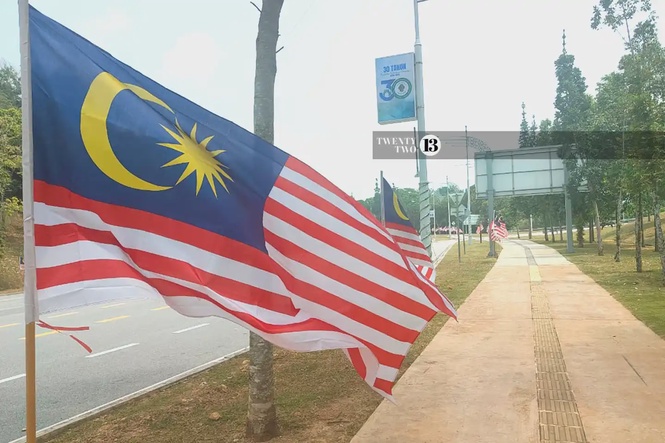
As another Merdeka approaches, I find myself thinking less about the change of flag that took place in 1957 and more about the change of mindset that independence should have brought with it.
For me, Merdeka cannot simply mean that we were once governed by foreigners and are now governed by those among us. If independence merely changed the identity of those exercising power, then we have understood only part of its meaning.
Merdeka should also have changed the way we think about power and government.
Under colonial rule, the people were essentially subjects of an administration whose ultimate authority and interests lay elsewhere. Independence fundamentally changed that relationship.
Those who govern us today come from among us, are chosen through our own political processes and exercise power on behalf of the nation. The government must therefore belong to the people, rather than the people being expected to belong to the government.
This is why I believe we must always guard against creating our own political elite that becomes increasingly divorced from the aspirations and everyday realities of ordinary Malaysians.
We lived for generations under colonial rulers whom the people could not remove simply because they were dissatisfied with the way they were governed. It would be a strange understanding of Merdeka if, after achieving independence, we allowed ourselves to become similarly stuck with our own leaders merely because they have occupied positions of power for a long time.
No leader or political party should acquire a sense of permanent entitlement to govern. Past contributions deserve recognition, but they cannot become a lifetime licence to exercise power.
If leaders govern competently and retain the confidence of the people, they should continue to receive support. If they become incompetent, corrupt, arrogant or disconnected from the people, our democratic system must allow citizens to replace them peacefully.
This also means that we should become more demanding about the quality of government. Merdeka should not merely give us Malaysian leaders; it should give Malaysians the confidence to expect good leadership.
We should expect transparency in decision-making, accountability in the exercise of public power and proper explanations for important policies.
Citizens are entitled to know how public money is spent, why major decisions are taken and whether those entrusted with authority are producing results.
Competence is equally important. Good intentions, patriotism and political popularity cannot compensate for an inability to govern. Governments must understand the problems confronting the country, formulate sensible policies and have the administrative capacity to implement them.
Ultimately, citizens experience government not through political speeches but through the economy, employment, education, healthcare, public safety, infrastructure and their ability to build a reasonably secure future for their families.
There is another measure of good government that I believe is particularly important in a diverse country such as ours: whether citizens genuinely feel that they belong.
Citizenship must mean something. Malaysians should not constantly be made to feel that their place in their own country depends on their ethnicity, religion, language or usefulness to a particular political cause.
Our differences are real and should not be denied, but responsible leadership should help us live confidently with those differences rather than repeatedly exploiting them.
Colonial governments were often accused of using variations of “divide and rule” to maintain political control. Surely one lesson of Merdeka must be that an independent nation should not reproduce the same instinct for political purposes.
Racial and religious anxieties may sometimes be useful in mobilising political support, but what helps politicians remain in power does not necessarily help a nation remain together. Leaders who genuinely believe in Malaysia should be creating a stronger sense of common citizenship, not constantly searching for divisions that can be converted into votes.
There is also a more personal dimension to Merdeka that I think deserves greater discussion. What is the meaning of national independence if citizens themselves are not given reasonable space to live their lives with dignity and make legitimate personal choices?
The government obviously has a responsibility to maintain order, protect rights and safeguard the interests of society. However, there must be limits to the extent to which the state, institutions or other people interfere in matters that properly belong to individuals.
This is particularly important in questions involving conscience and religion.
Faith has meaning because it involves conscience and conviction. A mature society should therefore be cautious about coercion in matters of personal belief. Citizens should have reasonable space to think, question, believe and make personal choices, provided that, in exercising their freedoms, they respect the rights of others and the legitimate requirements of the law.
For me, this is also part of the mindset of Merdeka. Independence should produce citizens who are capable of thinking and making responsible choices, rather than people who are constantly treated as though they must be told what to think, what to believe and how every aspect of their lives should be lived.
The proper role of government is to create conditions in which citizens can flourish with dignity, while intervening only where genuinely necessary to protect society and the rights of others.
Perhaps we should therefore think of Merdeka as involving a transition not only from colonial rule to self-government, but also from the mentality of subjects to the confidence of citizenship.
Citizens should respect lawful authority, but they must also understand that they have the right to question those who exercise power, demand accountability and, through democratic processes, replace leaders who no longer deserve their confidence.
Malaysia is larger than any prime minister, government, political party or generation of leaders. We should respect those who serve the country and acknowledge their contributions, but we should never create a political culture in which leaders become an elite class that considers itself indispensable to the nation.
As we celebrate Merdeka today, perhaps the question is no longer simply whether we have freed ourselves from colonial rule. We should also ask whether we have sufficiently freed ourselves from the colonial mindset of governance.
To me, the continuing promise of Merdeka is a country where power is understood to be temporary, leaders remain accountable, citizenship is respected, diversity is not exploited for political survival, and Malaysians are given the space to live with dignity and participate confidently in determining the future of their own country.
The views expressed here are the personal opinion of the writer and do not represent those of Twentytwo13.