
Britain must cut benefits and invest billions of pounds in job schemes to tackle the youth unemployment crisis, the author of a Government-commissioned report has said.
In a 267-page document published on Tuesday, Alan Milburn set out measures to lower the number of Neets (people aged 16 to 24 not in employment, education or training) by more than half from 13.4% to around 6.8% by 2036.
But in a challenge to ministers, Mr Milburn said Britain should aim to reach a 5% Neet rate, which he dubbed “Neet Zero”.
Under the former Labour cabinet minister’s plan, under-25s would stop being eligible for the disability benefit personal independence payment (Pip) and the health element of universal credit (UC), with a new “youth allowance” proposed instead.
Mr Milburn has also recommended giving employers up to £7,000 for hiring under-25s who have been a Neet for six months and lowering employer National Insurance contributions over a five-year period for workers aged 21 to 24.
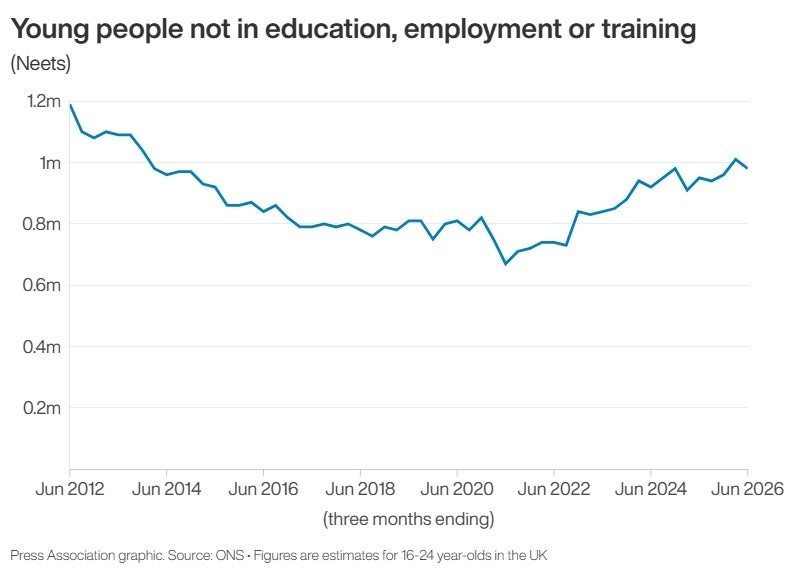
The number of Neets topped a million earlier this year for the first time in more than a decade.
Read MoreMilburn calls for ‘entirely new’ benefits system to cut £13bn. Here’s what could change
The key takeaways from Milburn report into UK’s youth unemployment crisis
Key Points
- Milburn review calls for youth unemployment to be cut to ‘Neet Zero’ in a decade
- What does the Milburn review into youth unemployment conclude?
- National Insurance hikes have contributed to youth unemployment
- Analysis: Today is the day Burnham may have to start taking tough decisions
- Proposed welfare cuts will prove ‘controversial’, experts warn
Likelihood of becoming a Neet can be predicted at 4 years old
12:00 , Holly EvansAlan Milburn said it is “one of the tragedies in this country” that you are able to predict who will become a Neet from the age of four or five years old.
He said: "Change should begin before a young person ever becomes NEET. It's one of the tragedies in our country that you can predict with reasonable accuracy at the age of 4 or 5, who will be NEET at the age of 16 or 17."
He said this is due to “poverty and disadvantage”, and called for more support to be given to parents.
Youth unemployment is a 'moral crisis', Milburn says
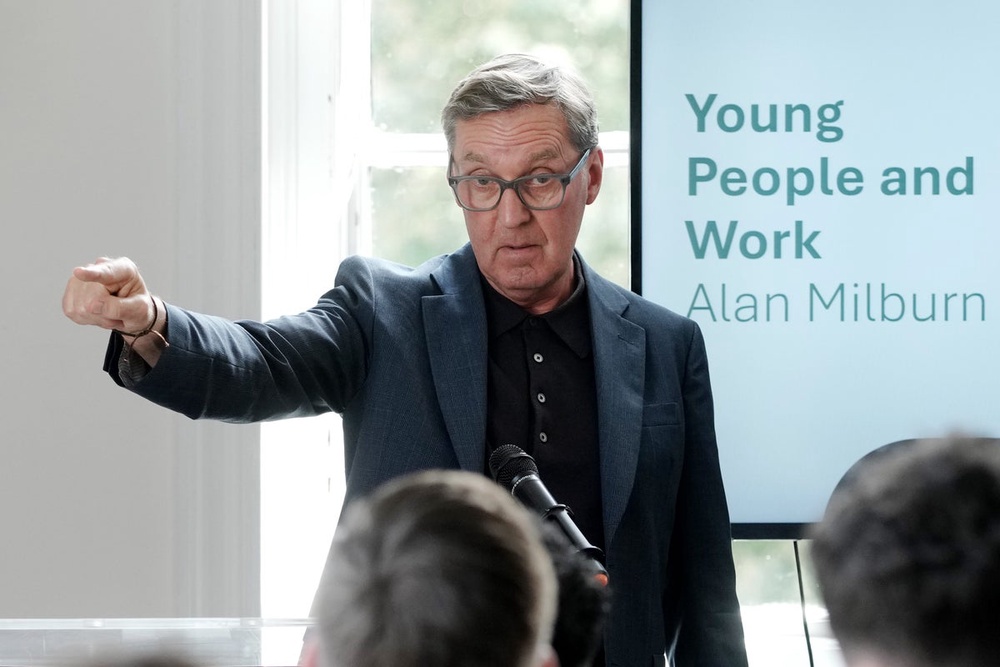
11:55 , Albert TothLaunching his report, Alan Milburn says he has “just come from cabinet”, thanking the prime minister and his team for giving him the “freedom to follow the evidence wherever it has led”.
He said: “Britain is at risk of losing a generation of young people.
“Not because they lack talent, not because they lack ambition, not because they do not want to work. This is not a crisis of aspiration; it is a crisis of opportunity. Nearly 1 million young people now outside education, employment, or training – one in eight – and rising.”
“A lost generation is not a fact of life; it's a choice, and I believe it's the wrong one. Not just because it's a fiscal crisis or an economic one, but because it's a moral crisis.
“We are failing as a nation to gift young people, the next generation, the opportunities they need to succeed.”

Milburn dismisses notion of 'snowflake generation'
11:52 , Holly EvansAlan Milburn has taken to the stage after unveiling his landmark report into the Neets crisis of youth unemployment.
He began by dismissing the notion that 16 to 24-year-olds were part of a “soft generation or a snowflake generation”.
“It’s a generation full of potential, full of aspiration and it should be full of hope,” he said.
How much would the recommendations cost?
11:48 , Holly EvansThe former health secretary has called on the government to invest half a billion in the next year to kickstart his recommendations to create job opportunities.
He has said the savings could be made through reprioritisation of existing spending, and that the government must make “choices” to focus on young people.
By the end of the 10 years, this would ramp up to £5.6bn of annual investment, which would be offset by these savings.
How could employers improve the Neets crisis?
11:44 , Holly EvansAlan Milburn said he wants to see employers given more incentives to hire young people, while also committing to guarantees to do so.
To that end, bosses would be offered between £3,000 and £7,000 for hiring those who have been Neets for six months.
The report also recommended lowering the rate of national insurance contributions for employees between 21 and 24 over a five-year period, with retail and hospitality prioritised for the tax cut.
If the policy was adopted by the Government, it would be a partial U-turn on a tax hike introduced by Rachel Reeves when she was chancellor.
In return for the extra support, the Government should also ask employers to do more on their part to solve the Neets crisis and should also lead by example and hire more young people in the public sector.
Milburn calls for ‘entirely new’ benefits system to cut £13bn. Here’s what could change
11:40 , Holly EvansA major government-backed report has called for an “entirely new” benefit system to tackle the rising number of under-25s not in education, employment or training (Neet).
Alan Milburn’s review into young people and work has presented its findings, outlining how spending on welfare and employment support should be rebalanced to boost economic activity.
Speaking on Tuesday, he said: “A lost generation is not a fact of life. It is a choice. And I believe it is the wrong one.
“It is time for a new settlement that makes work not welfare the future for the next generation.”
Read the full analysis from Albert Toth here:
Milburn calls for new benefits system to cut £13bn. Here’s what could change
Milburn: Benefits must be overhauled for young claimants
11:37 , Albert TothAlan Milburn’s report proposes an “entirely new benefit system for young people”, with a so-called youth allowance replacing both the health element of universal credit (UC) and personal independence payment (Pip) for 16 to 24-year-olds.
The new system would give every young person a legal entitlement to a route into education, training or work, and a guarantee of support to get the health, employment, functional and practical help they need to get into and stay in work.
Savings in welfare would begin by the end of this Parliament in 2029/30, with cumulative savings of £13.7 billion by 2036/37 – consisting of savings of £3.6 billion in that year alone.
Milburn recommends extending child disability living allowance for young people with severe needs
11:36 , Holly EvansAlan Milburn’s report recommends extending child DLA (disability living allowance) to cover children up to the age of 18 rather than 16 as it is now, “providing a two-year period to actively prepare young people for work and adult life instead of passively holding years of evidence about their condition, challenges and needs”.
The report also recommends a “more generous and long-term award” called severe and complex needs insurance, to cover those young people with the most profound and long-term disabilities, “where it is already clear they will likely never be able to work”.
While, currently, for every £25 spent on benefits £1 is spent on support to help young people into education or employment, Mr Milburn said his changes would take this down to £2 to £1 within the next 10 years.
In his report, he said: “The system I propose will spend less on compensating for economic inactivity, more on creating routes out of it; less on the consequences of failure and more on avoiding it.
“I am unapologetic about advocating that the State should spend more to set young people up for a successful life earning or learning rather than spending decades with their sole income from benefits.
“That is the choice I believe is the right one for this and future generations of young people.”
Watch: Milburn report outlines plans to help 500,000 young people into work
11:33 , Holly EvansWhat does the Milburn review into youth unemployment conclude?
11:33 , Holly EvansIn a more than 250-page report, former Labour health secretary Alan Milburn has set out his plan for whole-system change to reduce UK youth unemployment.
Here are the key points:
– Neet zero
Mr Milburn wants the Government to commit to more than halving the rate of young people not in education, employment or training (Neets) by 2036.
A drop from the current rate of 13% to 5% in 10 years from now would be “an effective rate of Neet Zero”, his report stated.
– Welfare
The report proposes an “entirely new benefit system for young people”, with a so-called youth allowance replacing both the health element of universal credit (UC) and personal independence payment (Pip) for 16 to 24-year-olds.
– Education
Half a million additional employment and education opportunities could be needed by 2036, according to the review’s modelling.
Schools should better equip pupils for the future world of work, the report stated.
– Health
The report warned that poor mental or physical health “should not become a one-way route out of education and work”.
Young people should, as a starting point, be able to get help online “through trusted channels and via the NHS app”, ensuring they get immediate advice and support rather than waiting for a diagnosis or assessment, the report said.
– Employment
Mr Milburn said he wants to see employers given more incentives to hire young people, while also committing to guarantees to do so.
To that end, bosses would be offered between £3,000 and £7,000 for hiring those who have been Neets for six months.
Young people with ADHD and autism ‘expected and enabled to be in work’
11:32 , Holly EvansYoung people with anxiety, depression, ADHD and autism will be “both expected and enabled to be in work” under new welfare reforms, the former minister behind the recommendations has said.
Alan Milburn admitted his proposed changes to tackle high youth unemployment will not be easy or pain-free, but said they will result in a welfare system than can “gift young people a future” rather than just writing them off with a cheque.
He has acknowledged some people might “get less financial support at the beginning of their benefit claim than under the current system”.
Social change organisation, the Joseph Rowntree Foundation, has estimated young people could lose out on about £50 a week if they are no longer entitled to claim the health element of universal credit (UC), and between £30 and £195 a week if they are also barred from the Pip disability benefit (personal independence payment).
According to the latest data, four in five Pip claimants who were under-25 in July 2026 had psychiatric disorders listed as their main disability – accounting for 80 per cent of all claims.
People in this group “often end up trapped on benefits, when under the new system they would be both expected and enabled to be in work”, the report said.

Proposed welfare cuts will prove ‘controversial’, experts warn
11:31 , Albert TothAlan Milburn’s wide-ranging recommendations cover areas from welfare to employment and health.
Experts have largely welcomed proposals to boost targeted career support for young people, but warn that the trade-off in reduced welfare spending may be a hard pill to swallow.
Ruth Curtice, chief executive of the Resolution Foundation, said that the recommendations “rise to [the] challenge” of the Neet crisis, but adds that the proposed welfare forms are “likely to be the most contested aspect”.
“The biggest winners may well be those already in work, while those with health conditions who struggle to work could lose out,” she said.
George Bangham, head of social policy at NEF, similarly said that there is “much to welcome” in the review, but added that “the positives risk being overshadowed by his argument for cuts to health and disability benefits.”
He said: "There is little evidence that health benefits are too generous or that they are driving young people out of work, while cutting them is likely to push people into poverty and make it harder for them to find work. Cuts to benefits also don’t solve the fundamental problem that there aren’t enough opportunities for young people.”
While the government is understood to have been in close contact with Mr Milburn as he finalised his report, ministers have not yet revealed which aspects of it they will commit to bringing into law in the future.
Schools should be judged on whether pupils are ‘work-ready’
11:31 , Holly EvansSchools in England should be judged on whether their pupils make successful transitions into further learning and work, a major report has urged.
The Government should introduce a new performance measure to hold schools to account on where young people end up once they have left, a landmark review on youth unemployment has suggested.
The introduction of a “ready-for-work” standard – inspected by Ofsted – and “strengthened” school destination measures are among the recommendations in former Labour minister Alan Milburn’s report.
But headteachers’ unions have warned that increased accountability measures could place “more pressure” on an overwhelmed system and schools risk being judged on factors “beyond their control”.
The review said schools, colleges and universities should “increasingly be judged” not simply for qualifications achieved, but by the destinations and sustained outcomes they help their students achieve.
It comes after the number of young people across the UK not in education, employment or training – known as Neets – topped a million earlier this year for the first time in more than a decade.

Milburn review calls for youth unemployment to be cut to ‘Neet Zero’ in a decade
11:30 , Holly EvansYouth unemployment should be cut to “Neet zero” within a decade, a wide-ranging review by an influential Labour former minister has said.
Alan Milburn, who has led a year-long investigation into how to tackle the high number of under-25s not in employment, education, or training (Neets), urged the Government to rapidly commit to the ambition if it is serious about the issue.
The number of Neets topped a million earlier this year for the first time in more than a decade.
One-time Labour health secretary Mr Milburn has previously warned the figure could rise from one in eight to one in six by 2031 without action, representing 1.25 million young people.

He has also warned his proposals would not be “pain-free”, giving a candid warning that they could lead to some people getting less financial support.
In a challenge to ministers, he said Britain should aim to go further and set a new national ambition for a 5% Neet rate, which he dubbed “Neet Zero”.
Mr Milburn said: “I believe we should set ourselves a new national ambition: every young person should be learning, earning or actively participating.
“By 2036, the United Kingdom should aim to reduce the Neet rate to around 5% and become one of Europe’s best-performing countries for youth participation. That will be an effective rate of Neet Zero. Full youth participation. Full employment and full education for the young. The end of long-term youth unemployment.”
Alan Milburn publishes Neets report
11:30 , Holly EvansAlan Milburn has published his much-awaited report into young people not in employment, education or training, known as Neets.
Separately, Mr Milburn himself is due to speak at around the same time and will take questions from the media.
We’ll bring you all the latest information.
Young people 'bear the brunt' of weak hiring rates
11:26 , Holly EvansNaomi Clayton, chief executive at the Institute for Employment Studies, noted that young people “bear the brunt” of weak hiring rates in the UK.
Ms Clayton said: “With the final Milburn report published today, the anticipated focus on the demand side and the role of employers is welcome.
“Young people need more opportunities, clearer pathways into work and tailored support to help them gain their first foothold in the labour market.”
Unions have also welcomed the recommendations in the report, with TUC general secretary Paul Nowak calling them “a generational chance to fix the Neet crisis” by investing in young people.
Business and union bosses welcome ‘bold’ report on youth unemployment crisis
11:06 , Holly EvansBusiness and Union leaders have heralded the “bold, practical intervention” recommended by a Government-commissioned report on youth unemployment, which offers a “generational chance” to fix the crisis.
The report, authored by former Labour cabinet minister Alan Milburn, will recommend changes across education, industry and social security to address the problem of 16- 24-year-olds not in education, employment or training (Neet).
The reported recommendations include gradually cutting national insurance paid by businesses on workers aged under 25, starting in retail and hospitality, as well as a “legal guarantee” of work, training or employment support for young people, with those who refuse to take up the offer potentially losing benefits.
With the report set to be published at 11.30am on Tuesday, industry leaders have begun to respond to the report.
Andy Spencer, chief executive of Punch Pubs, said: “This is exactly the kind of bold, practical intervention we need if we are serious about getting more young people into work.
“Pubs have always been a gateway into employment, giving people that vital first opportunity to earn, learn new skills, build confidence and take their first steps towards a rewarding career.
“Reducing the National Insurance burden for employing 21 to 24-year-olds would give pubs and hospitality businesses greater confidence to recruit and invest in young people at a time when employment costs are putting those opportunities under increasing pressure.”
What to expect from the Milburn report into UK’s youth unemployment crisis
11:02 , Holly EvansThe government-backed report into young people and work will be released on Tuesday, officials have confirmed, as several of its key recommendations are revealed.
Led by former health minister Alan Milburn, the report lays out steps to tackle the rising number of young people not in education, employment or training (Neet) in the UK, which currently sits at around one million.
Sweeping changes to the benefit system and improved employment support are central to the proposals, which ministers will be expected to set into action during this parliament.
Read the full article here:

What to expect from the Milburn report into UK’s youth unemployment crisis
Job vacancies fall to lowest level outside Covid era for 12 years, figures show
10:37 , Holly EvansThe UK’s unemployment rate has dropped again unexpectedly, but vacancies tumbled to the lowest level outside of the pandemic era for 12 years in a sign of the pressures facing job hunters.
The data comes as a long-awaited report into youth unemployment by former Labour health secretary Alan Milburn is being published on Tuesday outlining major reforms to tackle rising numbers of young people across the UK not in education, employment or training – known as Neets.
Sectors such as retail and hospitality, leisure and construction in particular have pulled back on hiring, with the industries knocked by Labour’s move last year to hike national insurance contributions and increase the minimum wage, sending staff costs soaring.
Former Tory leader says Burnham will have to 'get on top of' welfare bill
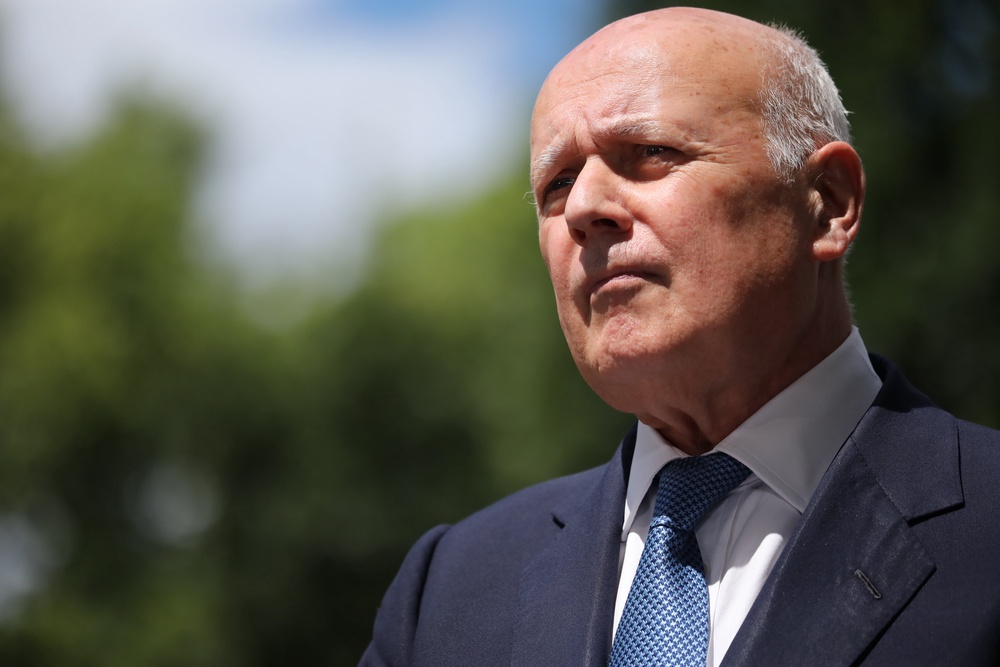
10:20 , Holly EvansFormer Tory leader Sir Iain Duncan Smith has said the government “need to get on top” of the spiralling welfare bill, and said that a 10-year-plan is too long to implement.
He told Times Radio: “I think 10 years is far too long for all of this. We have to see a reduction in that because the cost on taxpayers and those in work and in businesses is enormous just to fund the existing cost.
He added: “The government has got to get on top of this and they’ve got to be honest to their backbenchers. Covid punched a hole through all of this, when I left we had the lowest record of workless households since records began, we had youth unemployment down to pretty much record levels, long term unemployment had almost collapsed.
“That’s all been reversed through Covid. We can understand why but it’s trying to get back on top of that but it requires tough decisions on how you spend and where you’re going to have to see the savings.”
Mr Duncan Smith, who also serviced as secretary for work and pensions until 2016, said that Andy Burnham’s government were braced for backlash from backbench MPs who sit to the left of the party.
“The question is, the government is really worried about what backbenchers will do, what Labour backbenchers will do. The Conservative party has already said that if they have to make tough decisions on welfare, they will support them in that regard.”
'A few hours of work rather than doomscrolling', Milburn urges
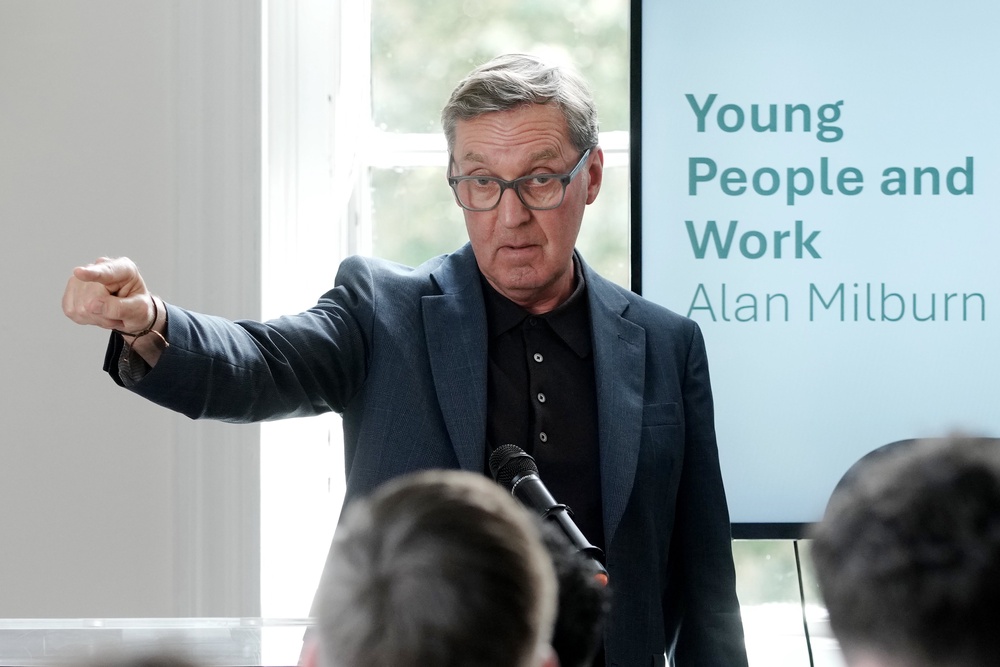
10:00 , Holly EvansAlan Milburn has previously warned the Neet figure could rise from one in eight to one in six by 2031 without action, representing 1.25 million young people.
It estimated the crisis is costing the UK around £125 billion a year – taking in factors including losses in taxes alongside higher health and welfare spending.
“I think, honestly, if you can work a few hours a week rather than working none and doomscrolling in your bedroom, that’s a step forward,” he said.
“In the end, for the vast majority of young people, work beats welfare every single time.”
National Insurance hikes have contributed to youth unemployment
09:47 , Holly EvansMr Milburn acknowledged policies introduced since Labour came into office in 2024 had contributed to the Neet problem by making it more expensive to hire younger workers.
The Government has pushed up national insurance costs for employers and increased the minimum wage for younger workers at a faster rate than that for older employees.
Mr Milburn said: “Well, there’s no doubt that that has hit business sentiment. Absolutely, no doubt at all… Employers have come to me and said that that has made it harder.”
Other reported recommendations include gradually cutting national insurance paid by businesses on workers aged under 25, starting in retail and hospitality, as well as a “legal guarantee” of work, training or employment support for young people, with those who refuse to take up the offer potentially losing benefits.
Pension provider warns Neets is a retirement crisis
09:42 , Holly EvansA pension provider has warned that the number of young people out of eduction, employment or training - known as Neets - is putting pressure on the state pension.
Maike Currie, VP Personal Finance, PensionBee said: “This is as much a pension issue as it is an employment crisis. The interim report estimates that the growing number of young people outside work, education or training is already costing the Treasury £3.2 billion a year in lost income tax and National Insurance contributions. That’s valuable money lost at a time when an ageing population is already putting growing pressure on the State Pension.
“Milburn estimates in the interim report that spending just one year out of work or education between the ages of 18 and 24 can cost a young person £52,000 in lifetime net earnings.
“But lost earnings are only part of the picture - time spent out of work can also leave a lasting dent in long-term pension provision.”
Milburn warns of need to ‘course correct’ after Labour National Insurance rise
09:23 , Kate DevlinAlan Milburn has warned of the impact Labour chancellor Rachel Reeves’ National Insurance hikes have had on the youth labour market.
He told LBC: “I understand why they did it because of the fiscal position that we're in. But there's absolutely no doubt that it's had an impact on the youth labour market... We need to course correct.”
Unemployment figures are a 'mixed picture', ONS director says
09:03 , Holly EvansThe ONS figures showed unemployment among 16-24 year-olds eased back to 15.1 per cent in the latest three months, but that the inactivity rate for those not in work or full-time education remained high at 20.8 per cent.
Liz McKeown, ONS director of economic statistics, said it was a “mixed picture overall”.
She added the drop in vacancies was “concentrated in smaller businesses, which report that increased labour and operating costs are affecting their hiring decisions”.

“Meanwhile, regular wage growth slowed, driven by a fall in public sector wage growth, as the recent impact from the timing of pay awards has started to drop out of the numbers,” she said.
Martin Beck, chief economist at WPI Strategy, said the numbers showed that outside of the pandemic years, vacancies were now at their lowest level since 2014.
He said: “The problem isn’t that businesses are firing workers. It’s that they’re increasingly reluctant to hire them.”
Charities voice concern over cuts to disability benefits
08:52 , Holly EvansStatistics out earlier this month showed just under half (45.3 per cent) of Neets were classed as disabled in the year to March – a proportion which has more than doubled in just over a decade.
Charities have voiced concern at the idea of cutting benefit support which is currently aimed at covering the extra costs that come with living with a disability.
Harriet Edwards from disability charity Sense said: “We share Alan Milburn’s ambition to break down the barriers that prevent young disabled people who want to work from doing so.”
But she added: “We urge the Government to provide urgent reassurance that no young disabled person with complex needs will be left worse off.”
Reform is 'not about crude cuts'
08:41 , Holly EvansAlan Milburn has insisted that his recommended reforms do not mean “crude cuts”, and that if an individual has severe needs, his view is that they should receive more support.
When asked about his recommendation to cut the two main health and disability benefits for young people, he said the new system will not mean that every young person “simply gets the basic youth allowance”.
He said the replacement for Pip will do this, and there will be a health and disability fund at a local level.
Overall, the benefits bill will fall and the amount going into employment support will rise.
"Benefits aren't improving the life chances of young people," he says as he cites figures including seven in ten Neets say they want to be in work or on training.
Watch: Milburn warns of 'lost generation' as plans to shake up benefits for unemployed young people to be revealed
08:30 , Holly EvansMilburn calls for 'fundamental reset' for country
08:22 , Holly EvansAlan Milburn has called for a “fundamental reset” for the country in order to ensure that young people enter the workplace, to avoid further unemployment rates in five years.
He told BBC Radio 4: “I think this is a crisis. I believe in young people, I don’t think the story told about them being a snowflake or a soft generation is right.
“They want a job they want to get on in their lives.
“It’s a moment of choice for the country. I don’t think half measures will do, it’s a fundamental reset for the country.”
He noted that if a young person applies for benefits between the age of 16 to 24 years old, there is a 50 per cent chance they will still be on those benefits in 15 years to come.
Labour is 'not the party of welfare and benefits', Milburn says
08:15 , Holly EvansLabour MPs must back sweeping changes to tackle the youth unemployment crisis even though welfare cuts will mean pain for some youngsters, the author of a Government-commissioned report said.
Labour MPs “have to vote for it”, Alan Milburn said. “Labour is what it says on the tin.
“It’s the party of work. It’s not the party of welfare and of benefits.”
He said he had received an “incredibly positive” response at a private meeting with Labour MPs on Monday night because they recognised there was a “moral imperative” to act, as well as the economic benefits.
“We’re writing off a whole generation. It is not inevitable. We’ve got the prospect of a lost generation.
“We can have a work generation, but that’s about making the right choices.”
Analysis: Today is the day Burnham may have to start taking tough decisions
08:09 , Holly EvansOur political editor David Maddox writes:
It has been a relatively easy first few months in Downing Street for Andy Burnham.
He has made some relatively cheap feel good retail decisions - like taking VAT off energy bills - but has punted the tougher calls down the road, mostly until after the next election.
But the Alan Milburn report today brings matters to a head.
The NEETs crisis is real, affects around a million young people and cannot be ignored.
He has to act to get young people working again and bring down the burgeoning welfare bill. Now, he has a detailed report explaining the difficult decisions he will need to make.
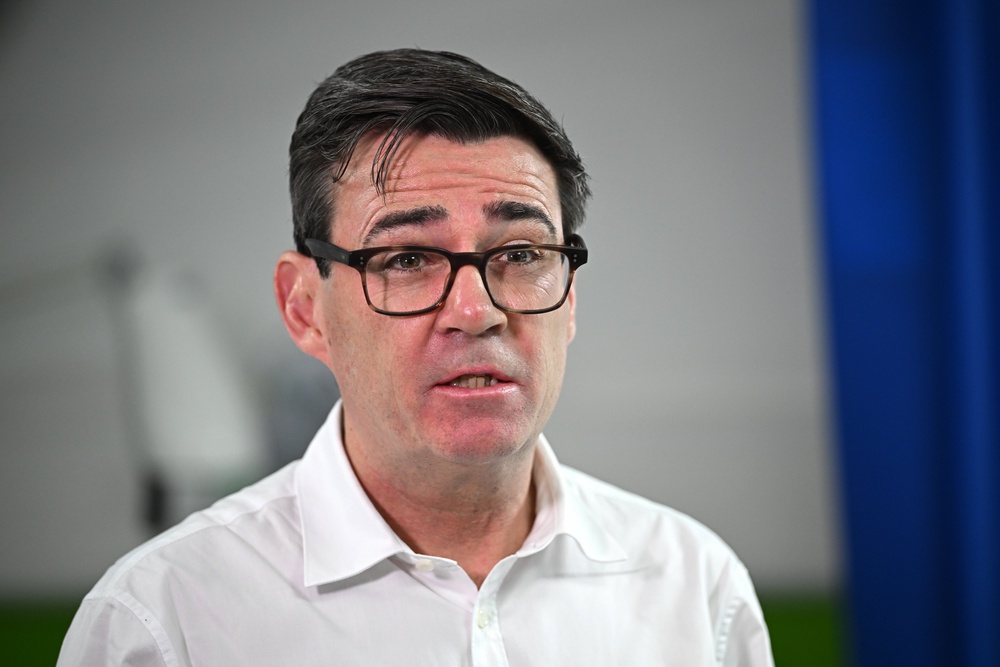
But Mr Burnham will be all too aware that his predecessor Sir Keir Starmer came unstuck over welfare.
Trying to bring down the benefits bill caused a massive backbench rebellion which eventually led to his downfall.
That is why Labour MPs installed Mr Burnham. They will not want more of the same.
So the new prime minister is going to have to deploy his famed sales skills to win over a very sceptical Labour Party if he wants to finally get a handle on this crisis.
Milburn rejects his 10-year plan will take too long to implement
08:05 , Holly EvansAlan Milburn has rejected the idea that his 10-year-long plan will take too long to implement, and has called for a “downpayment” of at least half a billion pounds.
"We’ve got to get on with it, it’s going to take time but I want to make sure every young person has a chance to earn or learn," he told BBC Breakfast.
He added: "If we do that we can end long-term youth unemployment for good."
He says to achieve this the UK will need new laws and new institutions.
DWP say they are 'determined to go further' to lower unemployment rates
07:54 , Holly EvansA spokesperson for the Department for Work and Pensions said: “Despite the difficult global backdrop, the unemployment rate is falling and the number of people in work is rising.
“We are determined to go further.
“Our £2.5 billion youth employment support will give almost one million young people opportunities to earn and learn, while wider reforms including improving Jobcentres will create a more personalised work and skills advice service for all.
“But we won’t be complacent and the Milburn Review will help shape our next steps for young people not in education, work or training.”
Some young people will be worse off initially, Milburn warns
07:48 , Holly EvansAlan Milburn, the author of the landmark report into Neets, has warned that some young people will initially be worse off, as a result of benefit cuts.
One of the former health secretary’s recommendations is to replace both the health element of universal credit (UC) and personal independence payment (Pip) for 16 to 24 year olds.
He told Sky News: “There will be some young people who are going to be worse off initially, at least as a consequence of benefit changes. In the end, the best thing for people is to get them into work.
“There are so many young people who come into the welfare system who frankly shouldn’t bet here.
“It’s not inevitable that if somebody has anxiety or depression or mild ADHD we should be saying to them as the first question we are asking them ‘what can’t you do?’. We should be asking them what can they do. What opportunity can we give to you?
“We need a revolution in the welfare state, we need a working state and more help to young people to get into work, rather than keep them on benefits.”
'We're at risk of a lost generation,' Milburn says
07:39 , Holly EvansSpeaking on Sky News, former health secretary Alan Milburn said: “We found that there are a million young people not in eduction employment or training and and they don’t want to be there, they want to be in work.
“If we keep doing what we’ve been doing and keep getting what we’ve been getting, unfortunately we forecast that in five years time, unless things change, that will be 1.25 million young people.
“We’re at risk of a lost generation, but this is a choice. It’s not inevitable, I know it’s become a fact of life but these things aren’t inevitable.”
He added: “When I’ve been to other countries in the world, particularly northern Europe, Holland or Belgium, they’ve got their Neet rate down to about five per cent.
“They’ve made a different choice. It’s not that they’ve got better young people, they’ve made better choices and they’ve decided to prioritise young people.”

What are Neets?
07:23 , Holly EvansA young person is considered Neet if they are:
- unemployed, looking for work; or
- economically inactive, not actively looking for work, and not waiting to start a job or caring for family
Those in formal education, undertaking an apprenticeship or in part-time work are not considered to be Neet.
There are now 981,000 young people aged 16-24 with Neet status in the UK, according to data from the Office for National Statistics published on Thursday. This is equivalent to 13 per cent of all people aged 16 to 24.
Unemployment falls to 4.6%
07:17 , Holly EvansThe rate of UK unemployment fell to 4.6 per cent in the three months to September, the Office for National Statistics said.
UK average regular earnings growth fell to 3.5 per cent in the three months to September and was 0.4 per cent higher after taking Consumer Prices Index inflation into account.
Andy Burnham to push for welfare overhaul before next election
07:15 , Holly EvansAndy Burnham is set to bring forward new legislation to change the welfare system for young people ahead of the next election.
The prime minister is hoping to win over Labour MPs who are concerned about the cuts, which is likely to include moving young people off the two main sickness and disability benefits on universal credit and Pip.
Mr Burnham is expected to back former Labour health secretary Alan Milburn’s recommendations on these two areas, having previously agreed that the “status quo clearly isn’t working”.
He is expected to publish his plans for welfare reform early next year before pressing ahead with legislation in mid 2027.
What has Milburn proposed in his report?
Monday 16 November 2026 23:24 , Alex CroftHere are some examples of the proposals laid out by Alan Milburn in his report:
- A new benefits system for under-25s, with the Universal Credit health element replaced
- A doubling of the number of young people achieving an apprenticeship over the next decade
- Instant access to needs-based mental health support without waiting for a diagnosis, including fast-track help for young people who are NEET
- More support for parents to ensure 90 per cent of children are ‘school-ready’ by age five
- A payment of £3,000 to an employer who hires young people who have been NEET for six months, with higher payments for small businesses
Full report: Work – not welfare – is the future, Alan Milburn says as he unveils plans to end Neets crisis
Monday 16 November 2026 23:23 , Alex CroftA benefits shake-up, new apprenticeships and a £3,000 incentive for employers are among the measures proposed by Alan Milburn to help nearly half a million young people into jobs over the next decade.
The former Labour cabinet minister will publish a major report on Tuesday on the one million under-25s trapped across the UK not in education, employment or training – known as Neets – with a raft of measures aimed at making “work, not welfare, the future for the next generation”.
Campaigners have described the report as “a once in a generation opportunity” to resolve the issue which is costing British taxpayers around £125 billion a year.
However, the recommendations will represent a challenge to Andy Burnham who could face backlash from some Labour MPs who will not want to cut welfare – a rebellion which ultimately saw the downfall of his predecessor Sir Keir Starmer.
Political editor David Maddox and reporter Albert Toth bring the news:
Work – not welfare – is the future, Milburn says as he unveils Neets report
Welcome to our live blog
Monday 16 November 2026 23:22 , Alex CroftWelcome to The Independent’s live politics blog.
Former health secretary Alan Milburn has issued a set of recommendations to help nearly half a million young people into jobs over the next decade.
Among the measures are a benefits shake-up, new apprenticeships and a £3,000 incentive for employers.
Meanwhile, prime minister Andy Burnham has vowed to deepen the UK’s relationship with the EU and take on a new and more collaborative approach to foreign policy in a major speech at the Lord Mayor’s banquet.
Stay with us as we bring you all the latest updates throughout the day.