Milei proposes banning central bank from financing government spending to strengthen monetary discipline.
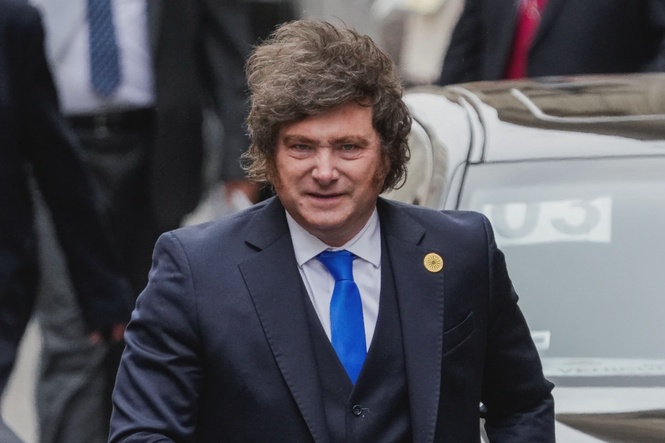
BUENOS AIRES: Argentine President Javier Milei announced plans on Thursday to reform the country’s central bank, banning it from financing government spending in a bid to strengthen monetary discipline.
Milei campaigned on a pledge to revive the economy by slashing public spending and reining in inflation, but the austerity measures imposed by his government have been deeply unpopular, prompting frequent protests.
Since Milei took office in December 2023, inflation has dropped from triple digits to the current 33.5%.
Milei said in a televised address that, under his proposed bill, “The fundamental mission of the central bank once again becomes preserving the value of the currency.”
“Financing of the state is categorically prohibited. This applies both to the National Treasury and to provincial and municipal governments, as well as to any purchase of national government bonds on the primary market,” Milei said.
The Argentine leader criticized previous administrations and said that “the central bank has been a tool that made possible the theft perpetrated by the political elite.”
The reform also seeks to make it harder to remove the institution’s leadership, so that its president and the board of directors will be shielded from political abuse, Milei said.
The announcement came after International Monetary Fund managing director Kristalina Georgieva hailed Argentina’s improved economic standing during a visit to the country this week.
Georgieva said Argentina’s “much stronger position… is a result of the hard work of the government,” as well as “the sacrifice of the Argentine people.”
Despite lower inflation, growth remains sluggish and well under the IMF’s forecast of 3.5% in 2026, with 0.2% growth year-on-year.
Milei also unveiled on Thursday a bill that will shut down the government in the event of a prolonged fiscal deficit.
“If the fiscal balance is in deficit for several consecutive months, Congress will have a few weeks to bring the accounts back into balance. If it does not do so, the shutdown will automatically come into effect,” he said.
A shutdown would halt non-essential state activities, freeze new expenditures and the awarding of contracts, with lawmakers and senior members of the executive branch not receiving a salary, according to Milei.
Economist Daniel Marx, director of the consulting firm Quantum, said Milei’s plans to reform the central bank seek to reduce the financial turbulence expected ahead of the 2027 presidential election.