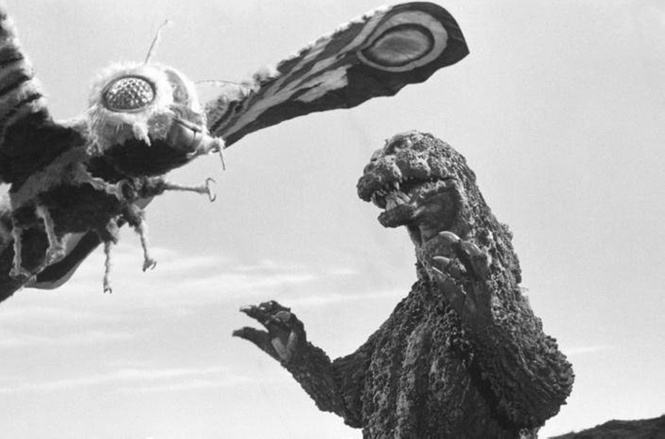
Godzilla’s appeal is enduring. It can be satisfying to see all kinds of unusual kaiju emerge from the skies and seas and face off with each other but there’s also something inherently compelling when it comes to this Japanese cultural icon.
The Japanese “Godzilla” films are inventive and unique; most of the time it has something to say about government, bureaucracy, nature, and the heroism of everyday people and underdogs. Add to that the recurrent themes of rebuilding, and creating a better world or being better people.
Godzilla emerged in the wake of the bombings of Hiroshima and Nagasaki, at the tail end of World War II with all its trauma and destruction. The first Godzilla movie, “Gojira,” was released 72 years ago in November of 1954. Since then, Toho has released 33 Godzilla films. (I’m not a fan of how the US does Godzilla movies, they’re not part of this count).
Those Toho films have assembled a “rogue’s gallery” of other kaiju — like the legendary mega-moth protector of Infant Island, Mothra, the three-headed King Ghidora, the extra-terrestrial cyborg, Gigan, the Pteranodon-like Rodan, the ankylosaurus-like Anguirus, and the genetically engineered mutant plant, Biollante.
In the Godzilla movies, you never know if it’s just intent on destroying parts of Japan or if it will actually save Japan from threats. (Japan uses a non-human gender neutral pronoun to refer to Godzilla.)
Godzilla has inspired so many movies. Guillermo del Toro’s “Pacific Rim” is my favorite. The Jurassic Park movies, Bong Joon-ho’s “The Host,” the UK’s rip-off “Gorgo” and the silly “D-War” all have Godzilla to thank.
Now, audiences can enjoy five Godzilla films representing different eras in the franchise, as Godzilla Film Festival is running selected SM Cinemas until October 20. The featured films are: “Mothra vs. Godzilla” (1964), “Godzilla vs. Biollante” (1989), “Godzilla 2000: Millennium” (1999), “Godzilla: Final Wars” (2004); and “Shin Godzilla” (2016).
I’ve seen three of films in the slate. The “Mothra vs. Godzilla” is fantastic and wonderfully bizarre, especially with twin priestesses who communicate with Mothra.
When I saw this on TV as a child, I was mesmerized by the action, destruction and fighting kaiju. When I became a teenager, I found the use of miniatures and a stuntman in a heavy suit silly, but in 2026, I am eating this stuff up all over again. With relish.
“Shin Godzilla,” the newest in the line-up, may be more modern but it still tackles the same themes. It also still uses miniatures, but has replaced the stuntman in a suit with a very tactile animatronic Godzilla.
“Shin Godzilla” has touches of satire and made me think of “Digger” and “Oppenheimer” (mostly men sitting around tables thinking some form of annihilation as the way to solve a problem).
“Godzilla: Final Wars” was the movie made for its 50th anniversary and it has got touches of “The Matrix.” There are fight scenes between human characters, and there are lots of fights between Godzilla and a thrilling assortment of kaijus. The suit actor for this one, thankfully had to deal with a much lighter suit compared to that of early iterations.
On November 4, the highly anticipated “Godzilla Minus Zero” will be out on Imax and regular cinemas and there’s new buzz regarding the “Shin Godzilla” sequel.