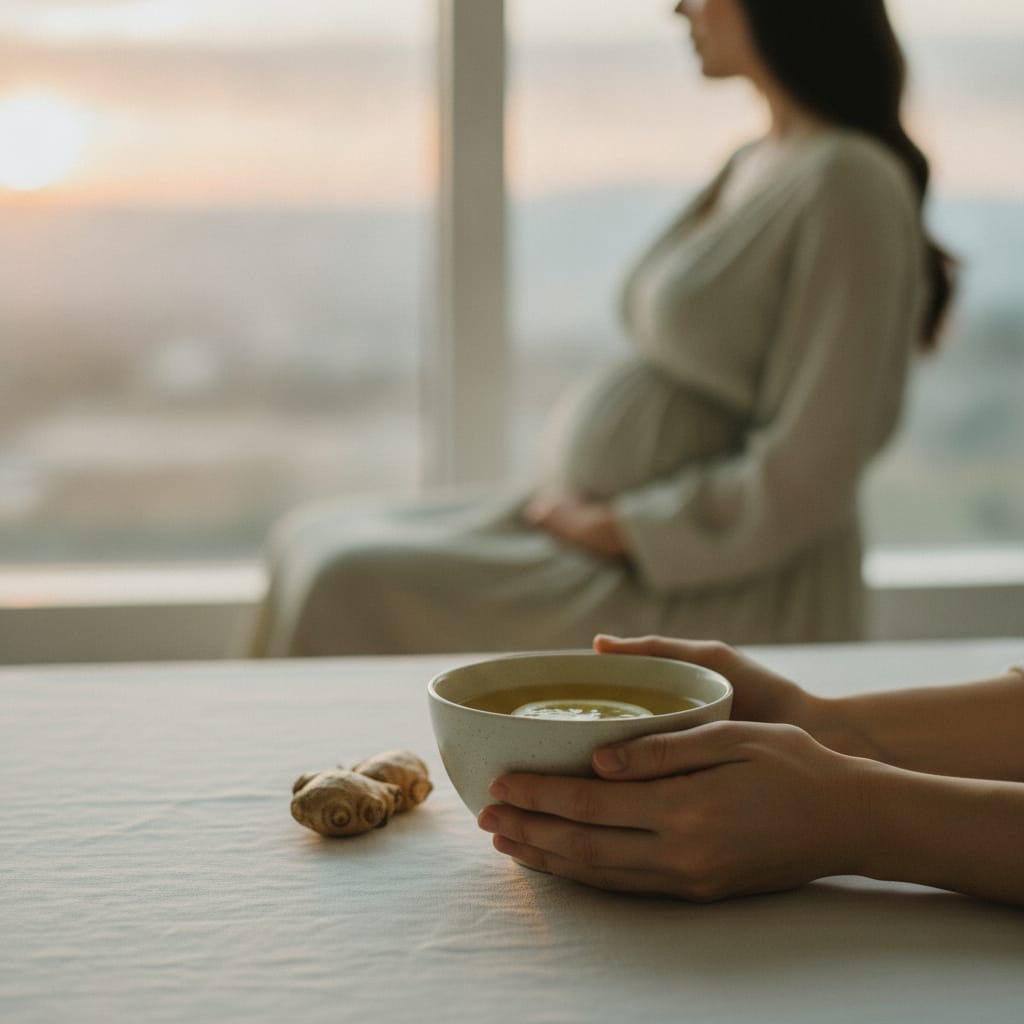
“I’m pregnant, I’m feeling sick all day, and I’m struggling to eat. Is there anything I can take?”
It is a question that comes up in community pharmacy, often from someone who is exhausted and simply wants to feel normal again.
Morning sickness is one of the best-known symptoms of pregnancy, but the name is misleading. For some women, the nausea is worst when they wake up. For others, it lasts throughout the day, returns in the evening or makes even the smell of food unbearable.
Most pregnancy sickness improves as the pregnancy progresses. But that does not mean women should be expected to suffer in silence, particularly when the symptoms interfere with eating, drinking, working or sleeping.
There are ways to help, and knowing when to seek treatment matters.
Why does pregnancy make you feel sick?
Nausea and vomiting are very common in early pregnancy. Symptoms often begin between the fourth and seventh week and usually improve by around 16 to 20 weeks, although some women experience them for longer.
Hormonal changes are thought to play an important role, although the precise causes are complex and not fully understood.
The severity varies considerably. One woman may feel slightly queasy before breakfast, while another may struggle with nausea throughout the day.
It is also worth remembering that the absence of vomiting does not mean the symptoms are insignificant. Persistent nausea alone can make eating difficult and affect everyday life.
The NHS confirms that pregnancy sickness can occur at any time of day and that, for most women, it improves during the first half of pregnancy. (NHS – Vomiting and morning sickness)
Small changes that may make a difference
Before reaching for medication, there are several practical measures worth trying. They will not work for everyone, but some women find that changing their eating habits helps.
Eat little and often. Large meals may be difficult to tolerate. Try smaller portions throughout the day rather than waiting until you feel very hungry.
Keep a plain snack beside the bed. Eating a dry biscuit or piece of toast before getting up may help some women who feel particularly sick first thing in the morning.
Choose foods you can tolerate. Plain rice, potatoes, crackers, toast and other simple foods may be easier to manage than rich, greasy or heavily seasoned meals. There is no need to force yourself to eat a particular food if its smell makes you feel worse.
Try cold foods if cooking smells trigger nausea. Cold meals may produce less of the smell that makes some pregnant women feel sick.
Drink little and often. Taking small, frequent sips of water may be easier than drinking a large glass at once. Keeping fluids down is particularly important if you have been vomiting.
Get enough rest. Tiredness can make pregnancy sickness harder to cope with, so take opportunities to rest where possible.
These practical measures are recommended in NHS guidance on morning sickness. (NHS – Vomiting and morning sickness)
Does ginger really help?
Ginger is often suggested for nausea, and there is some evidence that it may help reduce mild to moderate pregnancy sickness.
It can be tried in foods or drinks, such as ginger tea or ginger biscuits, if the taste is acceptable and it does not worsen symptoms.
However, ginger is not a guaranteed remedy, and evidence for different products and preparations varies. Concentrated ginger supplements are not the same as using ginger in food, so check with a pharmacist or maternity professional before taking them during pregnancy.
NICE recommends considering ginger for pregnant women with mild to moderate nausea and vomiting who prefer to try a non-medicine option. (NICE – Antenatal care)
Acupressure wristbands may help some people, although the benefit is not consistent for everyone.
If these approaches are not helping, there is no need to keep trying one home remedy after another while the symptoms continue.
Can you take medicine for morning sickness?
Yes. When symptoms are affecting everyday life, anti-sickness medicines may be appropriate during pregnancy.
This is an important point because some women worry that taking any medicine during pregnancy will harm their baby. Others assume that nothing can be prescribed until the sickness becomes severe.
Neither assumption is helpful.
There are antiemetic medicines that can be used during pregnancy, but the choice depends on the person’s symptoms, medical history, other medicines and stage of pregnancy.
A GP or maternity professional can discuss suitable options, their benefits and possible side effects. Some treatments can cause drowsiness, which matters if you are driving, operating machinery or caring for young children.
A community pharmacist can advise on appropriate non-prescription measures and help you decide when medical assessment is needed. If you are pregnant, do not start an over-the-counter medicine or herbal supplement for nausea without checking that it is suitable.
NICE recommends offering an antiemetic when a pregnant woman chooses pharmacological treatment, with the advantages and disadvantages discussed as part of the decision. (NICE – Antenatal care)
The key message is simple: if nausea is making it difficult to function, ask for help early. You do not have to wait until you are seriously unwell before discussing treatment.
When morning sickness becomes something more serious
There is a more severe form of pregnancy sickness called hyperemesis gravidarum (HG).
This is not simply an unpleasant morning. It can involve severe, persistent nausea and vomiting that makes it difficult to eat or drink normally and may lead to dehydration, weight loss and nutritional problems.
Women with HG may struggle to carry out everyday activities and can become physically and emotionally exhausted.
Warning signs include being unable to keep fluids down, passing much less urine than usual, having very dark urine, feeling very weak or dizzy, or losing weight.
If you cannot keep food or drink down, contact your midwife, GP or maternity unit promptly. You may need assessment and treatment, including fluids and anti-sickness medication. Severe cases sometimes require hospital care.
The NHS estimates that hyperemesis gravidarum affects around one to three in every 100 pregnancies. (NHS – Severe vomiting in pregnancy)
Do not dismiss severe symptoms as something every pregnant woman simply has to endure.
When should you seek urgent medical advice?
Get prompt medical advice if vomiting is frequent, you cannot keep fluids down, you are becoming dehydrated or the symptoms are preventing you from managing normal daily activities.
Also seek assessment if you have abdominal pain, fever, pain when passing urine or other symptoms that do not fit ordinary pregnancy sickness. Not every episode of nausea and vomiting during pregnancy is necessarily caused by the pregnancy itself.
If you have severe abdominal pain, collapse, confusion or other serious symptoms, seek emergency medical help.
The Royal College of Obstetricians and Gynaecologists emphasises that pregnancy sickness should be assessed according to its severity and its impact on the woman’s ability to eat, drink and function. (RCOG – Pregnancy sickness and hyperemesis gravidarum)
A little understanding goes a long way
Pregnancy sickness is common, but common does not mean trivial.
For some women, a few dietary adjustments and extra rest are enough. Others need medication or more intensive treatment to prevent dehydration and help them cope.
As community pharmacists, we can provide practical advice, check whether a proposed remedy is suitable during pregnancy and recognise when symptoms need medical attention. Just as importantly, we can listen without making someone feel that they are exaggerating a normal pregnancy symptom.
If you are struggling with morning sickness, do not feel that you have to put up with it until it passes. Speak to your pharmacist, midwife or GP, particularly if the symptoms are affecting your ability to eat, drink or get through the day.
Pregnancy sickness may be common, but suffering in silence should never be the expectation.
Until next time, look after yourself.
This article is for general health information and is not intended to replace individual medical advice.
Health Matters (zaynp100@yahoo.com) is a content creator under the Newswav Creator programme, where you get to express yourself, be a citizen journalist, and at the same time monetize your content & reach millions of users on Newswav. Log in to creator.newswav.com and become a Newswav Creator now!
The User Content (as defined on Newswav Terms of Use) above including the views expressed and media (pictures, videos, citations etc) were submitted & posted by the author. Newswav is solely an aggregation platform that hosts the User Content. If you have any questions about the content, copyright or other issues of the work, please contact creator@newswav.com.