Table of Contents
Bloodier Mortal Kombat sequel finds firmer footing by leaning closer to video games
A clear improvement on the 2021 reboot, Mortal Kombat II finally seems willing to be a Mortal Kombat movie without apology.
The first film often felt trapped between explaining the games to newcomers and distancing itself from the source material. This sequel has less of that hesitation. It spends more time in Outworld, leans harder into the tournament structure and stages several fights in a way that recalls the side-on visual rhythm of the games.
There are arenas, power moves, brutal finishes and enough revived characters to remind audiences that death in this franchise has always been more of a temporary inconvenience than a final exit.
Retcon or course correction
One of the more noticeable changes is what the film does not bring back. The arcana power system from the first movie is largely ignored, which is either a sensible course correction or an awkward retcon, depending on how generous one feels.
The system made the characters’ powers easier to explain to general audiences, but it also flattened the strangeness of the franchise into a convenient device. By moving away from it, the sequel feels closer to the games, although it also exposes how loosely written the film can be when it wants to move from one fight to the next.
Sharper combat
The action is stronger this time. The fight scenes make better use of the environment and the characters’ individual abilities, giving the sequel a sharper sense of physical spectacle.
There are still moments where the choreography looks too telegraphed, particularly during the Liu Kang and Kung Lao fight, but that sequence remains one of the film’s stronger emotional moments. For a series built on combat, Mortal Kombat II at least understands that the fights need to carry more than just noise and gore.
The bigger issue is that the film rarely has much beyond action. Mortal Kombat as a game series has always had rivalries, loyalties, betrayal, romance and strange family connections beneath the violence. This film gives only limited space to that.
There is little suggestion of the relationship between Liu Kang and Kitana, and Johnny Cage and Sonya Blade are not given much romantic charge either. Given the writing level here, that may be for the best. Adding more relationship drama would only help if the script knew what to do with it.
Kitana takes centre stage
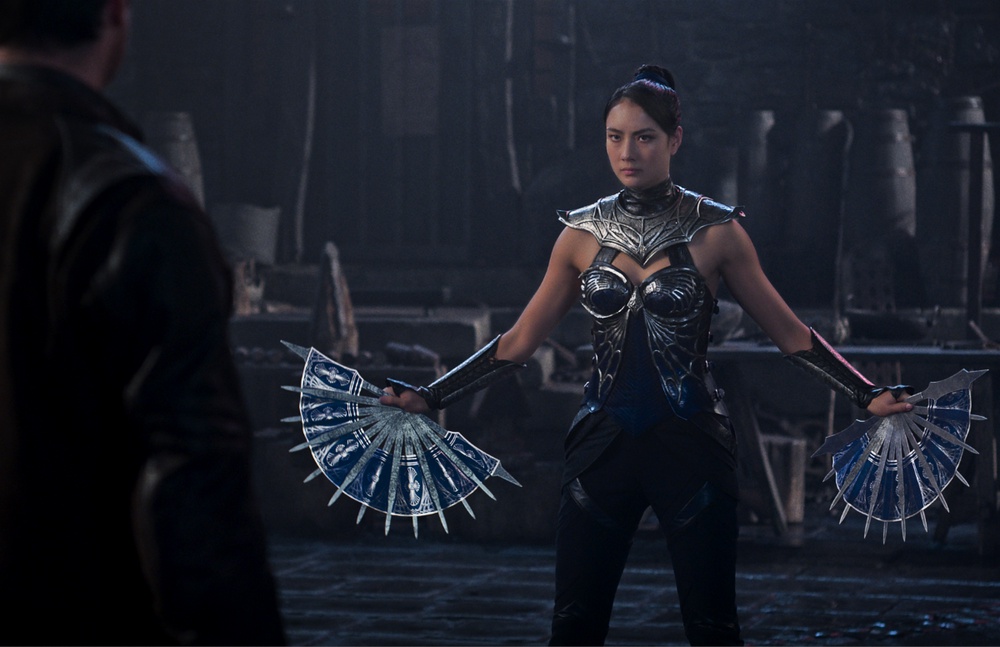
Adeline Rudolph’s Kitana is the closest the film has to a real protagonist. As the princess of Edenia and stepdaughter of Shao Kahn, she gives the story its clearest emotional and political thread.
Rudolph fits the role well and her version of Kitana is close to the game character, apart from the missing Liu Kang connection and any meaningful reference to Mileena.
The oddity is in the plot around her. Shao Kahn’s confidence in Kitana’s loyalty never makes much sense, especially when she has not been corrupted like Sindel. For a tyrant who builds his rule on conquest and fear, letting her compete for Outworld without considering betrayal feels like a major oversight.
Johnny Cage problem
Karl Urban’s Johnny Cage is harder to accept. Urban gives a committed performance, but the character feels misjudged from the start.
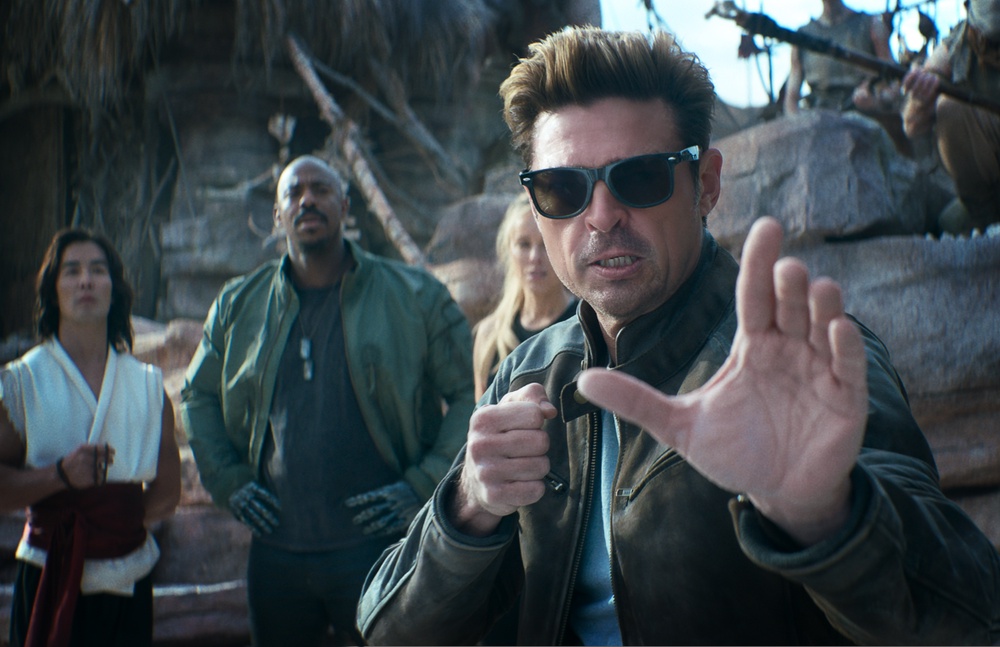
Reimagining Johnny as a washed-up action star with low confidence and a bumbling streak takes away too much of what made him fun. The original version of Johnny was already brash, cocky and ridiculous in a way fans liked. This film’s version feels like an unnecessary reinvention, and the script keeps pushing him into a role that does not quite fit.
Wasted champion
Lewis Tan’s Cole Young is also poorly served. He was introduced in the previous film as an original character meant to anchor new audiences, but his presence always felt unnecessary in a franchise already filled with stronger characters.
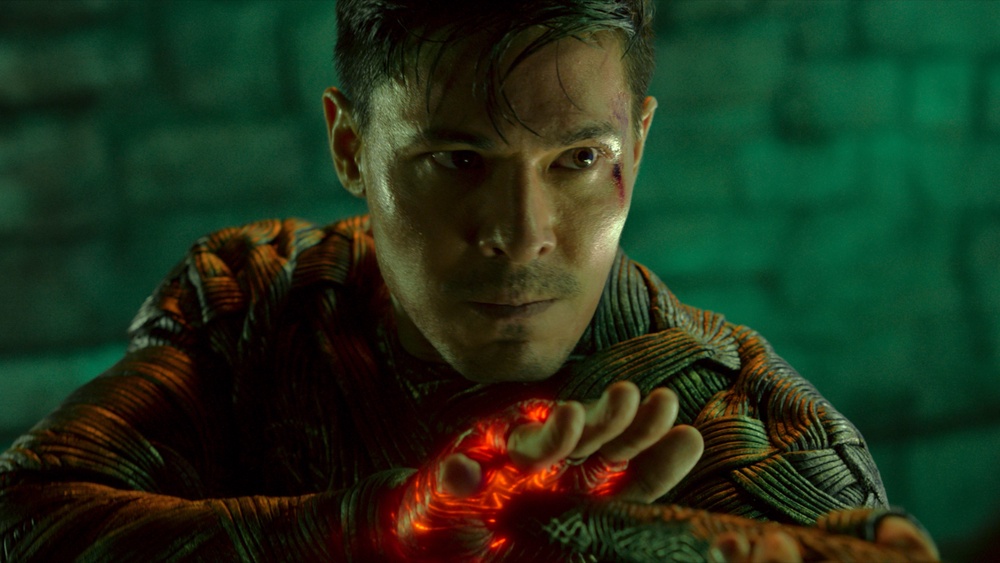
Mortal Kombat II seems to admit that by pushing Liu Kang closer to the centre and giving Cole an unceremonious death. It is strange because, within the movie continuity, Cole arguably had the most to lose, with a family left behind. The film barely explores that.
Perhaps he could return as a revenant, Ermac or even Kenshi, as some fans may hope, but for now, the character feels like a studio idea the series no longer knows how to use.
Too many fighters
The supporting cast also suffers from overcrowding. Sindel, Quan Chi and Shang Tsung are present, but not always given enough room to make an impact.
There are also logic issues that become harder to ignore if one thinks too much about the plot. Raiden can be mortally wounded by Kung Lao’s hat, yet Shao Kahn becomes practically untouchable after stealing his powers. The movie wants its mythology to feel grand, but it often treats its own rules as suggestions.
Verdict
Still, Mortal Kombat II is better than the first film because it better understands what audiences came for. It is loud, messy, violent and mostly built for fans who want fights, fatalities and game-accurate flourishes.
The visuals could be stronger and the story is thin, but as a “turn-off-your-brain” action fantasy, it has enough momentum to survive its weaker choices.
Ed Boon’s cameo as the bartender at Johnny’s bar is also a fun nod for game fans, giving the film a brief but welcome link to the franchise’s roots.
With a third film already being set up, the franchise may still improve. For now, Mortal Kombat II is not a flawless victory, but it is a cleaner hit than its predecessor.
With Street Fighter also on the way, the next round of video game movies may be worth watching closely.