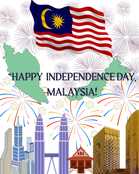
31st August 1957: As the Union Jack fell and the new flag climbed, Tunku Abdul Rahman threw up his fist and shouted “Merdeka!” seven times. A nation was born.
Now picture a mother enduring hours of agonising labour. She bleeds, tears, nearly breaks – yet pushes on because of her deep love for the child. The child finally arrives and the father lifts the baby before jubilant crowds. Cameras flash. Congratulations pour in.
The mother, exhausted and still bleeding, is quietly wheeled away. She is not invited to the party.
Worse, she is later branded a danger to the child she delivered. The child grows up believing that story, never knowing the truth.
If Tunku is the Father of Independence, who is this forgotten mother?
The answer has been hiding in plain sight all along. She was the generation of anti-colonial guerrillas whose long war of attrition made the British decide to pack up and leave.
Tunku: Into The Jungle To Meet Chin Peng
In the run-up to the 1955 federal elections, Tunku made a bold pledge: “I will go into the jungle to meet Chin Peng.”[8] It was politically astute – it courted nationalists while reassuring a Britain exhausted by years of fighting the communists. London increasingly saw in Tunku a leader with whom it could negotiate an orderly handover, safeguarding its strategic and economic interests. Tunku’s pledge led to the Baling Talks of 28–29 December 1955.
“Captive In My Own Country”
Across the table sat Chin Peng, Rashid Maidin and Chen Tian. Chin Peng’s proposal was simple: “Once an elected Malayan government assumes full military-political sovereignty, the CPM shall immediately cease armed struggle.” [1] His sole condition: legalise the Communist Party so it could contest elections peacefully.
Tunku and David Marshall rejected the proposal. Instead, they demanded unconditional surrender. The guerrillas would lay down arms, submit to interrogation and face detention. Chin Peng’s answer was stark: “Better a free man in the jungle than a captive in my own country.” [1] Days later, Tunku departed for London to negotiate Malaya’s independence.
“No, I’m Not Disappointed”
Soon afterwards, Utusan Melayu journalist Said Zahari asked Tunku whether he was disappointed that the Talks had failed. His reply was immediate: “No, I’m not. I never wanted it to be a success.” [3] Alarmed, Syed Jaafar Albar urged Said Zahari not to publish the remark.
That admission casts Baling in a very different light. The evidence suggests the talks were less about achieving peace than about demonstrating to the British that Tunku could manage the communist challenge. Having established that credibility, he entered the London negotiations from a position of far greater strength.
Tunku himself later acknowledged: “ “The only good thing the Emergency produced was my meeting with Chin Peng. Because of those Talks of mine in Baling we were able to wrest the initiative from the Malayan Communist Party, then sit at a conference table in London to negotiate our independence with the British, and win our freedom as a nation. Baling led straight to Merdeka.” [2]
Merdeka Was Purchased…With Blood
The political leverage Tunku carried to London did not appear out of thin air. It had been purchased with years of sacrifice by thousands who fought colonial rule long before constitutional negotiations began.
Britain had dominated Malaya since 1786. For 171 years it extracted Malaya’s tin, rubber and labour to enrich the Empire. Would Britain have surrendered such a profitable colony voluntarily? Never.
After the Japanese Surrender in 1945, the British returned, determined, in Chin Peng’s words, “to resurrect their glory days as masters and bullies.” [1]
Resistance spread like fire. The October *hartal* in 1947 was a strike that consumed the whole country. [7]
Trade unions and political organisations were outlawed. Thousands were banished; the prisons overflowed. Over half a million people were forcibly relocated into heavily guarded “New Villages”. [7]
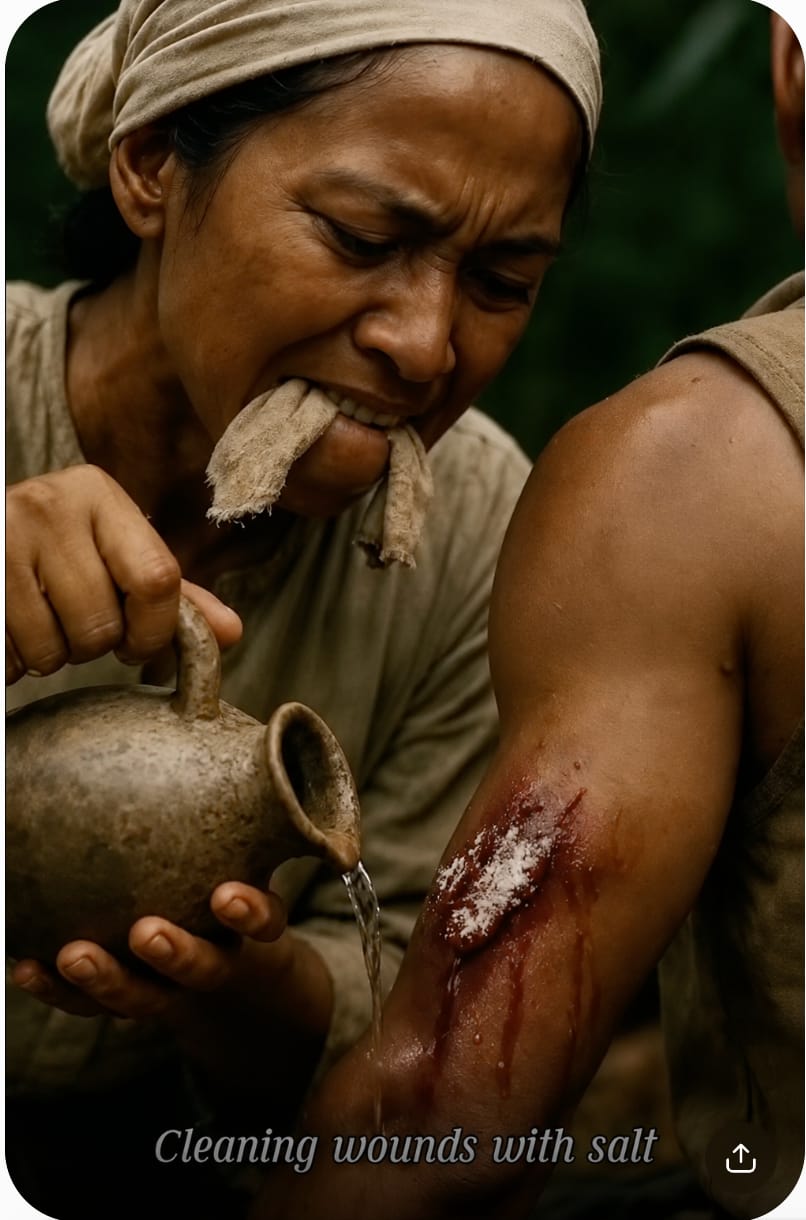
Thousands retreated into the jungle, and by early 1949 the Malayan National Liberation Army was forged. Able-bodied men and women left behind parents, spouses and even newborn children.[6] They endured starvation, disease, bombing and relentless pursuit. Many never came home.
The Batang Kali massacre remains among the darkest episodes of this war. British soldiers executed more than twenty unarmed villagers in Selangor. For decades, Britain denied responsibility before finally expressing “deep regret” in 2025. [4][5]
Unprofitable Empire Seeks Exit From Jungle Quagmire
Hundreds of millions of pounds—a staggering sum in post-war sterling—were consumed by the war against the Malayan National Liberation Army. Britain, faced with a depleted exchequer and reliant on American loans, could no longer sustain such a haemorrhage of men and money. [9]
Worse, military planners privately conceded that the war in Malaya was an unwinnable quagmire —the guerrillas could not be bombed or starved into submission, only contained at crippling, recurring expense. [10] The war of attrition had recalibrated Britain's cost-benefit calculus—the Empire was now seeking an exit, and a reliable partner to manage post-colonial interests.
As the MNLA leader, Chin Peng later reflected: "We forced them to the bargaining table long before they were prepared to sit there."[1]
The protracted guerrilla war was the agonising labour—the pangs a mother suffers. The subsequent negotiations were the midwife, officiating a delivery that armed resistance had already made inevitable.
The Orphaned Nation and the Milk It Was Fed
Generations grew up conditioned to fear the mother. The freedom fighters were branded "communist terrorists." So much dread is infused into these two words that many people prefer to say "CT." With this acronym, humanity, dedication and agency are obliterated; patriots are turned into pariahs. This was the milk the nation was nursed on.
The anti-colonial struggle was systematically written out of the story.
The father took the glory. The mother took exile.
Rebuffed at Baling, the guerrillas had no other recourse but the jungle's embrace—where they remained for three more decades, until the Haadyai Peace Agreement of 1989 finally allowed their return with dignity. [1]
Being Honest About Legacy
Recognising the sacrifice of the anti-colonial guerrillas does not diminish Tunku Abdul Rahman; his constitutional negotiations were indispensable to the final handover.
There is no need to choose between mother and father. One made colonial rule unsustainable. The other negotiated independence. Both delivered the nation into existence.
To acknowledge the Communist Party of Malaya’s contribution to Merdeka does not mean we endorse its ideology—it is simply to be honest about legacy.
"Independence on a Silver Platter" is a fairy tale, not history. Until we can say in our heart: “Mother, I see you” - we remain a motherless nation.
References
- Chin Peng, Alias Chin Peng: My Side of History. Singapore: Media Masters, 2003.
- Tunku Abdul Rahman, * Looking Back - Monday Musings & Memories - Pustaka Antara 1977 (Article: The Baling Talks, The Star, 30th Dec, 1974)
- Said Zahari, Dark Clouds at Dawn: A Political Memoir. Kuala Lumpur: INSAN, pp. 282, 287.
- BBC, In Cold Blood (documentary), 1992.
- Catherine West, UK Minister for the Indo-Pacific, Statement on the Batang Kali Massacre, 31 March 2025.
- Chin Peng, My Last Wish (Farewell Letter).
- Musimgrafik, Where Monsoons Meet: A People's History of Malaya. Petaling Jaya: SIRD, p. 136; 151.
- Khong Kim Hoong, Merdeka! British Rule and the Struggle for Independence in Malaya.
- UK Parliamentary Records (Hansard) on Anglo-American Loan (1945) quoted in Northern Advocate, 30 January 1942, Page 6. Papers Past, National Library of New Zealand. https://paperspast.natlib.govt.nz/newspapers/NA19420130.2.91
- "Malayan Emergency." National Army Museum, London. Malayan Emergency | National Army Museum
Nathalie CHIA (nathalie.meiying@gmail.com) is a content creator under the Newswav Creator programme, where you get to express yourself, be a citizen journalist, and at the same time monetize your content & reach millions of users on Newswav. Log in to creator.newswav.com and become a Newswav Creator now!
The User Content (as defined on Newswav Terms of Use) above including the views expressed and media (pictures, videos, citations etc) were submitted & posted by the author. Newswav is solely an aggregation platform that hosts the User Content. If you have any questions about the content, copyright or other issues of the work, please contact creator@newswav.com.