
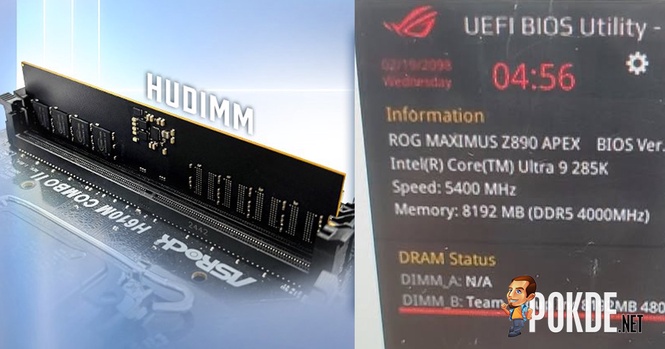
RAM prices are exorbitant as of late, which is a widely known fact – more importantly, it’s not just the consumers that has to bear the brunt of this AI-induced sticker shock. Recently, both ASRock and ASUS pitched the idea of a downsized “HUDIMM” DDR5 memory (“H” as in “half”) that effectively cuts a typical module in half.
HUDIMM Is The Answer?

And yes, that means by cutting a module in half, the total memory capacity per module is also halved as a result. A typical 16GB DDR5 module – the most common format in the current memory standard – features two 32-bit “subchannels” of memory to form a single 64-bit data channel, so it inherently makes it simple to remove half of that. In ASRock’s case, both the HUDIMM and HSODIMM (same concept in laptop RAM form factors) are primarily designed for low-end systems to save costs.

The motherboard maker also claimed that such form factors also provide performance benefits in marginal cases, like a 8GB+16GB combination outperforming a single 24GB module in total bandwidth and memory latency. TeamGroup was brought onboard for the development of this new module, and it’s got Intel’s blessings too, with VP Robert Hallock stating that this is “crucial to ensuring desktop computing remains accessible despite the rising demand and costs for DDR5 memory.”
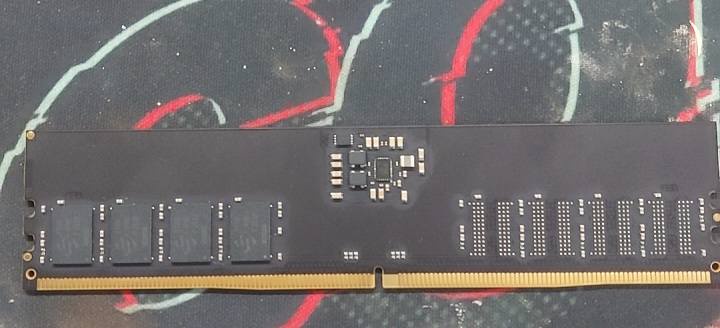
ASUS, meanwhile, also shown the same idea, courtesy of its R&D team member demonstrating the possibility of booting the Maximus Z890 Apex motherboard with the TeamGroup modules registering just 8GB of memory (they also demonstrated taping over a specific part of the contact pins to effectively “disable” half of the subchannels on 48GB SK Hynix modules, effectively turning them into 24GB sticks).
What does that mean for gamers at large? For one, this opens the possibility of PC builders utilizing two such “HUDIMM” modules to form a 2x8GB setup, although the performance implication of such is not exactly clear (and going by ASRock’s example, it could be marginal at best). It’s worth noting that DDR5 can still operate somewhat like a dual-channel memory due to the aforementioned subchannel design, which means the performance impact is less pronounced even when running on a single stick, as opposed to DDR4’s design.
For now, it looks unlikely that gaming-focused PCs will revert back to 16GB as standard, and we’ve seen that gaming laptops this year still remain on 32GB or more in terms of capacity, opting to increase pricing to cover the margins. Games also largely require 32GB of RAM to run these days, so we do think the effects of RAM pricing surge is not going beyond unreasonably high sticker prices anytime soon as far as gamers are concerned.
Pokdepinion: Necessity breeds innovation, as they say.