.jpeg)
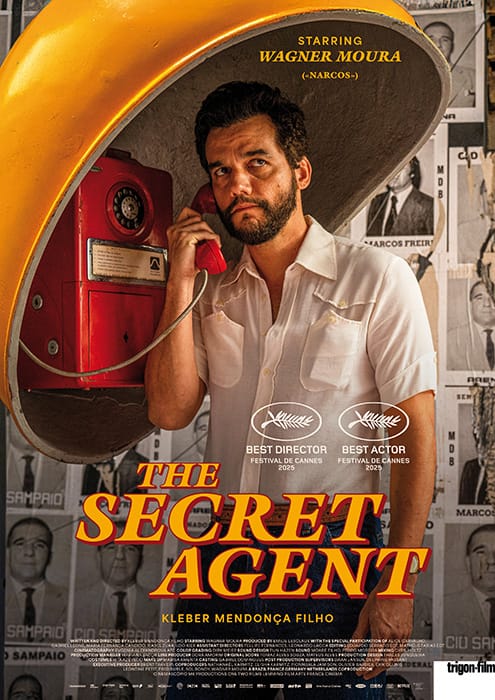
The Secret Agent (O Agente Secreto, Brazil, Portuguese),
Director: Kleber Mendonça Filho
Maybe all of this dates back to the time when the Monroe Doctrine was introduced in 1823. It firmly instructed European powers to stay out of the Western Hemisphere and to define a 'sphere of influence' in Latin America. In exchange, the United States would not interfere in European affairs. As the US expanded westward, acquiring California from Mexico, it grew more confident. By 1898, after defeating a fragmented Spain and taking control of Guam, Puerto Rico, and the Philippines, the United States had become a superpower.
In the late 19th century, Venezuela was embroiled in a civil war. The military leader who took charge refused to pay foreign debts, incurring the wrath of the European imperial powers. They imposed a naval blockade against Venezuela. After arbitration and US pressure, a compromise was reached. That event compelled the President, then Theodore Roosevelt, to add a corollary to the doctrine in 1904, stating that the US would act as an "international police power" in the Western Hemisphere. It authorised US intervention in Latin American nations to restore stability.
Since then, the world has observed the US interfere in the affairs of many Latin American countries, more than 80 times, actually. The list is quite extensive, but it includes Cuba and various invasions, notably the disastrous invasion at the Bay of Pigs. In Panama, the US supported rebels when it was part of Colombia and later built and took control of the Panama Canal. The CIA supported 'Contra' rebels in Nicaragua. In Chile and Argentina, brutal dictatorships backed by the US replaced elected governments. During 'Operation Condor', in the 1970s and 80s, at the height of the Cold War, the US also provided logistical support and intelligence to right-wing dictators in many countries, including Brazil.
This film is set in 1977 Brazil, during the leadership of Ernesto Geisel, when the country was supposed to be transitioning towards democracy. In reality, however, it was still governed by an authoritarian ruler. The opposition was suppressed, academia was repressed, and the free press was controlled. The wealthy with political connections were managing the country through government machinery. Many extrajudicial killings were common. Daily reports of distressing events are forgotten amidst absurd urban legends like the 'Hairy Leg' and the violence against the homeless and marginalised groups.
It follows Marcelo, a former academic forced into hiding, living among other political fugitives after angering those connected to the political regime. The film gives a retro feel through the clever use of colours from that era's prints. With the smart use of 'paparazzi' filming, the thrill spills all over.
The transition of rule from one system to another is paved with blood, dead bodies and a pile of broken promises. Cues should be learnt from the Bastille invasion, the Bolshevik Revolution and the fall of the Kremlin in the early 1990s. It takes time to appease all the power-hungry parties and reach a steady state.
Farouk Gulsara (asokansham@gmail.com) is a content creator under the Newswav Creator programme, where you get to express yourself, be a citizen journalist, and at the same time monetize your content & reach millions of users on Newswav. Log in to creator.newswav.com and become a Newswav Creator now!
The User Content (as defined on Newswav Terms of Use) above including the views expressed and media (pictures, videos, citations etc) were submitted & posted by the author. Newswav is solely an aggregation platform that hosts the User Content. If you have any questions about the content, copyright or other issues of the work, please contact creator@newswav.com.