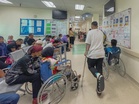
Kuala Lumpur: The government should consider recruiting foreign doctors, particularly international medical graduates trained in Malaysia, as a short-term measure to address the shortage of healthcare workers in East Malaysia, says an MP.
Dr Kelvin Yii (PH-Bandar Kuching) (pic) said, however, that recruiting foreign doctors should not undermine or replace efforts to improve the salaries and career prospects of Malaysian doctors.
Yii said the proportion of doctors who failed to report for permanent postings in Sabah rose from 2% in 2022 to 20% in 2023, about 40% in 2025, and 66% this month.
“The Malaysian Medical Association (MMA) has reported rates of 70% to 76% for Sabah and Sarawak. This is no longer a warning sign. This is an emergency,” he said in the Dewan Rakyat today.
He cited several hospitals struggling with severe manpower shortages, including Beluran Hospital, which received no new doctors and now has only six doctors.
“Kudat Hospital received four of the 17 doctors posted there, and Sri Aman Hospital six of 20,” he said, contrasting this with Serdang Hospital in Selangor, which he said received 150 new doctors on the same day.
Yii also said the official no-show figures might not reflect the actual scale of the problem, as doctors who do not comply with postings may not be recorded as having resigned.
It was previously reported that 70% to 76% of medical officers assigned to permanent postings in Sabah and Sarawak failed to report for duty on Sept 28.
MMA later urged the government to review its incentive scheme and revert to percentage-based regional incentive payments for doctors posted in East Malaysia, saying the current fixed payment system had reduced the value of the incentives for those serving there.
MMA president Dr L Sivanaesan also proposed several other incentives, including a dedicated East Malaysia service allowance and fixed posting durations.
‘Restore progressive regional incentive payment rates’Yii pointed out that the regional incentive payment (BIW) allowance was reduced under the new public service remuneration system from a percentage of one’s salary to a fixed RM360, while a separate RM300 cost of living allowance was withdrawn.
“The difference is only RM60 a month, not enough for a single ticket home,” he said.
He proposed restoring progressive BIW rates for healthcare workers in Sabah and Sarawak and paying their relocation assistance upfront based on actual costs.
He also called for the establishment of a health service commission with the power to determine remuneration independently of the wider civil service scheme.
Yii said the Sabah and Sarawak governments should provide bonuses and incentives for healthcare workers serving in their respective states.
He also touched on the Sept 8 helicopter crash in Ulu Baram that killed five people from the Flying Doctor Service, questioning whether the aircraft was maintained according to schedule.
He asked when the health ministry last audited the operator’s maintenance records, saying having a valid airworthiness certificate was not enough if the required maintenance was not actually performed.