
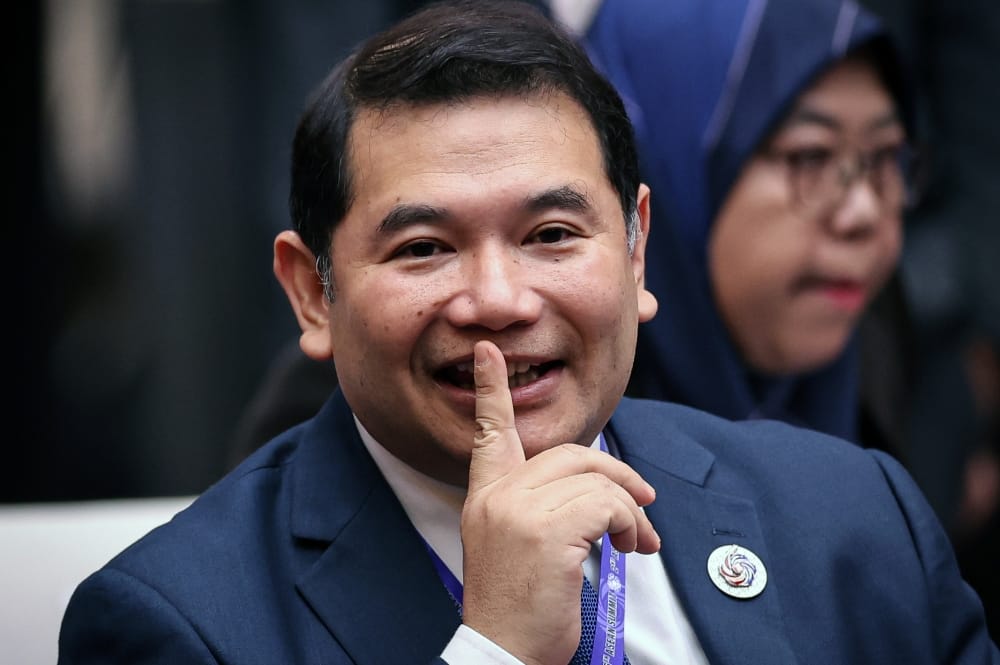
In Malaysia’s political theatre, few figures have built their reputation as methodically as Rafizi Ramli. He cultivated an image as a data-driven reformist, a whistleblower strategist, and a politician willing to challenge entrenched power even from within government.
So when Rafizi began referring publicly to a shadowy figure known only as “Mr R”, the reaction was immediate. Supporters called it a warning. Critics called it theatre. Party insiders called it dangerous.
The mystery surrounding “Mr R” did not emerge from gossip. It surfaced at the intersection of intra-party rivalry, enforcement-agency allegations, and a widening credibility battle inside Malaysia’s reformist establishment. At stake is not simply the identity of one individual. The controversy reveals fractures within the country’s governing coalition and exposes how power struggles increasingly unfold through public narratives rather than internal negotiations.
The question now confronting Malaysia’s political class is simple but explosive: is “Mr R” evidence of hidden influence networks shaping investigations and contracts, or a political signal deployed in a larger contest over legitimacy inside the reform movement?
The Origins of “Mr R”: A Political Code Name with Real Consequences
The “Mr R” controversy emerged in the aftermath of investigative reporting linked to allegations involving enforcement agencies and business interests highlighted in international coverage, including reporting referenced by Malaysian lawmakers responding to disclosures about the Malaysian Anti-Corruption Commission. (Malay Mail)
Rafizi’s decision to publicly reference a concealed figure marked a departure from his earlier strategy of releasing structured documents and forensic claims. Historically, his political credibility rested on evidence-based disclosures, including earlier work exposing financial scandals that reshaped national debate.
This time, however, he introduced ambiguity.
By invoking “Mr R”, Rafizi suggested the existence of a politically connected actor operating behind institutional decisions or commercial arrangements. Yet he stopped short of naming the individual immediately. That hesitation transformed a whistleblowing gesture into a political event.
Within days, speculation spread across party networks, enforcement observers, and parliamentary circles. Analysts began asking whether the label referred to a corporate intermediary, a political operator, or someone embedded within the ruling coalition itself.
The silence became the message.
Rafizi’s Political Identity: Why His Claims Carry Weight
Unlike many mid-tier politicians, Rafizi occupies a distinctive role in Malaysia’s reformist narrative.
He built his reputation not through patronage networks but through data-driven exposés. Earlier in his career he helped popularize the strategy of “forensic politics”, combining financial analysis with public communication to shape voter perception. That approach helped position him as one of the most technically credible figures within the People’s Justice Party.
His later appointment as economy minister reinforced that image before he stepped down after losing the party’s deputy presidency contest in 2025. (Bloomberg Technoz)
The timing matters.
Political scientists frequently note that reformist figures who lose internal leadership battles often reposition themselves as guardians of institutional integrity. Rafizi’s post-cabinet trajectory fits that pattern. Since leaving executive office, he has repeatedly pressed for transparency regarding enforcement-agency conduct and asset-ownership controversies involving senior officials. (MalaysiaNow)
“Mr R” emerged during that repositioning phase.
The Bloomberg Connection: Enforcement Agencies and Elite Networks
The background to the controversy lies partly in reporting about alleged relationships between enforcement actions and private interests described in international investigative coverage cited by Malaysian lawmakers.
Rafizi and several colleagues urged authorities to respond decisively to those allegations and even proposed public mobilization through civil-society platforms such as Bersih. (Malay Mail)
This move signaled escalation.
Rather than treating the issue as an internal administrative matter, Rafizi framed it as a systemic accountability crisis. He argued that failure to address the allegations risked repeating credibility collapses associated with earlier governance scandals.
Within that narrative, “Mr R” appeared less like a personal accusation and more like a structural clue. It implied that enforcement controversies might involve intermediaries positioned between public institutions and private actors.
Whether accurate or strategic, the implication raised the political stakes dramatically.
Internal Party Friction: Reformasi Meets Realpolitik
The emergence of “Mr R” cannot be separated from tensions inside the ruling party.
Rafizi’s defeat in the deputy presidency contest reshaped internal alliances. Leadership transitions often trigger ideological repositioning, especially inside parties rooted in reform movements rather than traditional patronage structures.
In Malaysia’s case, the People’s Justice Party was founded during the Reformasi era as a vehicle for institutional change. Yet after entering government, the party confronted a familiar dilemma faced by reform movements globally. Governing requires compromise. Compromise weakens outsider identity.
Rafizi’s critics inside the party argue that his public statements risk undermining institutional stability. One senior party leader publicly urged him to cooperate fully with investigations instead of generating confusion through indirect accusations related to major contracts. (The Star)
Supporters respond differently.
They interpret “Mr R” as evidence that reformist vigilance must continue even after electoral victory.
A Pattern of Strategic Disclosure
To understand the significance of “Mr R”, analysts point to Rafizi’s long-standing political method.
He rarely releases information casually.
Instead, his disclosures often follow a sequence:
- First, introduce a claim without naming individuals.
- Second, build public curiosity and pressure.
- Third, release supporting material.
- Fourth, force institutional response.
That sequence shaped earlier political controversies involving procurement and enforcement agencies. It allowed Rafizi to control narrative momentum even without formal authority.
If the same method is being deployed again, “Mr R” represents the opening move rather than the conclusion.
Enforcement Agencies, Shareholdings, and the Politics of Suspicion
The timing of the controversy overlaps with wider debates about asset ownership and institutional independence involving enforcement leadership.
Rafizi publicly urged authorities to clarify reports concerning shareholdings allegedly linked to senior officials across multiple companies with a combined value reaching millions of ringgit. (MalaysiaNow)
Such interventions placed him at the center of an accountability dispute extending beyond party politics.
In that environment, the introduction of “Mr R” functioned as a multiplier. It connected enforcement controversies with elite influence networks without naming a specific individual.
Political strategists recognize this technique as narrative bridging. It links separate issues into a single legitimacy crisis.
The Information Strategy Behind Ambiguity
Why introduce a mysterious figure without immediate identification?
There are three possible explanations.
First, legal caution. Malaysian defamation law imposes substantial risks on public accusations without documented evidence.
Second, institutional pressure. Whistleblowers often test public reaction before releasing sensitive material.
Third, political signaling. Code names allow messages to reach insiders without triggering immediate confrontation.
Each explanation carries implications for interpreting Rafizi’s move.
If the hesitation reflects legal prudence, disclosure may still come. If it reflects political messaging, “Mr R” may already have been identified privately by its intended audience.
The Rivalry Narrative: Personal Conflict or Structural Warning?
Observers across Malaysia’s political spectrum disagree about whether “Mr R” represents a personal rivalry or a systemic warning.
Critics inside government argue that repeated public hints without confirmation risk damaging institutional credibility. Supporters counter that silence would be worse if evidence exists.
The disagreement reflects a broader transformation in Malaysian politics.
During earlier eras, elite disputes were resolved through internal negotiation. Today they unfold through public disclosure campaigns amplified by digital platforms and international reporting networks.
“Mr R” fits that new environment.
It is both a political claim and a communications strategy.
Reformist Credibility at Risk
Malaysia’s reform movement depends heavily on credibility narratives.
Unlike traditional patronage parties, reformist coalitions rely on public trust rather than distribution networks alone. That makes transparency disputes particularly dangerous.
If Rafizi’s claims eventually produce evidence, his credibility strengthens dramatically. If not, critics will argue that reformist rhetoric is becoming indistinguishable from factional politics.
Either outcome affects voter confidence.
Recent controversies involving large-scale project allegations, enforcement-agency investigations, and asset-ownership questions have already intensified scrutiny of governance standards. Rafizi himself has rejected claims linking him to multi-billion-ringgit controversies, calling them exaggerated and unsupported by evidence. (The Star)
The result is a credibility contest unfolding on multiple fronts simultaneously.
The International Dimension: Why Foreign Media Matters
International investigative reporting plays an increasingly important role in Malaysian political accountability debates.
References to disclosures by global financial news organizations shaped parliamentary responses and public mobilization strategies surrounding enforcement-agency controversies earlier this year. (Malay Mail)
That influence reflects a structural shift.
Domestic politics no longer operates in isolation from global scrutiny. Allegations involving governance, migrant labor systems, or procurement decisions now circulate across transnational information networks.
“Mr R” therefore resonates beyond Malaysia.
It signals how reformist politics adapts to a globalized accountability environment.
A Personal Risk Calculation
For Rafizi, the decision to invoke “Mr R” carries personal consequences.
He has already faced legal battles throughout his political career and once received a suspended sentence under secrecy legislation related to earlier disclosures. His reputation as a whistleblower strategist emerged from those confrontations.
That history explains why his supporters treat the latest controversy seriously.
When a politician with that record introduces a coded allegation, observers assume preparation rather than improvisation.
Whether that assumption proves correct remains unknown.
The Strategic Silence That Now Defines the Debate
The most revealing aspect of the controversy may not be what Rafizi said.
It may be what he has not yet said.
Silence creates narrative space. In politics, narrative space invites interpretation. Interpretation produces alignment. Alignment reshapes power.
By introducing “Mr R” without immediate clarification, Rafizi forced multiple actors to respond without knowing whether they were being accused directly or indirectly.
That uncertainty is itself a political instrument.
What Do You Think? I’d Love to Hear Your Opinion in the Comments Section.
The relationship between Rafizi Ramli and the figure known as “Mr R” remains unresolved. Yet the controversy has already achieved something significant. It shifted the national conversation from individual allegations to structural questions about influence, enforcement independence, and reformist credibility inside government.
Whether “Mr R” proves to be a whistleblower clue, a factional signal, or a strategic narrative device, the episode illustrates how Malaysia’s reform movement is entering a new phase. Transparency battles are no longer confined to parliamentary debates. They now unfold across media ecosystems, party contests, and institutional investigations simultaneously.
For Rafizi, the stakes are personal and political. For Malaysia, they are institutional.
If the mystery ends with evidence, it could reshape the balance of trust inside the governing coalition. If it ends without disclosure, it could redefine how reformist credibility itself is measured.
AM World (tameer.work88@gmail.com) is a content creator under the Newswav Creator programme, where you get to express yourself, be a citizen journalist, and at the same time monetize your content & reach millions of users on Newswav. Log in to creator.newswav.com and become a Newswav Creator now!
The User Content (as defined on Newswav Terms of Use) above including the views expressed and media (pictures, videos, citations etc) were submitted & posted by the author. Newswav is solely an aggregation platform that hosts the User Content. If you have any questions about the content, copyright or other issues of the work, please contact creator@newswav.com.