KUALA LUMPUR: The prospect of a second political rapprochement between Umno and Pas is beginning to look increasingly plausible, but whether it can evolve into a durable electoral pact may depend on one difficult question: which party is prepared to give way?
The two largest Malay-based political parties have moved noticeably closer in recent months, with their cooperation in the Johor and Negeri Sembilan state elections providing an early template for working together against Pakatan Harapan (PH).
That momentum has now spilled into preparations for the Melaka state election, while Pas has openly acknowledged that discussions with Barisan Nasional (BN) over possible cooperation are continuing.
At the same time, the presence of senior Umno leaders at Pas’ annual muktamar in Kelantan recently – even as the two parties remain formally on opposing sides of federal politics – has provided perhaps the clearest indication yet that the idea of a “Muafakat Nasional 2.0” is moving beyond political rhetoric.
Pas president Tan Sri Abdul Hadi Awang said recently that the party remained open to negotiations with BN for the 16th General Election (GE16), pointing to the parties’ cooperation in Johor and Negeri Sembilan as part of the process.
“We are always ready to negotiate, including among parties that have strong Malay support,” he was reported as saying.
Hadi added that talks were ongoing but had not been finalised, while saying any decision would ultimately take into account the number of seats won by the respective parties.
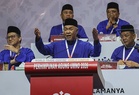
The message was reinforced at Pas’ 72nd Muktamar in Kelantan, where Umno secretary-general Datuk Dr Asyraf Wajdi Dusuki represented Umno president and BN chairman Datuk Seri Ahmad Zahid Hamidi.
Kelantan Umno chairman Datuk Seri Ahmad Jazlan Yaakub and other state leaders also attended.
Pas secretary-general Datuk Seri Takiyuddin Hassan described the Umno delegation’s presence as a new chapter in Malaysian politics and evidence of efforts to advance the “penyatuan ummah” agenda.
Melaka could provide the crucial test
The immediate test, however, will not be rhetoric but arithmetic.
Professor Dr Azmi Hassan of the Nusantara Academy of Strategic Research believes the real test of BN-PN cooperation will come in Melaka, where there are only 28 state seats and therefore much less room for compromise than in Negeri Sembilan.
“In Negeri Sembilan, there were quite a number of seats that could be shared or negotiated between the two sides. Melaka is different, as it has only 28 seats,” Azmi told Twentytwo13.
“That is why the real test will be in Melaka. The discussions are expected to be more complicated because there are not many seats that can be negotiated or divided between the two sides. So, in Melaka, a great deal of compromise will be required.”
BN currently holds 21 of the 28 Melaka seats and will be defending all of them.
That gives Umno and BN considerable leverage in negotiations but also creates a potential obstacle: Pas and its PN partners must determine whether there are enough constituencies in which they can contest without directly threatening BN’s existing position.
Azmi believes the burden of compromise could therefore fall disproportionately on PN.
“BN has the advantage because it currently holds 21 seats and will be defending all 21,” he said.
“In this regard, the greater burden of compromise will fall on PN, particularly because Pas itself has to share seats with Wawasan (Parti Wawasan Negara) within the PN coalition.”
The dilemma is reflected in remarks by PN election director and Kedah Menteri Besar Datuk Seri Muhammad Sanusi Md Nor, who recently insisted that Pas should not simply surrender seats it has won.
His position illustrates the central contradiction confronting both parties: cooperation may maximise their collective chances against PH, but every seat conceded represents a potential loss of political influence.
BN president Zahid has maintained that the door to cooperation remains open, including possible seat swaps, but has stressed that seats won by a party should be respected.
More recently, he said formal negotiations on Melaka candidates would only begin after the state assembly is dissolved.
Two parties, one voter base
Professor James Chin of Monash University Malaysia believes the strategic logic behind cooperation is nevertheless compelling.
“Pas is basically hanging on to Umno because they know that combined together, they are unbeatable in the Malay-majority areas,” he said.
For Chin, the objective goes beyond winning Melaka.
He believes the two parties are attempting to build enough momentum in Malay-majority constituencies to put themselves in a position to form the federal government after GE16.
The victories in Johor and Negeri Sembilan have already given the cooperation a political narrative.
Zahid himself described the Negeri Sembilan result as a continuation of the “blue wave” that began in Johor and expressed confidence that it could spread to Melaka.
Chin believes Pas is therefore willing to accommodate BN in Melaka because the state is relatively small compared with the larger prize of federal power.
“The most important thing to remember for Hadi Awang is the number one target is the fall of Anwar,” he said.
“If they come together, it is almost impossible to beat them,” he added, referring to the combined strength of Umno and Pas among Malay voters.
But who leads the partnership?
This is where the idea of Muafakat Nasional 2.0 becomes considerably more complicated.
Associate Professor Dr Azeem Fazwan Ahmad Farouk, director of Universiti Sains Malaysia’s Centre for Policy Research, has argued that while an Umno-Pas alliance may appear politically logical, their relationship is far from straightforward.
Umno’s political strength is no longer what it was before 2018, while Pas still lacks broad national appeal.
Even if both parties agree to cooperate, he argues, the distribution of resources, political patronage and bargaining over seats could become major sources of friction.
More fundamentally, the two parties would have to determine who occupies the dominant position.
Umno is accustomed to leading Malay politics, while Pas has become increasingly assertive after its strong electoral performance in recent years.
Azmi similarly sees the latest developments as the beginning of a new political alignment.
“I see this as the beginning of a new alignment – starting with Negeri Sembilan and Melaka, and potentially extending to other state elections as well as GE16,” he said.
“It represents a new alignment and a new form of cooperation.”
Yet the geographic balance of power makes the negotiations particularly sensitive.
Pas-led PN dominates Kedah, Perlis, Kelantan and Terengganu, while BN has strengthened its position in Johor and Melaka and, following the Negeri Sembilan election, has regained substantial influence in a state previously governed by PH.
Any nationwide pact would therefore require both sides to negotiate not only Melaka but potentially dozens of constituencies where their interests overlap.
The Tabung Haji factor
The emerging rapprochement is taking place against another politically sensitive backdrop – investigations arising from the Royal Commission of Inquiry into Tabung Haji.
Several Umno-linked figures have come under investigation or arrest following the RCI findings, creating speculation over whether the developments could affect Umno’s willingness to remain within the federal unity government or push the party closer towards Pas.
Chin believes the investigations could increase political pressure on Umno leaders.
He argued that the developments send a powerful political signal to Umno: remaining within government provides one set of political incentives, while moving towards Pas carries potentially greater exposure to investigations.
However, Anwar has repeatedly rejected allegations that the investigations amount to political retaliation.
He said probes into Tabung Haji and Felda were about accountability, the rule of law and protecting public funds, rather than political revenge.
“Don’t politicise this,” Anwar said recently, stressing that investigations were conducted by enforcement agencies, while prosecution decisions rested with the Attorney-General and sentences with the courts.
The political significance of the issue nevertheless cannot be ignored.
At grassroots level, Azmi said sentiments within Umno appeared to favour greater cooperation with PN despite the RCI-related developments.
“First of all, in relation to the RCI into Tabung Haji, sentiments at the BN-Umno grassroots level itself is that they want to work with PN,” he said.
From tactical cooperation to Muafakat Nasional 2.0?
For now, the evidence points towards a cautious but unmistakable convergence.
The cooperation in Johor and Negeri Sembilan has demonstrated that Umno and Pas can put aside their rivalry when electoral mathematics demands it.
Pas’ willingness to negotiate with BN for GE16, the attendance of senior Umno leaders at its muktamar, and Zahid’s repeated references to maintaining electoral momentum all point in the same direction.
But an agreement to cooperate is very different from agreeing on who gets what.
That is why Melaka could become the decisive test.
If the two parties can negotiate a seat-sharing arrangement despite competing for the same Malay electorate, they would have demonstrated that their cooperation can survive the first serious test of conflicting interests.
If they fail, the concept of Muafakat Nasional 2.0 could remain little more than a tactical understanding.
For Chin, however, the strategic imperative is already clear.
“The idea is to build momentum,” he said, pointing to the Johor and Negeri Sembilan victories and the possibility of further gains in Melaka.
Azmi believes the process has already begun.
Azeem, meanwhile, offers perhaps the most important caution: Malaysia’s political terrain remains fluid, and both parties will ultimately make decisions based on power.
The question, therefore, is not simply whether Umno and Pas can reconcile.
It is whether they can agree on how much power each is prepared to surrender to make that reconciliation work.
With Melaka potentially the next electoral battleground, that calculation is about to become much harder.