
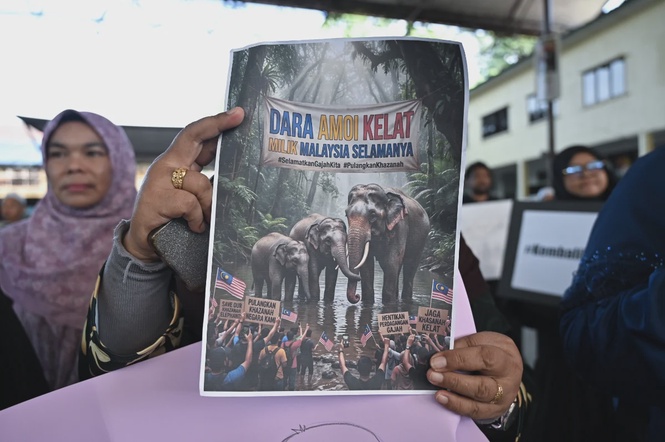
Taiping council says male elephant’s behaviour linked to natural hormonal surge, not sickness, as it dismisses eye illness claims.
IPOH: Behavioural changes observed in Kelat, one of three Malaysian elephants relocated to Japan, are linked to a periodic natural biological condition known as musth, characterised by a massive surge in reproductive hormones, experienced by male elephants, according to Taiping Municipal Council (MPT).
The three elephants – Dara, Amoi and Kelat, collectively known as DAK – are currently housed at Tennoji Zoo under a 25-year international cooperation agreement signed in 2022 between Tennoji Zoo and Taiping Zoo and Night Safari, represented by MPT.
MPT president, Mohamed Akmal Dahalan, said elevated testosterone levels during musth could cause male elephants to become more active, sensitive or aggressive than usual, but he stressed that the condition was normal and was being closely monitored by zoo keepers and veterinarians in Osaka.
“During the musth period, several observations and special management measures have been implemented, including monitoring daily behaviour and aggression levels, regular physical examinations by veterinarians, and controlled isolation to ensure the safety of both the animals and staff.
“Food and water intake, as well as waste output, were also being monitored, while environmental management and enrichment programmes were continuously carried out to reduce stress and maintain the elephants’ wellbeing,” he said in a statement today.
Mohamed Akmal also dismissed claims that Kelat was suffering from ocular or eye-related illness.
He explained that visible changes around the elephant’s eyes were related to swelling of the temporal glands during musth, which could place slight pressure on surrounding areas.
“This is a common natural response among mature male elephants during this phase,” he said.
He noted that Tennoji Zoo had engaged Elephant Business Inc to train staff in protected-contact elephant management, a method designed to ensure safer and more systematic handling, healthcare monitoring and veterinary examinations.
Mohamed Akmal also denied allegations of forced breeding involving the elephants, saying such practices were strictly prohibited under the terms agreed in the memorandum of understanding between both parties.
He further said Tennoji Zoo had informed MPT that a fragment of Kelat’s tusk was recently found inside the enclosure and was believed to have detached naturally through daily use.
“Veterinary examinations found no serious injury or bleeding, and Kelat’s condition remained stable, with ongoing monitoring to prevent infection or further complications.
“MPT will continue working closely with Tennoji Zoo and relevant parties to ensure the welfare, health and management of all the elephants remain at the highest level,” he added.