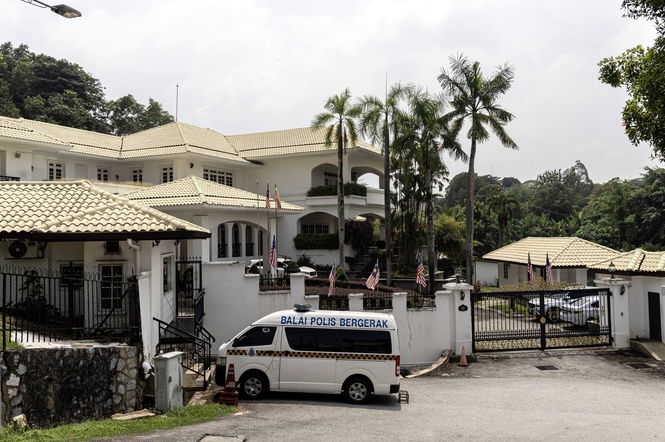
Najib house arrest could affect Malaysia’s anti-corruption credibility, says TI-M
PETALING JAYA: The conditional pardon granted to former prime minister Datuk Seri Najib Abdul Razak to serve the remainder of his sentence at home risks reinforcing the perception that influential politicians do not face the same consequences as ordinary offenders, said Transparency International Malaysia (TI-M).
Its president Dr Raymon Ram said the exceptional treatment of a person convicted in a major corruption case could create expectations for similar treatment in future cases involving grand corruption and financial crime.
READ MORE: Najib’s conditional pardon does not affect pending 1MDB case – MACC
READ MORE: House arrest applies only to SRC sentence, Najib still faces other legal battles
“Malaysia’s anti-corruption credibility will ultimately be judged by whether the principles of accountability, proportionality and equality before the law remain equally strong when those involved are powerful,” he said in a statement.
Raymon said TI-M respects the constitutional power of clemency under Article 42 of the Federal Constitution, but added that allowing Najib to serve the remainder of his sentence under house arrest carries serious implications for Malaysia’s anti-corruption credibility.
He said the decision also had implications for Malaysia’s international standing, potentially affecting its Corruption Perceptions Index score.
“Malaysia should be strengthening confidence in the integrity of its institutions, not creating further uncertainty over whether accountability is applied consistently.”
Lawyer and former PKR Kebun Bunga state assemblyman Datuk Jason Ong Khan Lee said the debate over Najib’s sentence reduction should be viewed objectively within the framework of the Constitution.
He said Article 42 expressly provides for the exercise of the power of ?pardon, remission and commutation of sentences and a person does not lose access to the constitutional process simply because he is a former prime minister.
“Constitutional clemency should not be confused with the judicial process,” he told theSun, adding that Najib’s conviction and sentence were determined by the courts, while the subsequent reduction was a separate exercise of the constitutional clemency mechanism.
Ong said the sentence reduction does not mean that the findings of the court had been overturned.
He added that legitimate questions over transparency, consistency and public confidence should also not be dismissed simply by pointing to ?Article 42.
He said the concern is essentially one of equality before the law, including whether ordinary Malaysians have a comparable opportunity to seek and obtain clemency, and whether the process is perceived to operate consistently regardless of a person’s political position or public profile.
Lawyer Muhamad Aiman Mohd Nahzeri, speaking to Astro Awani, said the wording of the official statement on a RM50 million fine imposed on Najib leaves room for two reasonable interpretations over when his house arrest could begin.
He said the first interpretation is that Najib could begin serving his remaining sentence under house arrest immediately, with failure to pay the RM50 million affecting the eventual release date.
He added that the second is that payment of the RM50 million is a precondition for house arrest, meaning Najib would remain in Kajang prison until the fine is paid in full.
Aiman said he favours the first interpretation, which he considers more consistent with the 2024 Pardons Board decision and the wording of the latest statement.
He said the official statement did not clearly resolve the issue and it should be clarified by the Legal Affairs Division.
“The position of the substitute imprisonment for the RM50 million fine under the new arrangement was not addressed in the statement.”