Najib’s East Malaysia ties could widen Umno-BN’s political options.
PETALING JAYA: Datuk Seri Najib Abdul Razak’s longstanding political ties in Sabah and Sarawak could widen the political options of Umno and Barisan Nasional (BN), while his house arrest could give the party greater flexibility in managing relationships with different political blocs, said Universiti Malaya Academy of Malay Studies dean Professor Datuk Dr Awang Azman Awang Pawi.
He said Najib had forged an unusually visible relationship with Sarawak during his premiership, which continued to shape perceptions of him in the state.
READ MORE: Najib pardon could give Umno greater room to chart own course towards GE16 – Analyst
READ MORE: Police and Prisons Dept assess security at Najib’s residence ahead of house arrest
“By April 2018, Najib had made 60 visits to Sarawak and visited around 160 locations.”
He said the former prime minister had also allocated RM4.3 billion for various projects in the state.
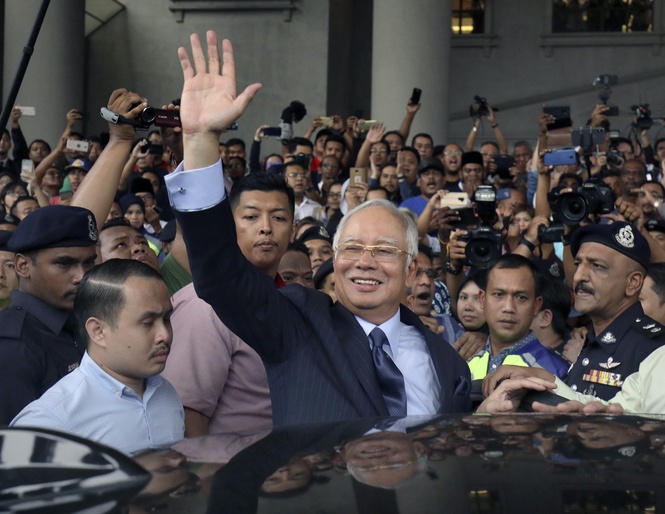
He added that Najib’s relationship with Sabah also retained a personal dimension even after BN lost federal power. “During the 2019 Sandakan by-election, for example, his appearance attracted an enthusiastic reception from supporters.”
Awang Azman said this historical memory helps explain why the Bossku persona could not be understood purely through the political dynamics of Peninsular Malaysia.
He, however, cautioned that historical goodwill towards Najib should not automatically be equated with present-day electoral support.
He said Sabah, and especially Sarawak, had become increasingly assertive in prioritising state interests, the Malaysia Agreement 1963 (MA63), autonomy and federal-state bargaining.
“Therefore, Najib’s house arrest could revive personal goodwill and political nostalgia among sections of the electorate but the larger political calculation in Sabah and Sarawak will continue to revolve around which federal configuration can most effectively accommodate MA63, development needs, state autonomy and equitable representation.”
Awang Azman said the East Malaysian dimension also illustrates why Najib’s house arrest does not necessarily force Umno to choose immediately between Pakatan Harapan (PH) and Perikatan Nasional (PN).
He said it is important to distinguish between “Blue Malaysia”, which he described as an Umno-BN agenda for the country’s direction should BN return to Putrajaya, and the proposed Grand Collaboration or Tafahum Siyasi which involves seeking a political understanding without necessarily merging the parties involved.
He said the development, however, gives Umno greater strategic room to continue supporting governmental stability under the present arrangement while simultaneously developing its own BN identity and exploring areas of understanding with other Malay-Muslim parties where their interests coincide.