
NASA’s next flagship space observatory has officially arrived in Florida, bringing one of the agency’s most ambitious astronomy missions closer to launch. According to NASA, the Nancy Grace Roman Space Telescope reached Kennedy Space Center on June 21, where engineers will carry out the final stages of processing before liftoff later this summer. The milestone marks the transition from years of development and testing to the final countdown for a mission expected to reshape our understanding of galaxies, exoplanets, black holes, and the mysterious forces driving the expansion of the universe.
A Cross-Country Journey For One Of NASA’s Most Important Spacecraft
The arrival of the Roman Space Telescope in Florida follows a carefully orchestrated transportation campaign that began at NASA’s Goddard Space Flight Center in Maryland. After engineers completed integration and extensive testing of the observatory, the nearly 18,000-pound spacecraft was sealed inside a specially designed environmentally controlled shipping container. From there, it was transported to the Port of Baltimore before beginning a voyage along the Atlantic coast aboard NASA’s Pegasus barge, a vessel that has played a major role in moving some of the agency’s largest and most valuable hardware.
Upon reaching Kennedy Space Center, technicians transferred the telescope from the barge to a transport vehicle and delivered it to the Payload Hazardous Servicing Facility, where final prelaunch activities will take place. Every step of the journey was designed to protect the highly sensitive observatory from contamination, vibration, and environmental changes. The mission team now enters one of the most critical phases before launch, where even minor inspections and verification procedures can have a significant impact on mission readiness. For a spacecraft expected to operate millions of miles from Earth, these final checks are among the most important tasks performed during the entire development process.
Inside The Final Processing Campaign Before Launch
Over the coming weeks, engineers and technicians will subject the observatory to a series of detailed inspections and preparations inside Kennedy Space Center’s specialized facilities. Before entering the clean room, the telescope must undergo multiple cleaning procedures designed to remove any contaminants that may have accumulated during transportation. Air filtration systems within the facility will maintain extremely controlled conditions while teams prepare the spacecraft for flight.
Once inside the processing area, technicians will position the observatory vertically and begin a sequence of tests on key systems. The spacecraft’s six solar arrays will be inspected and verified, while engineers evaluate thermal blankets and insulation materials that will protect Roman in the harsh environment of space. Another major milestone will involve fueling operations, during which trained specialists will load approximately 290 gallons of hydrazine propellant into the spacecraft’s tanks. This fuel will be used for trajectory corrections, station-keeping maneuvers, and operational adjustments during the mission. Each procedure follows strict protocols developed to ensure the observatory is fully prepared for the challenges of launch and long-term operations in deep space.
What NASA Says About The Mission’s Ambitious Scientific Goals
According to NASA, the Nancy Grace Roman Space Telescope is expected to become one of the most productive astronomical observatories ever launched. Following liftoff aboard a SpaceX Falcon Heavy rocket, currently targeted for no earlier than August 30, the spacecraft will travel to the Sun-Earth L2 Lagrange Point, a gravitationally stable region located roughly one million miles from Earth.
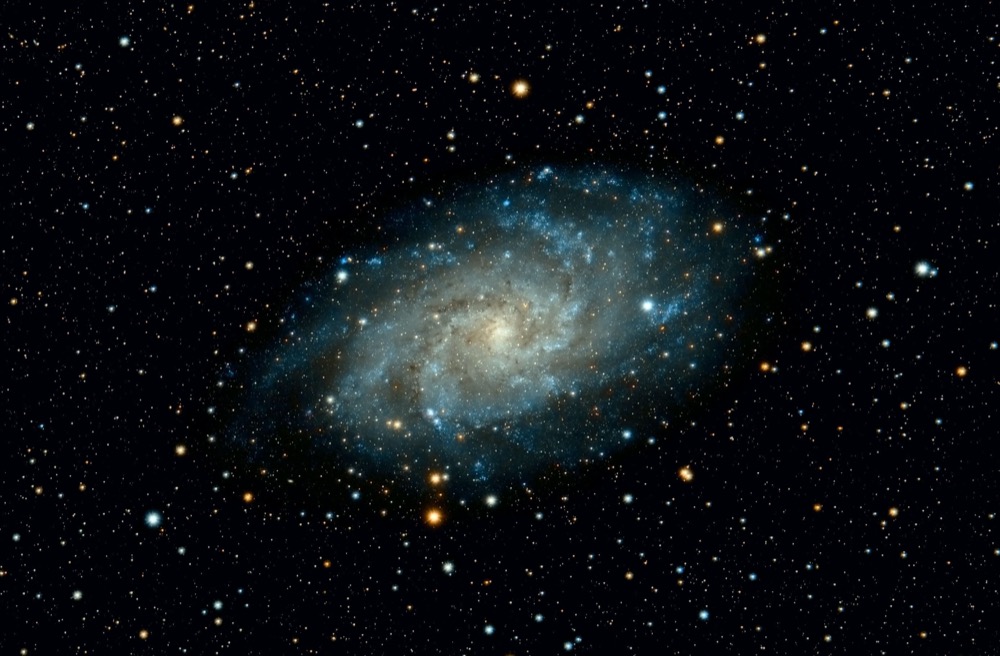
From this vantage point, Roman will conduct wide-field surveys on an unprecedented scale. Its powerful instruments are designed to observe billions of galaxies across cosmic history, helping scientists investigate how the universe evolved over time. Researchers hope the mission will provide critical clues about the nature of dark energy, the poorly understood phenomenon believed to be responsible for the accelerating expansion of the universe. Roman’s observations will also contribute to studies of dark matter, galaxy formation, and the large-scale structure of the cosmos. The observatory’s combination of sensitivity and survey speed gives astronomers the ability to gather immense amounts of data that would take many years for other telescopes to collect.
A Powerful New Tool For Finding Exoplanets
According too NASA, one of Roman’s most anticipated objectives involves the search for planets beyond our solar system. The observatory is expected to identify hundreds of thousands of new exoplanets, dramatically increasing the number of known worlds in the Milky Way. Scientists will use these observations to better understand how planetary systems form and evolve, as well as how common different types of planets may be throughout the galaxy.
The telescope carries a sophisticated 300-megapixel instrument capable of capturing vast regions of the sky in a single observation. Alongside this primary instrument, Roman will test advanced starlight-blocking technology known as a coronagraph. This experimental system is designed to suppress the overwhelming brightness of stars, making it possible to directly observe nearby exoplanets and planet-forming disks. While the coronagraph serves as a technology demonstration, its success could pave the way for future missions specifically designed to image Earth-like planets orbiting distant stars. For astronomers seeking to study worlds beyond our own, Roman represents a major technological step forward.