Mars may once have hidden enormous seas of magma beneath its surface, giving the Red Planet a much more complex interior than scientists had imagined. Using seismic data collected by NASA’s InSight lander, researchers say these ancient magma systems could rewrite part of Mars’ geological history.
Mars has long been seen as a planet with a relatively simple crust. Unlike Earth, there is no convincing evidence that it ever developed plate tectonics, the process that constantly recycles Earth’s crust and drives earthquakes and volcanoes. Because of that, scientists have generally viewed it as a world with a single, rigid outer shell and a fairly uniform crust.
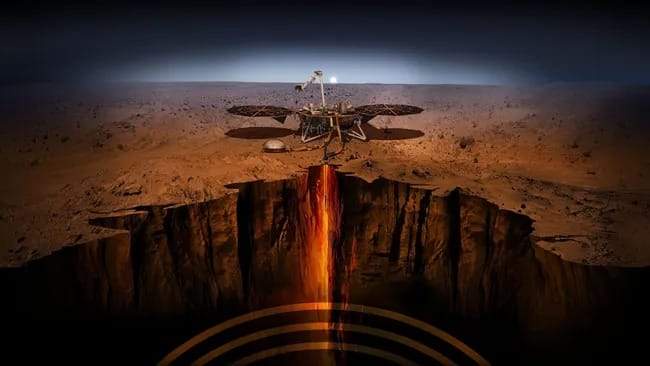
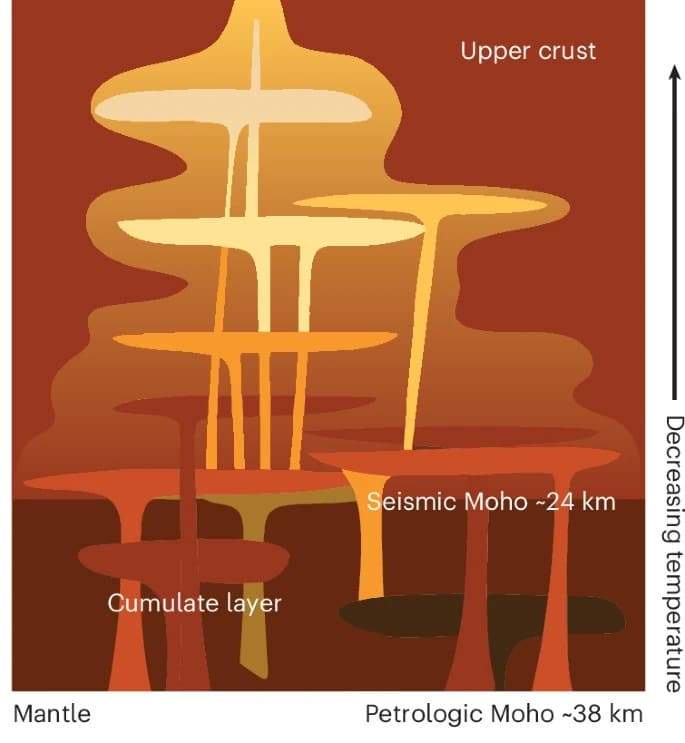
New research paints a different picture. According to a study published inNature Astronomy, seismic measurements from NASA’s InSight mission reveal a boundary about 15 miles (24 kilometers) below the surface. The research suggests that huge underground magma reservoirs once allowed molten rock to separate into different layers before cooling, leaving behind the crust detected today.
Insight Uncovered A Hidden Layer Beneath The Martian Surface
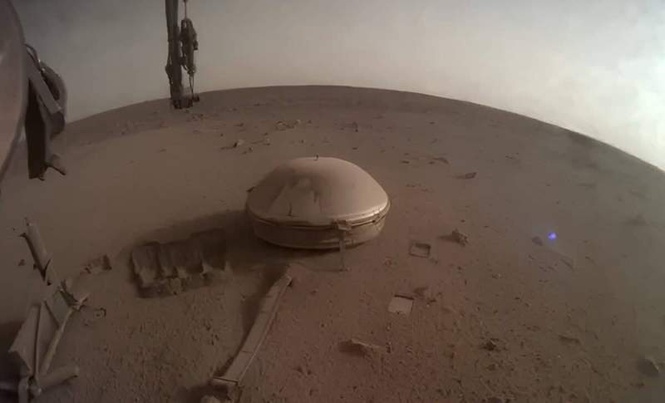
NASA’s Insight lander spent four years on Mars listening for marsquakes caused by meteorite impacts and activity inside the planet. As seismic waves moved through the crust, they traveled at different speeds depending on the rocks they encountered, giving scientists a way to look beneath the surface.
It revealed a boundary inside the crust that researchers had struggled to explain. To solve the mystery, a team from the University of Oxford compared the seismic data with geothermal models. Their analysis showed that the upper crust is made mostly of mafic rock, which is rich in iron, magnesium and silica. Beneath it sits a denser layer of ultramafic rock, which contains iron and magnesium but much less silica and extends another 8.7 miles (14 kilometers) before reaching the mantle.
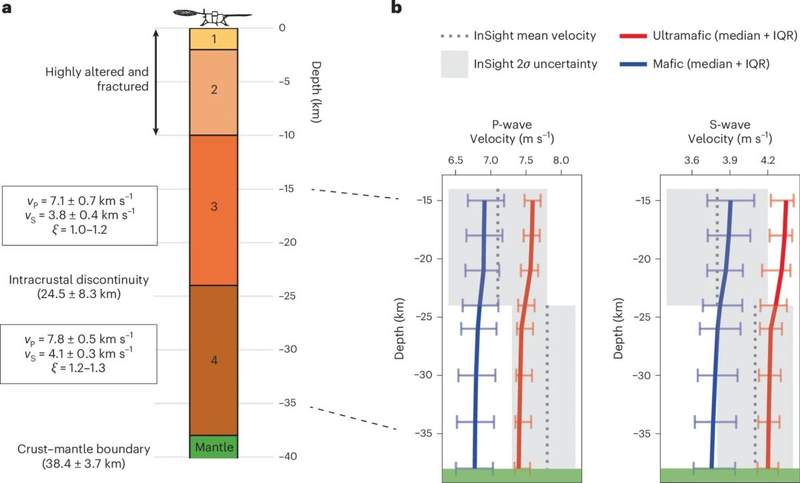
The study published on June 26 in Nature Astronomy explained that this structure is the result of magmatic differentiation, a process in which heavier material sinks below lighter molten rock before everything cools and hardens.
Mars May Have Hidden Vast Underground Magma Networks
The research also indicated these were not isolated pockets of magma feeding individual volcanoes. Instead, the molten rock may have formed vast interconnected reservoirs stretching for hundreds or even thousands of kilometers beneath the crust. That would mean famous volcanic regions such as Olympus Mons and the Tharsis volcanoes were connected below the surface rather than operating as separate volcanic hotspots.
Lead author Tobermory Mackay-Champion, now at the University of Bristol, said the discovery changes the picture of Martian volcanism.
“We’ve traditionally assumed that volcanism on Mars was relatively simple compared to that on Earth, but this discovery suggests that the planet could sustain massive, long-lived magmatic systems capable of evolving and reprocessing molten rock throughout the crust,” he said.
The researchers add that this type of transcrustal magmatism had previously been identified only on Earth.
The Research Paints a New Picture of Early Mars
The team says the magma likely formed as hot material rose from deep inside Mars, heating and partially melting the crust. Similar processes also took place on Earth during the Archaean Eon, between 4 and 2.5 billion years ago.
Researchers said that the large volcanic systems could have filled the Martian atmosphere with greenhouse gases. However, the planet later lost much of its atmosphere and water, a consequence of its weak gravity and the absence of a protective magnetic field. University of Oxford researcher Jon Wade said the discovery could broaden scientists’ view of how habitable environments develop.
“If Mars could develop this kind of complex crust without plate tectonics, then maybe the conditions needed for habitability can emerge on more planets than we realized, including those previously dismissed based on size or their apparent lack of tectonic activity,” he said.
They also found that repeated recycling of molten rock may have left mineral deposits closer to the surface than previously thought.Mackay-Champion said that:
“Mars may hold significantly more near-surface mineral wealth than previously recognized, boosting its potential for future mining, crewed missions and, eventually, permanent settlements.”