
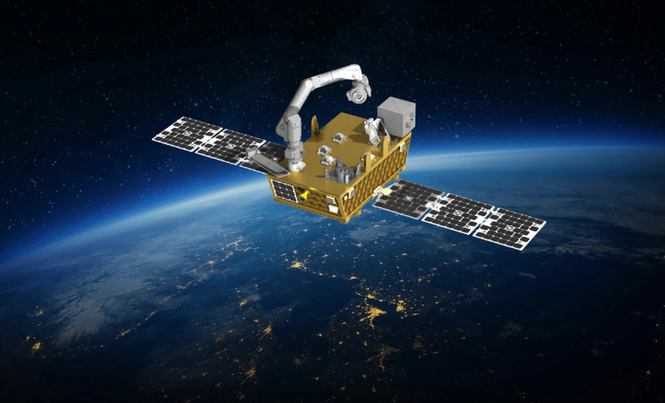
A new generation of gamma-ray detector known as AstroPix will fly aboard the agency’s Fly Foundational Robots mission, scheduled for launch in late 2027. While the technology demonstration may appear modest in scale, its implications are far-reaching. Scientists hope the experiment will help close a long-standing observational gap in gamma-ray astronomy, potentially improving future studies of gamma-ray bursts, active galaxies powered by supermassive black holes, and some of the most energetic phenomena ever observed in the cosmos.
Why AstroPix Could Change The Future Of Gamma-Ray Astronomy
Gamma rays represent the highest-energy form of light known to science. They are produced by extreme cosmic environments, including powerful stellar explosions, intense solar activity, and violent collisions occurring billions of light-years away. Detecting these signals is one of the most effective ways to investigate the universe’s most energetic processes, yet certain energy ranges remain difficult to study with existing instruments.
AstroPix was designed specifically to address part of that challenge. The detectors are capable of measuring gamma rays between 20,000 and 700,000 electron volts, a range that extends far beyond visible light. Scientists are particularly interested in improving sensitivity around the region between 500,000 and 1 million electron volts, where many gamma-ray bursts emit some of their strongest radiation. This energy range is also expected to contain valuable information about distant active galaxies powered by enormous black holes. By eventually combining multiple AstroPix detectors into larger instruments, researchers could create future observatories capable of examining these events with far greater precision. Such advances would provide new clues about how matter behaves under extreme conditions and how some of the universe’s most powerful engines generate enormous amounts of energy.
A Rare Opportunity To Test The Technology In Orbit
For experimental space technologies, reaching orbit is often one of the most difficult milestones. Many demonstrations are limited to balloon flights or sounding rockets, which provide only brief exposure to space-like conditions. AstroPix is receiving a far more valuable opportunity: an extended test aboard an orbital mission.
“The Fly Foundational Robots spacecraft is also a technology demonstration, so the projects were a good fit for each other,” said Dan Violette, an AstroPix team member and post-doctoral fellow at NASA’s Goddard Space Flight Center in Greenbelt, Maryland.
“We need to thoroughly test AstroPix’s performance before we can use the sensors in future science missions. We’ve flown comparable technologies on a scientific balloon mission, and the current prototype eventually will be part of a sounding rocket payload. Many of those flight opportunities only reach near space, though. It’s not often that technology demonstrations like ours can find a ride into orbit.”
The orbital environment will allow engineers to evaluate detector performance under realistic operating conditions while collecting valuable scientific data. The experience gained from this mission could influence the design of future gamma-ray observatories and determine whether AstroPix becomes part of larger scientific spacecraft later in the decade. For technology developers, orbital validation is often the difference between a promising prototype and a mission-ready instrument.
How A Robotic Spacecraft Will Carry And Operate The Experiment
The AstroPix demonstration, officially called the AstroPix Satellite Technology dEmonstration Payload or A-STEP, will be installed inside an Orbital Replacement Unit developed by Rocket Lab Robotics. The payload will not simply ride into space; it will become part of a broader robotic servicing demonstration designed to showcase how spacecraft components can be moved and replaced while in orbit.
A robotic arm supplied by Rocket Lab Robotics will reposition the Orbital Replacement Unit during flight before AstroPix begins collecting data. The concept reflects a growing interest across the space industry in developing spacecraft that can be upgraded rather than replaced entirely. Such capabilities could dramatically extend mission lifetimes and reduce operational costs.
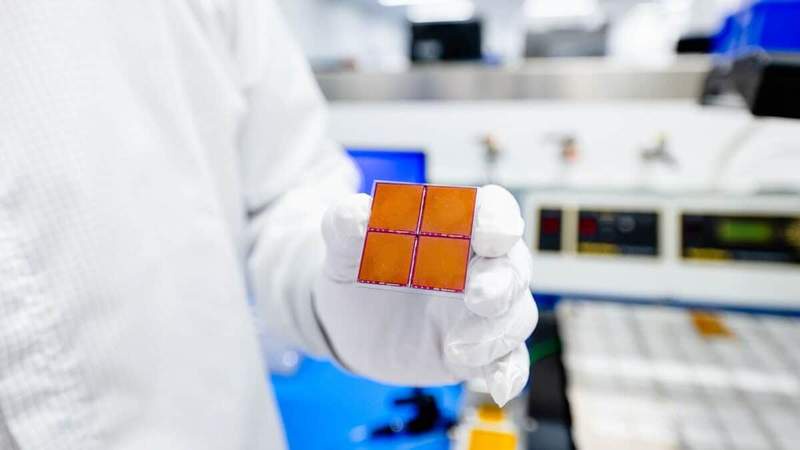
Each AstroPix chip contains four silicon gamma-ray detectors, and every detector includes 1,225 individual pixels. The architecture resembles imaging sensors used in smartphones, though it is optimized for detecting high-energy radiation rather than visible light. The payload includes all supporting electronics needed for power distribution, data collection, and communications while operating in orbit.
NASA’s Broader Goal: Building Upgradeable Spacecraft
The mission is not only about astronomy. It also serves as a testbed for technologies that could reshape how future satellites are maintained and improved after launch.
“The unit already had the volume, power, and data needed to support the AstroPix team’s design,” said Bo Naasz, senior technical lead, In-space Servicing, Assembly, and Manufacturing in the Space Technology Mission Directorate at NASA Headquarters in Washington. “One of our major goals with Fly Foundational Robots is to demonstrate robotic changeout of payloads in orbit, enabling upgrades or improvements to satellites and space instruments at a fraction of the cost of a full mission. Allowing AstroPix to complete its own technology demonstration in orbit is a bonus.”
As highlighted by NASA, the ability to replace instruments in space could significantly alter the economics of exploration and scientific research. Rather than launching entirely new missions whenever better technology becomes available, future spacecraft could receive upgraded components through robotic servicing operations. That approach could accelerate innovation while reducing costs for both scientific and commercial missions.
