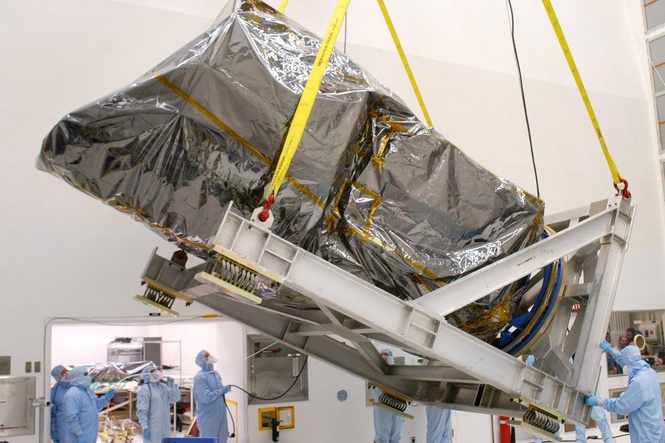
A major NASA space telescope reentered Earth’s atmosphere on Wednesday, bringing to a close its 22-year mission observing the cosmos’s most violent explosions.
The destruction of the Swift Observatory followed less than three months after a high-risk recovery attempt failed.
After tracking its falling orbit brought on by intense solar activity over the past few years, the U.S. Space Force confirmed Swift reentered near Indonesia.
NASA had contracted a private company to assemble a rapid orbit-raising mission, but Katalyst Space's three-armed robotic vehicle encountered issues after launching in July and crashed in September.
How much of the 1.5-ton craft disintegrated upon reentry remained unconfirmed, although NASA expected several of the denser components to survive.
Launched in 2004 for a planned two-year analysis of exploding stars and gamma-ray bursts, Swift ultimately operated 11 times longer than anticipated.
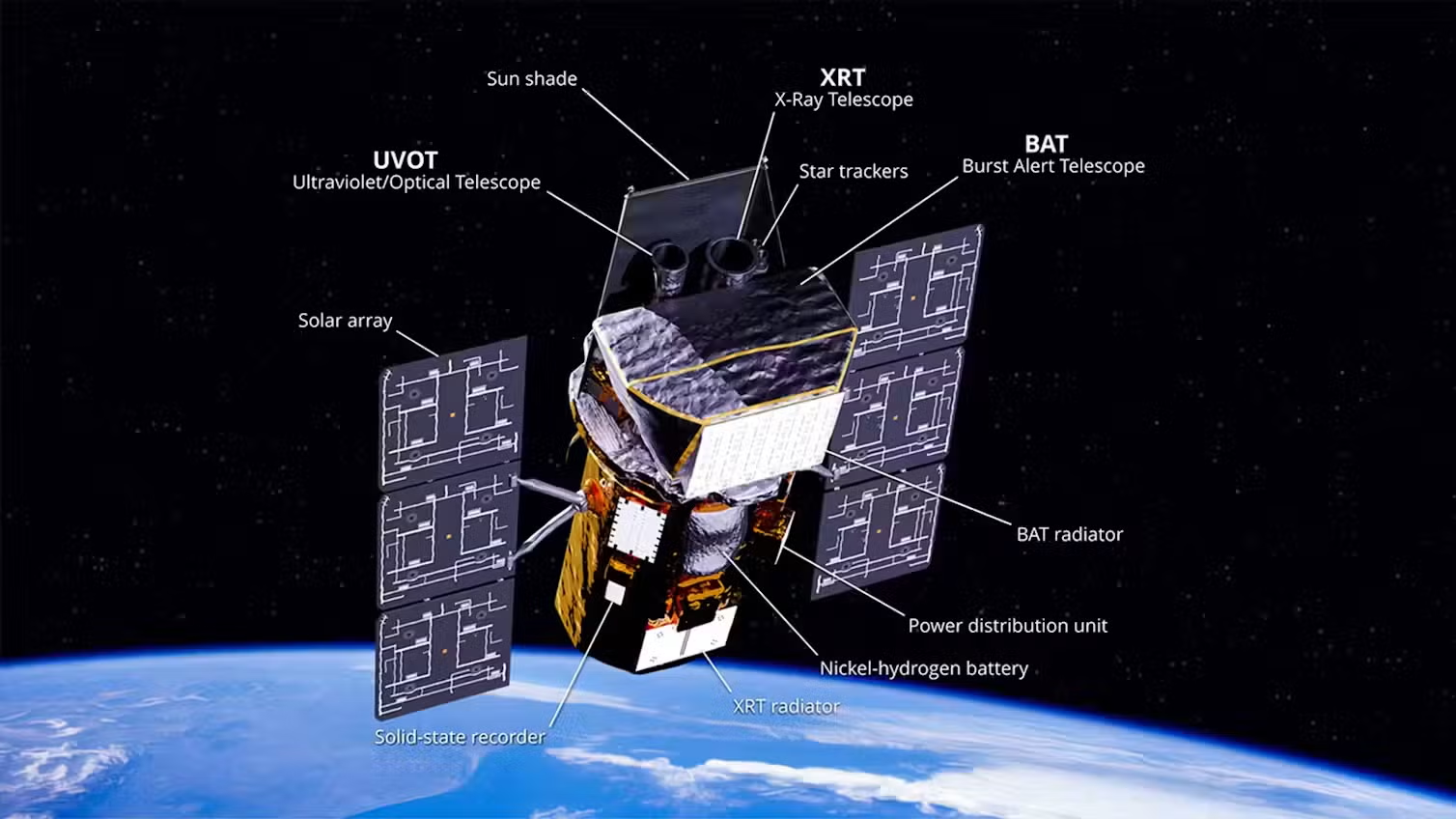
It catalogued thousands of cosmic events, acting as an early notifier for deeper-probing instruments.
Its final tally: more than 2,000 gamma ray bursts and 1,400 exploding stars, not to mention a slew of comets, asteroids and star-shredding black holes. The telescope’s superpower was its ability to swivel swiftly — thus its name — toward erupting celestial events.
“We’ve known this day would come since before Swift was launched. At least in low-Earth orbit, what goes up must come down. And that end is catastrophic,” said Pennsylvania State University’s John Nousek, an astronomer who led the control team.
NASA is now assessing industry interest in conducting a recovery mission for another instrument affected by solar weather: the Hubble Space Telescope. Deployed in 1990, Hubble faces reentry by the mid-2030s.
The agency seeks proposals from commercial partners regarding methods to lift Hubble’s trajectory, modernise its hardware, or execute a controlled deorbit, or a combination. Any intervention must occur by 2032.
Unlike the rushed attempt with Swift, NASA has more time to review options for saving Hubble, noted Nicky Fox, NASA’s science mission chief.
"Hubble still has important science ahead of it," NASA Administrator Jared Isaacman said in a statement, "and we should be looking at every reasonable opportunity to keep it delivering for as long as possible."
Read MoreA Nasa telescope is about to crash to Earth. Here’s what it achieved
NASA crew emerges after 378 days in isolation in 3D-printed habitat
NASA spacecraft is on the verge of plunging back to Earth after failed rescue mission
Scientists discover 'noxious gas' coming out of Mars
Stargazing in November: A great chance to spot two distant planets
Astronomers find new way to work out when aliens would contact us