NEARLY 40 per cent of Malaysia's crude oil supply comes through the Strait of Hormuz, leaving the country's energy supply chain exposed to prolonged disruption arising from the US-Iran conflict.
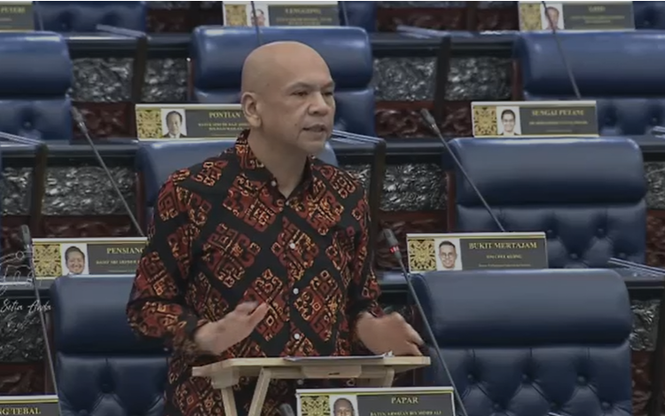
Domestic Trade and Cost of Living Ministry (KPDN) Minister Datuk Armizan Mohd Ali told the Dewan Rakyat today that the disruption had triggered a global supply crisis, pushing up prices of goods and services, including transportation and logistics costs, amid growing competition for alternative supplies.
It said Malaysia's domestic oil refineries depended on both local and imported crude oil, with a significant portion of imports passing through the strategic waterway.
In a written parliamentary reply to Dr Abd Ghani Ahmad (PN-Jerlun), the ministry said the prolonged conflict had also prompted several countries to restrict exports to safeguard their domestic supplies of strategic petroleum-based products.
The conflict, which began on Feb 28, 2026, following attacks by the United States and Israel on Iran, had created wider economic pressures through disruptions to global supply and demand, it said.
To address the impact, the National Economic Action Council (MTEN) has been meeting weekly since March 2026 to assess the implications and coordinate intervention and mitigation measures.
A Crisis Management Task Force was also established under MTEN, involving KPDN and other ministries, to monitor developments daily and coordinate responses with industry players and relevant stakeholders.
The government has adopted four main priorities in managing the crisis: fiscal consolidation and economic resilience; securing strategic supply chains and essential consumer goods; supporting the sustainability of local businesses, particularly micro, small and medium enterprises (MSMEs); and managing the cost of living through price stabilisation, subsidies and additional assistance.
Despite the global pressures, Malaysia's inflation remained below two per cent, at 1.9 per cent in October.
This compared with 7.8 per cent in the Philippines, 5.1 per cent in Vietnam, 3.9 per cent in Thailand and 3.2 per cent in Indonesia.
The International Monetary Fund (IMF) had projected global inflation to rise from three per cent in 2025 to 4.7 per cent in 2026.
Amirzan said the government would continue implementing measures under Budget 2027 and the National Cost of Living Action Plan 2030 (NCLAP30), launched on Oct 24, 2026.
He added that the effectiveness of its interventions was reflected in three developments: uninterrupted supplies of fuel and essential goods for consumers and industry, no need for domestic rationing, and relatively stable inflation.
It attributed the stability partly to targeted fuel subsidies for domestic consumers and industry, supported by additional government allocations.
The government would continue monitoring developments in West Asia and strengthen its cross-ministerial response through the special crisis task force, it said. - November 26, 2026