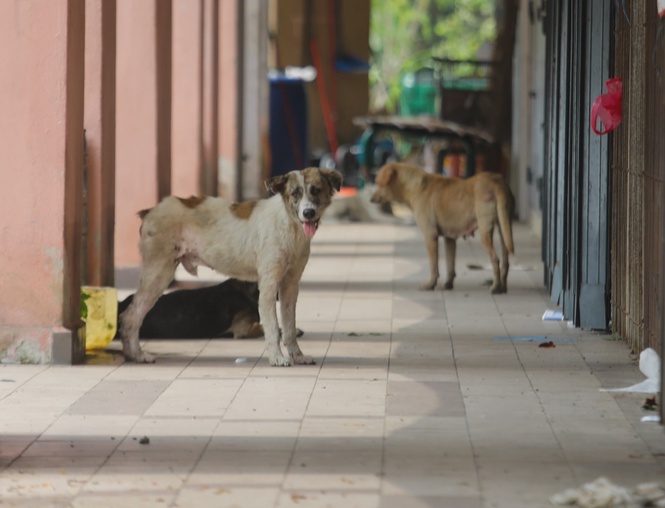
The dog must be surrendered alive, have no serious injury or signs of abuse, and be unlicensed or have no proof of ownership.
PETALING JAYA: Negeri Sembilan Local Government and Housing executive councillor John Siow Kong Choon will meet Seremban City Council mayor Datuk Masri Baharuddin next week to discuss the council’s incentive for the voluntary surrender of stray dogs.
Siow, who was appointed to the state executive council on Aug 7, said the programme was decided by the previous state administration, but any policy involving stray dog handling should be reviewed from the perspective of public safety.
READ MORE: Three men arrested for alleged involvement in online scam syndicate
READ MORE: DAP’s continued support for government is not a ‘blank cheque’ – Loke
He said he had received feedback and concerns from members of the public, various groups and NGOs over whether members of the public had the knowledge, skills, experience and equipment to safely handle or surrender stray dogs. Masri would brief him on the programme, its implementation and relevant procedures at their meeting.
“We will also discuss and jointly look at the most appropriate, safe and effective approach to address the issue,” he told theSun.
Siow was responding to concerns raised by Lawyers for Animal Rights (LAR), which has urged the council to withdraw the 2026 Voluntary Stray Dog Surrender Incentive Programme.
LAR described the incentive to surrender stray dogs to the council as a “cash-for-capture scheme” that exposed the public to risk and could encourage pet dogs to be passed off as strays for cash.
Asked whether he would direct the council to withdraw the incentive and promote trapneuter-return (TNR), Siow said he would first meet Masri before determining the way forward.
Siow said tackling strays could not rely solely on catching or removing them from the streets.
“A longer-term solution required cooperation among the government, local authorities, NGOs, residents and pet owners, including preventing irresponsible abandonment and addressing the root causes of the stray population,” he said.
He emphasised that the government’s objective is not to ignore the issue, but to find a solution that is safe, practical, effective and sustainable, while taking into consideration both the safety of the public and the proper welfare of animals.
Under the council’s programme, Malaysian citizens living within its jurisdiction can claim RM50 for an adult stray dog and RM25 for a puppy below six months, with the programme running from Aug 24 to Nov 30.
The dog must also be surrendered alive, have no serious injury or signs of abuse, and be unlicensed or have no proof of ownership.
Meanwhile, Masri said the council was often blamed when attacks or accidents involving stray animals occurred because it was seen as failing to address the problem, as reported by a local Malay daily on Friday.
“It is easy to question our scheme, but resolving the stray dog problem isn’t easy.”
He said the council had appointed a contractor to catch stray dogs and allocated funds for a sterilisation programme to control their population.
“We are not capturing and disposing of them. “Instead, all the animals will be managed by NGOs and placed at suitable locations.” He urged those who disagreed to propose alternative solutions.