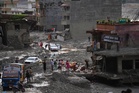
A young survivor said she lost 17 members of her family in last week’s deadly flash floods in Nepal as the scale of the devastation began to emerge.
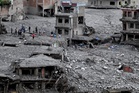
The floods, triggered by a glacial collapse, wiped out entire towns and villages along the Nepal-Tibet border, killing over 1,100 people and leaving nearly 4,000 missing, including hundreds of foreigners.
Kopila Tamang said she lost 17 relatives, including her mother, siblings, grandmother, uncles, aunts, and cousins, after floodwaters destroyed her family’s home in Rusawa.
“They are like my children,” the 20-year-old told CNN, referring to her younger siblings and cousins. “I miss them.”
She had tried calling some of their phones. “There is no answer.”
In Nepal, as in most South Asian countries, extended families often share a home or live in close-knit communities.
The floods tore through settlements along the Trishuli and Bhotekoshi river corridors. “The flood in the Bhotekoshi river in Rasuwa was not an ordinary flood,” prime minister Balender Shah said.
“It was one of the region’s major disasters, triggered by an avalanche of snow and ice in the Himalayan region.”
He said that the disaster indicated “the risks we face in the Himalayan region are increasing alongside climate change”.
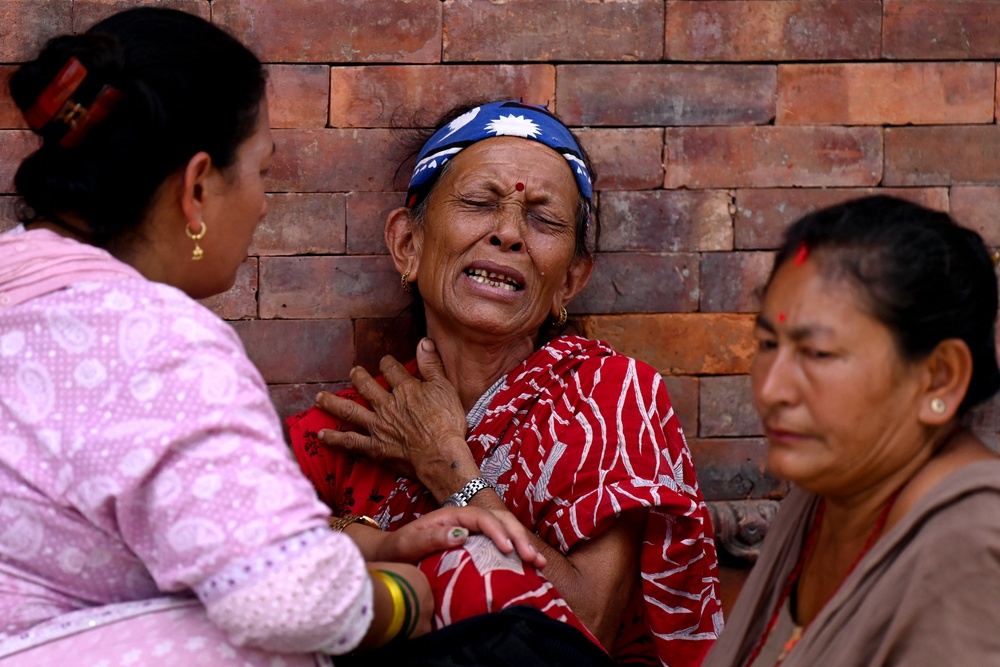
Kopila Tamang is one of hundreds of Nepalis who are mourning the loss of almost their entire families.
Arjun Poudel, a reporter with the Kathmandu Post, lost several members of his family. He recalled the moment his wife told him that the floods were tearing through the place he once called home.
“There’s nothing left in the village,” Mr Poudel remembered her telling him on the phone. “Most of the people are gone.”

Betrawati, a historic settlement where people once gathered for festivals, worship and markets, was transformed within minutes. Homes, bridges and roads were swept away.
“Sole and Tupche sit nearly a hundred metres above the riverbed. No flood in living memory – in centuries, as far as anyone knew – had ever reached that high,” he wrote in the paper.
“I am 44 years old, and I have never once, in all that time, seen the river come for us.”
He remembered a local resident telling him that “90 percent of the homes in Betrawati are gone”.
“The school van was swept off too,” he added. “There’s a boy near me with a broken leg. Another man beside him – broken leg, his eye is hurt badly. If you can get a helicopter here, please, send one.”
The impact has been particularly severe on children. Unicef estimates that more than 17,000 children have been directly affected across the Trishuli and Bhotekoshi corridors.
Samir Tamang, 16, managed to reach higher ground after the Bhotekoshi became a torrent of water, and debris. His sisters, aged 13 and seven, were at home and went missing.
“My youngest sister had an injury on her hand and could not attend school so my older sister stayed back to take care of her,” he told the Kathmandu Post. “I don’t know what to do anymore. My sisters were like my closest friends, and in a single moment, the flood took them away.”

Akash Tamang, 14, survived by fleeing into a forest. His younger brother, 8, and sister, 11, who had left for school, disappeared.
“I managed to survive, but my brother and sister couldn’t,” he said.
The children had been staying in a rented room near Betrawati while their parents worked elsewhere.
“I have no idea where the river carried my siblings to,” the boy said.
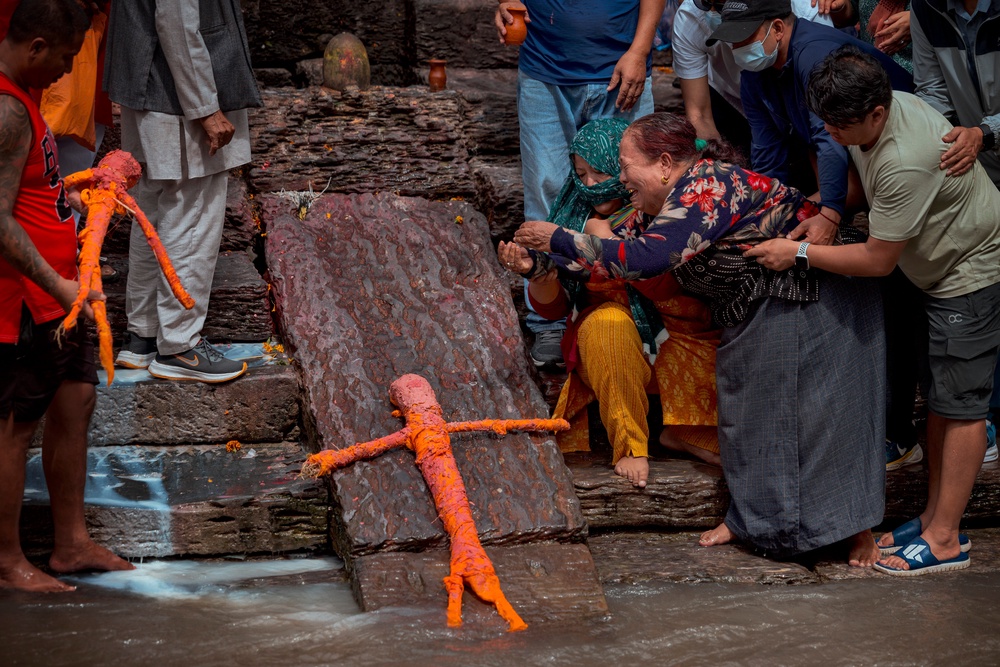
Nepal’s finance minister, Swarnim Wagle, said initial estimates suggested the country could need up to £3.7bn to rebuild the Rasuwa and Nuwakot districts near the Tibet border.
Nepal has asked the UN for urgent climate-disaster funding. Maheshwar Dhakal, head of climate change in the ministry of agriculture, forest and environment, argued that human-caused climate change had contributed to the disaster in his country. “Those who have contributed the least are suffering the most,” he said, according to the New York Times.

For the survivors, the disaster is far from over.
Children are sleeping in temporary shelters, many without proper clothing or access to school. Aid agencies are warning of risks including disease, malnutrition, exploitation and severe psychological trauma.
The physical destruction is also making rescue and recovery difficult.
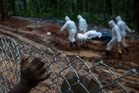
Villages remain cut off as bridges and roads lie wrecked, while debris and unstable ground continue to hamper efforts to recover bodies and find the missing. Many worry that more people remain buried in the mud.
For survivors like Kopila Tamang, there is no easy way to measure what is lost.
She introduces her seven-year-old brother Koben Tamang, whom she’s now left to look after on her own. “I have one small brother. I’ve to take care of him. Now I’m the mother for him. So I have to be strong. When I cry, he will also cry.”