.png)
NEPAL’S catastrophic floods have killed at least 955 people and left more than 4,400 unaccounted for, with rescuers entering a sixth day of operations amid treacherous terrain, damaged infrastructure and rapidly changing flood conditions.
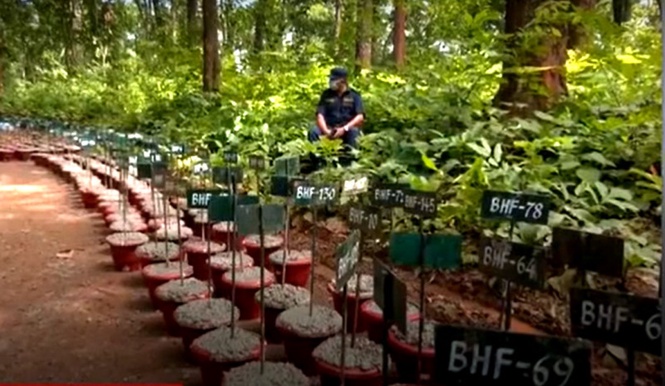
Hundreds of victims whose bodies have not been claimed by their families are being buried in mass graves deep in the jungle outside Bharatpur city after DNA samples are collected.
The policeman overseeing one burial site told CNN that more than 200 bodies had been buried there in a single day.
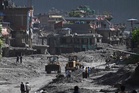
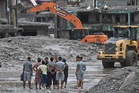
For many families, travelling downstream to search for missing relatives is impossible after floodwaters swept away bridges and buried roads under tonnes of silt and debris.
Rescue teams in Nepal are battling unpredictable rivers, flooded settlements and marshland as they search for survivors and recover victims from one of the country’s worst natural disasters in years.
“There are too many challenges,” said E. Hawadi, a police officer coordinating rescue efforts in the badly affected Nuwakot district.
“There are no roads, they have all been washed away, and many areas are just not accessible,” he told AFP.
Floodwaters remain high in some areas, while elsewhere the ground has turned into thick mud, slowing rescue teams and making access increasingly difficult.
“It is very difficult for my men. The area is still flooded, and elsewhere it is all marshland,” Hawadi said.
Entire communities have been swept away, leaving families homeless and forcing survivors to shelter in temporary facilities amid continuing heavy rain.
Unidentified bodies are being buried in mass graves following DNA sampling as authorities struggle to identify victims and reunite families with their loved ones.
The scale and geography of the disaster have forced rescuers to rely heavily on helicopters, often the only practical means of reaching isolated communities.
“Once my men are dropped, they have to roam over large distances to conduct search and rescue,” Hawadi said. “But the helicopters have to return because there are not enough of them.”
With rescue resources stretched across a vast disaster zone, authorities have continued sending reinforcements to Bidur, a small town on the banks of the Trishuli River that has become a key hub for rescue operations.
Foreign ministry spokesman Lok Bahadur Poudel Chhetri appealed for international assistance, including specialist teams and equipment to “locate people who may be buried under debris”.
Nepal’s mountainous landscape is making rescue and relief operations particularly hazardous.
“This is the Himalayas... We have to be very careful when starting any rescue operation or relief operation,” he told reporters.
“The gorges are very deep and steep, so that’s the difficulty.”
The International Federation of Red Cross and Red Crescent Societies estimated that about 93,000 people may have been affected by the floods, with many homes destroyed or severely damaged.
More than 40 bridges have been damaged or destroyed, severely restricting access to affected communities.
India and China are sending prefabricated Bailey bridges that can be rapidly assembled to restore vital transport links without requiring heavy construction equipment.
Adverse weather poses challenges
Prime Minister Balendra Shah described the rescue effort as “challenging due to adverse weather, difficult terrain, and ongoing risks”.
The United Nations World Food Programme said damage to roads, bridges, settlements and critical infrastructure had “severely disrupted access to affected communities”, creating major obstacles for relief operations.
The agency is sending 2.4 tonnes of high-energy biscuits to families who have lost access to cooking facilities.
Rescue teams are also struggling with shortages of essential equipment, including flotation devices required to operate safely in floodwaters.
The swollen rivers remain particularly dangerous, with watercourses changing direction and flooding areas that had previously been accessible.
“For example, an area that was dry yesterday is completely flooded today,” Hawadi said.
The unpredictable conditions have made night-time rescue operations impossible in many areas, despite the urgency to locate those still missing.
“It is unpredictable,” he said. “Floods can come at any time.”
The disaster has also triggered an urgent search for workers believed to be trapped inside hydropower tunnels in Nepal after thick mud inundated the facilities. More than 900 workers at various projects are reported to remain missing.
The UN estimates that about 65,000 people in Nepal urgently require water, sanitation and hygiene assistance, while families continue to struggle to obtain information about missing relatives.
Across the border, Chinese authorities are also monitoring the situation closely. Weather forecasters have warned of further rain and poor conditions around Gyirong, raising concerns that water levels in a nearby barrier lake could rise.
Officials have also warned that glaciers near the flood-affected area could collapse, adding another layer of danger to already difficult rescue operations.
With tens of thousands still missing and access to many communities severely disrupted, Nepal’s rescue effort is increasingly becoming a race against time, weather and an unforgiving Himalayan landscape. - September 1, 2026