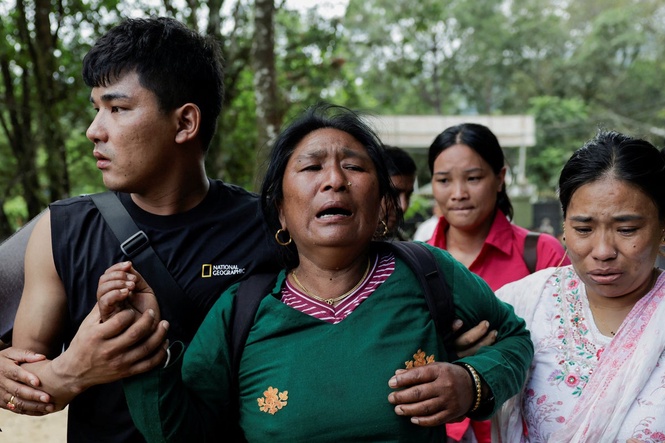
China's embassy in Nepal has said the situation in the Himalayan nation is “at critical stage for rescue and emergency response” amid fears of a second flood after a lake formed by debris from a glacier collapse began to overflow on Friday morning.
The embassy warned residents downstream of the landslide-dammed lake to “remain highly vigilant”, as the rescue operations in Nepal and Tibet resumed.
Residents in Nepal’s Rasuwa district, on the border with China’s Tibet region, were seen rushing up hillsides to escape a possible surge in river levels.
The overflowing lake upstream of the Gyirong border comes as authorities in both countries warn of further deluge after catastrophic floods killed more than 489 people and left hundreds missing, including 33 Britons.
China has warned that water equivalent to about 1,200 Olympic-sized swimming pools is expected to flow into the already dammed lake on its side of the border over the next three days, raising the risk of its banks bursting.
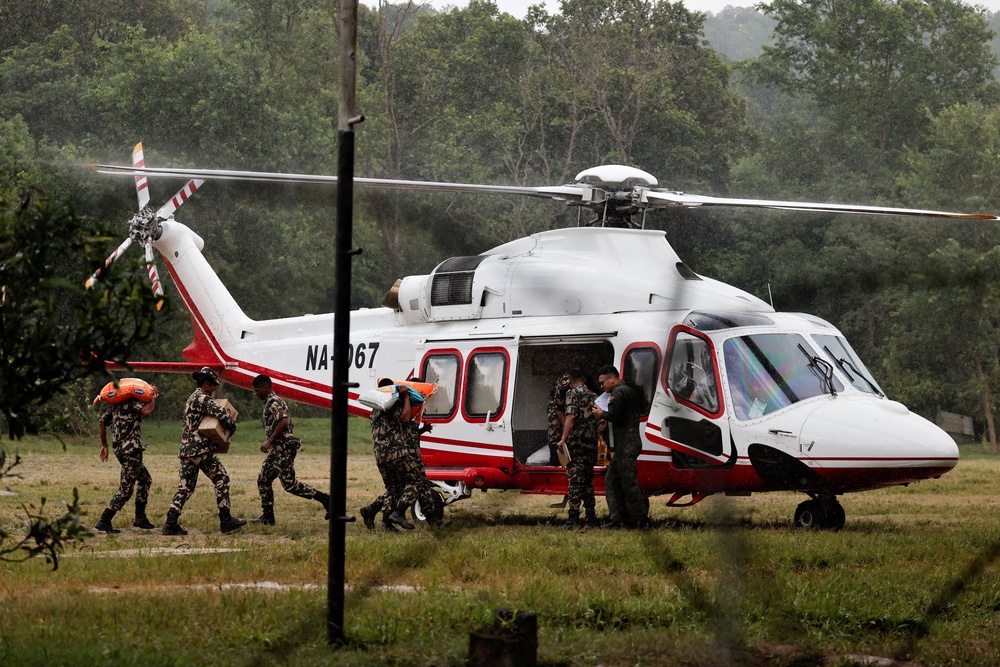
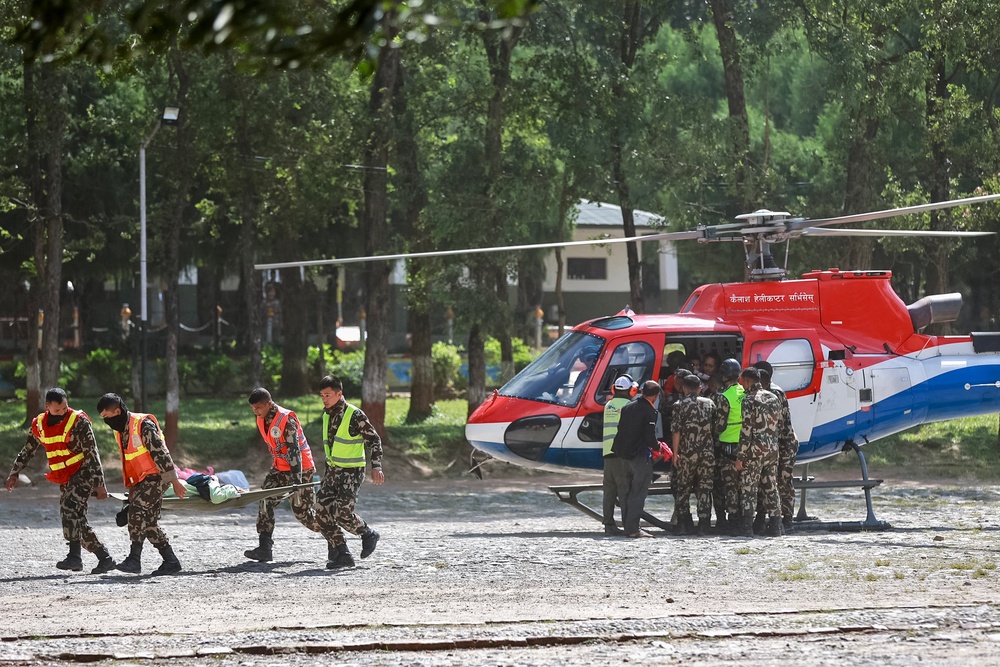
Nepali army helicopter teams are racing against time, working to rescue around 100 people trapped inside a tunnel at a hydropower project that was swamped by flooding two days earlier.
Read MoreUK offers £5m to Nepal following devastating flash floods
What triggered Nepal flash floods? And why are experts worried a second flood is ‘imminent’?
Nurse among 33 Britons missing in Nepal’s devastating flash floods
Nepal flash floods mapped: Where deadly floods hit along Tibet border
Key Points
- Death toll in Nepal rises to 489
- Nepal issues alert as dam on Tibetan side bursts again
- Rescuers racing against time to save 100 trapped in hydropower tunnel
- Breaking: China resumes rescue operation in Tibet
- Lake formed by landslide on Nepal-Tibet border overflows
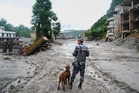
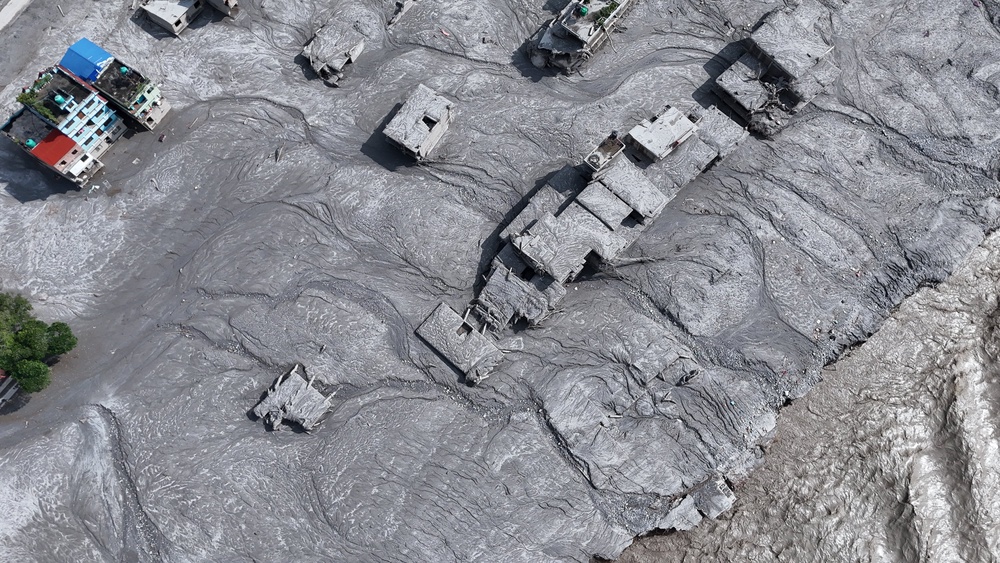
In pictures: An aerial view shows debris and mud covering an area following flash floods in DevGhat village, Nepal
15:15 , Bryony Gooch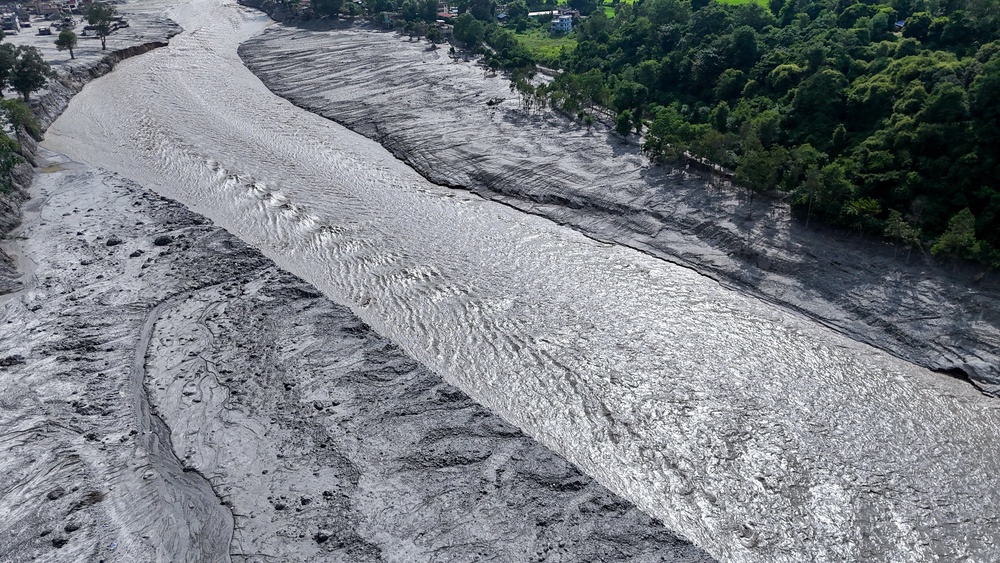
Surrey A-level student and family among those missing after Nepal floods
15:00 , Bryony GoochAn A-level student from Surrey and his family are among those missing and feared dead after flash floods in Nepal.
Spandan Sahu, 18, was in Nepal with his father Santosh Sahu, 46, who was chief executive of UK pharmaceutical technology company Charac, his mother Surabhi Manmath Padhy, 44, and sister Syna Kumari Sahu, 13.
Spandan had just finished his A-levels at Royal Grammar School, Guildford, and according to his LinkedIn was preparing to study philosophy, politics and economics at university.
His profile said he was a senior prefect at the private school and a member of the hockey and cricket teams.
A spokesperson for the school said: “It is with great concern that we have been informed that a former student, along with members of his family, have been reported missing in Nepal.
“Whilst we are hoping for positive news, we do not have any further information at this time.
“Our thoughts, love and deepest sympathies are with all of the families and loved ones of anyone affected by this tragedy in Nepal at this incredibly difficult time.”
‘Everyone is dead. I’ve lost everything’: Survivors of Nepal’s flood recount horror
14:40 , Bryony GoochAid agencies say the rough terrain is making it difficult to reach the worst-affected areas, as 538 people are confirmed dead in catastrophic floods in Nepal after a glacial landslide, Alisha Rahaman Sarkar reports.
Read more here:
Nepal floods latest: Rescue operation at ‘critical stage’ amid fears overflowing lake
Watch: Trump says US offers Nepal aid as dozens of Americans may be missing
14:20 , Bryony GoochNepal's government hosts talks with Meta and TikTok amid misinformation and graphic images surrounding floods
14:00 , Bryony GoochNepal’s government has asked Meta and TikTok to immediately remove graphic images, AI-generated videos, fraudulent QR codes and misleading posts circulating on their platforms following the devastating floods, according to the Kathmandu Post.
Government officials reportedly held talks with Nepal-based representatives of the two social media companies on Friday, amid concerns the public could be misled, relief efforts could be obstructed, and further distress could be caused to families of victims.
Up to four inches of rain could fall, complicating rescue missions in Nepal
13:51 , Bryony GoochHeavy rain in Trishuli could complicate rescue missions ongoing to help people in Nepal.
It is understood that storms could continue over the weekend, with up to four inches in isolated spots.
Nepal monitoring two lakes, flood risk to remain until they're fully drained, official says
13:45 , Bryony GoochNepal is monitoring two lakes upstream of the flood zone where hundreds died on Wednesday, an official with Nepal's Disaster Management Authority said.
Flood risks will remain until the two lakes have fully drained, the official added, as one of the two lakes began overflowing on Friday.
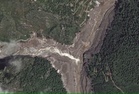
Satellite images showed the two lakes in proximity to the site where a glacier collapse was believed to have pushed rock, ice, mud and debris into river systems on Wednesday, causing flood waves that levelled houses and tore away bridges.
The formation of one of the two lakes had been captured in aerial footage by a Chinese rescue team on Thursday.
The footage on Thursday showed masses of brown water accumulating in a basin. By Friday, water was draining from that lake, according to new satellite imagery.
The imagery also showed another lake upstream that appeared to be growing in size and was bigger in surface area than the first lake, without any visible outlet as of Friday morning, meaning that water pressure may still be building there.
Nepalese authorities are relying on satellite imagery to track conditions, though monitoring is limited by the availability of images, the Nepalese official said.
Nepal plans to install cameras and sensors downstream, including near the border town of Timure, and is assessing deployment options by helicopter, he said.
Glacier collapse that killed hundreds in Nepal was decades in the making, scientists say
13:30 , Dan HaygarthAwall of ice, rock and mud tore through Nepal and Tibet this week, killing hundreds of people. Scientists believe the disaster began when part of a glacier and the mountainside beneath it collapsed. Though it is unclear what set it off, it has raised a bigger question: are the Himalayas becoming a more dangerous place to live?
High on Langtang Lirung, a 7,000m mountain on the Nepal-Tibet border, part of the mountainside gave way and took a section of glacier with it.
The resulting mass of ice, rock and debris crashed into the Lhende Khola river below and grew as it travelled, picking up sediment and water before surging downstream into Nepal's Rasuwa, Nuwakot and Dhading districts.
A lake formed by the initial landslide has since begun overflowing, triggering fresh panic in communities already devastated by Wednesday's disaster. The death toll has risen to 538 in Nepal and five in Tibet, authorities say.
The Red Cross says more than 90,000 people had been directly affected and were in urgent need of help, and warned the crisis was "still unfolding" as officials braced for further flooding.
Read more:

Glacier collapse that killed hundreds in Nepal was decades in making, scientists say
Japan foreign minister says relief team starting operations
13:15 , Dan HaygarthJapanese foreign minister Toshimitsu Motegi said Friday that two members of an emergency relief team were set to start their operations at the disaster site in Nepal.
Japan also has decided to provide emergency relief goods at the request of Nepal and will provide additional support as needed, Motegi said.
Full story: Nurse among 33 Britons missing in Nepal’s devastating flash floods
12:58 , Dan Haygarth
Nurse among 33 Britons missing in Nepal’s devastating flash floods
Nepal and China resume flood rescue after lake threat eases
12:46 , Dan HaygarthNepal and China resumed rescue operations that had been suspended briefly in the flood-hit Himalayas on Friday after risks from an overflowing lake were found to be manageable, easing fears of fresh devastation.
Wednesday's catastrophic flood caused by a glacier collapse killed 547 people in Nepal and five in China's Tibet, with almost 1,000 more missing in the two countries.
A huge torrent of rock, ice, mud and debris cascaded through Himalayan mountain river systems after the collapse, and also led to the formation of a lake where water continued to collect and rise.
Watch: Rescuers race against time to rescue 100 trapped in Nepal tunnel
12:25 , Dan HaygarthBritish psychiatrist flies to Nepal to search for husband missing after floods
12:17 , Namita SinghA British psychiatrist has travelled to Nepal in search of her husband, who has been missing since deadly flash floods swept through the Himalayan border region on Wednesday, she told The Telegraph.
Pravin Atmakur, 54, was leading 77 pilgrims on a journey to Mount Kailash in Tibet when the floods struck, killing over 500 people, while hundreds remain missing
His wife, Manjula Atmakur, arrived in Kathmandu on Friday and said she was determined to find him.
“I came here with the only agenda that I want to take Pravin back home alive,” she said.
The couple are both former NHS psychiatry consultants. Atmakur said the family felt abandoned by the British government and criticised the lack of information about the search.
“No one told us anything. We clearly feel let down by the British government. There is no information, they are waiting for China to share the information, updates,” she said.
Rescuers pull out survivors from debris and mud
12:03 , Namita SinghRescuers pulled out survivors caked in dark brown mud and helicopters lifted stranded people to safety Friday as Nepal and China raced to respond to catastrophic flash floods that killed more than 500 people.
There was little information on survivors on the Chinese side, where the death toll rose to five Friday as state media showed evacuations of villages and leaders' efforts to direct the relief response.
China's state media previously said 558 people were missing. Across the border, Nepal’s disaster management authority said Friday that 977 people were still unaccounted for. Hundreds of them were foreigners in the area to work, trek or make a pilgrimage to a sacred peak.
Nepali authority says the death toll in flash floods has risen to 538
11:46 , Namita SinghNepal's National Disaster Risk Reduction and Management Authority said on Friday that the death toll in the flash floods that struck on Wednesday has risen to 538.
The authority said in an update that the number of missing people remained at 977. It said 14,829 security personnel have been mobilised for search and rescue operations. So far, 3742 people have been rescued.
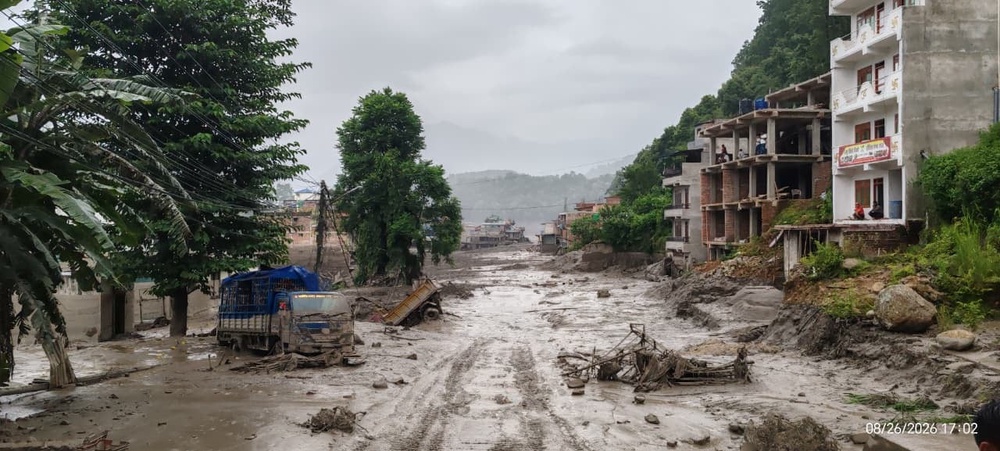
‘Everyone is dead. I’ve lost everything’: Survivors of Nepal’s flood come to grips with death and destruction
11:30 , Namita SinghAid agencies say the rough terrain is making it difficult to reach the worst-affected areas, as 489 people are confirmed dead in catatrophic floods in Nepal after a glacial landslide, Alisha Rahaman Sarkar reports

Survivors of Nepal’s flash floods come to grips with the death and destruction
China's CCTV says dammed lake risks 'manageable', downstream rescue efforts resume
11:30 , Namita SinghDownstream rescue operations in China had resumed on Friday following a brief halt, after flood risks from an overflowing barrier lake on the Nepal-Tibet border were deemed "manageable", China's state broadcaster said.
‘Critical stage for rescue’: Stark warning from Chinese Embassy in Nepal
11:23 , Namita SinghChinese embassy in Nepal has issued a stark warning to the resident, warning that the landslide-dammed lake formed after an avalanche has started to overflow, “posing a risk of further breach”.
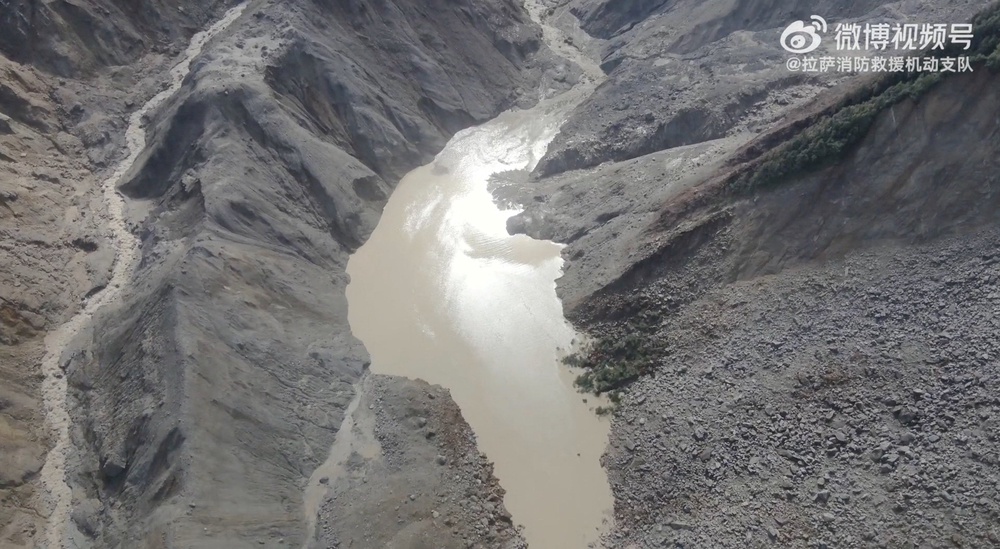
Asking the locals in the downstream areas to exercise caution, the embassy asked them to remain “highly vigilant”.
Lake overflows on Nepal-China border, sparking panic and halting rescue
11:17 , Namita SinghA lake formed by a landslide on the Nepal-China border started to overflow on Friday, triggering panic and putting at risk areas devastated by a flash flood two days ago as rescue efforts were briefly halted.
Wednesday's catastrophic flood caused by a glacier collapse killed 489 people in Nepal and five in China's Tibet, with almost 1,000 more missing in the two countries. A huge torrent of rock, ice, mud and debris cascaded through Himalayan mountain river systems after the collapse, and also led to the formation of a lake where water continued to collect and rise.
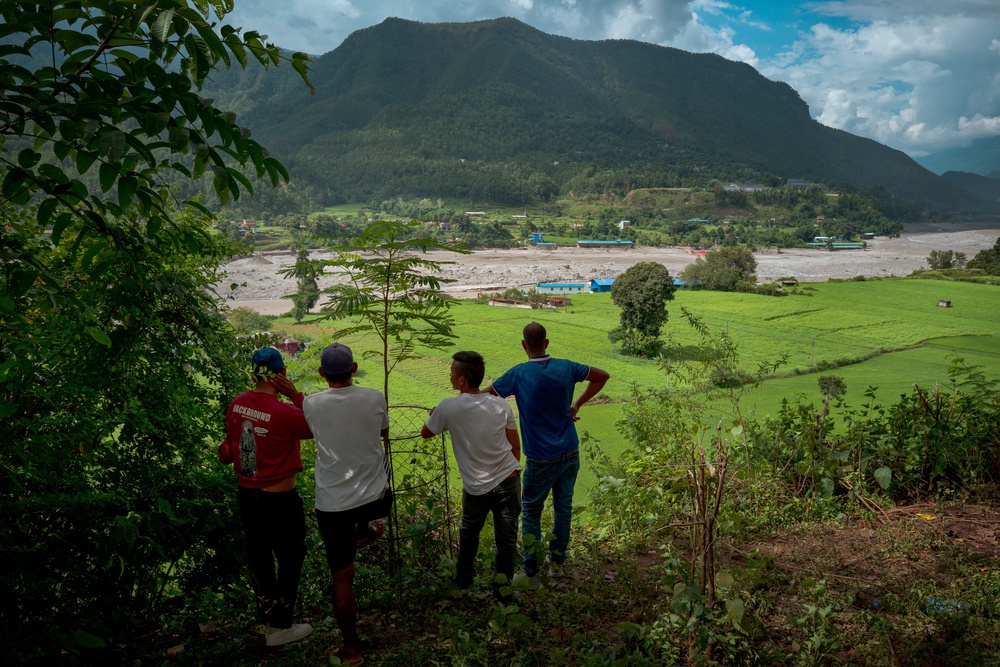
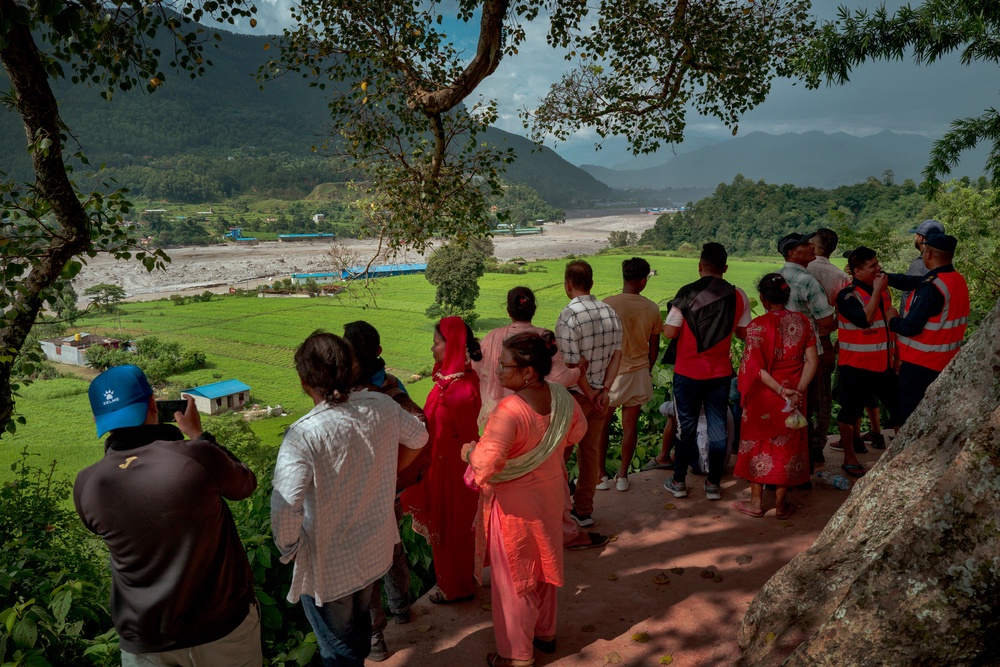
On Friday, the lake's reservoir had topped 2.5 million cubic metres of water, up from the estimated 1.5-2 million cubic metres recorded a day earlier, before overflowing into the Bhotekoshi River, authorities and witnesses in Nepal said.
“We have received a notice saying that the lake has broken its banks," Narendra Pariyar, the most senior bureaucrat in Nepal's flood-hit Rasuwa district, told Reuters.
"But we do not know how big it is and how high is its water level. We can see that the level of water in the river is rising.”People ran to higher ground carrying belongings as announcements were made warning them to stay away from the river and police personnel remained on standby with ropes and stretchers, Reuters witnesses said.
"Everyone started saying 'run', so I ran. The siren in Bidur (town) also went off. I was very scared," Shanti Tamang, 40, told Reuters.Rescue workers were also asked to move to safer places along with their equipment.
Why is Nepal averse to help from other countries?
11:05 , Namita SinghThe Nepal government's reluctance to accept foreign search-and-rescue teams may be linked to the location of the flood-hit Rasuwa district, which borders China's Tibet, a region that poses one of Beijing's most sensitive territorial issues, said Dinesh Bhattarai, a former Nepali ambassador to the United Nations in Geneva.
Nepal has long walked a tightrope in diplomatic relations with its much bigger neighbour.
"They may have thought about the locational sensitivity of the region and decided not to accept foreign teams," Mr Bhattarai told Reuters.
But Chhetri said the decision had nothing to do with China's sensitivity because Nepal's own rescue teams were handling the operation.
The Foreign Ministry of China did not immediately respond to a request about why Nepal was refusing to accept foreign search and rescue assistance. Chinese state media reported that Chinese president Xi Jinping extended condolences to Nepal's president on Friday.
'Chaos’ in Nepal as flood-hit communities desperately await aid, charity worker says
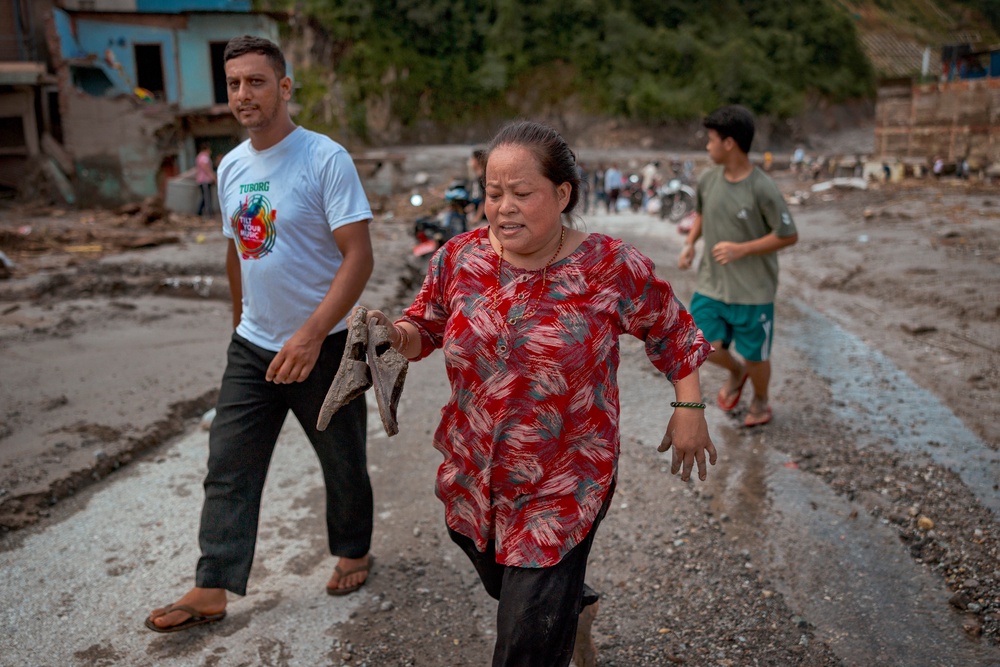
10:49 , Namita SinghThe situation in flood-hit parts of Nepal is “chaos”, according to Dhruba Gurmachhan of humanitarian charity World Vision.
Speaking to BBC from Nepal, Mr Gurmachhan said people affected by the disaster were “desperately waiting” for assistance.
“Their houses have been swept away... everything gone. It is a very heartbreaking, critical situation here,” he said.
But MR Gurmachhan said he remained hopeful that some of those reported missing “could be found alive”, with disruptions to network connectivity making it difficult to establish contact with people in affected areas.
“The government is tirelessly working for finding those lives... and many agencies are working to provide assistance,” he added.
Nepal declines foreign rescue help, South Korea says it is 'negotiating'
10:47 , Namita SinghNepal does not need foreign assistance for search-and-rescue operations following the devastating flash flood that swept through several towns, its foreign ministry said on Friday, despite offers of help from several countries with nationals missing in the disaster.
The flood tore through areas including Rasuwa district near the Chinese border, levelling entire towns, damaging hydropower projects and killing close to 500 people.
Hundreds of foreign nationals are still missing, including from South Korea, which said it has already sent a response team to Nepal and will also dispatch a disaster relief team.
But Nepal's foreign ministry said on Friday that it was managing the rescue efforts.
"The offer for help is natural. Our security agencies are doing the search and rescue operation. For now we don't require such help," Lok Bahadur Chhetri, spokesperson for the foreign ministry, said without providing further details.
The Kathmandu Post reported that India, China, the United States, Britain, Japan, South Korea, Sri Lanka and Bangladesh had asked the government to allow their search-and-rescue teams to assist in the operation.
South Korea's foreign ministry said Nepal had indicated it was not yet planning to accept foreign rescue teams.
"South Korea will keep negotiating with Nepal over the matter," the ministry added. Seoul has pledged $1 million in humanitarian assistance through international organisations, its foreign minister said on X.
Nine South Koreans working in a hydropower plant were missing and 10 were stranded, South Korea's foreign ministry said on Wednesday.
Over 90,000 affected by Himalayan landslide, Red Cross says
10:38 , Namita SinghMore than 90,000 people are estimated to be affected by the Himalayan landslide, the Red Cross said on Friday, as aid officials voiced fears of further flooding.
"We're of course very concerned about the secondary flood," said David Fisher, head of delegation for the International Federation of Red Cross and Red Crescent Societies in Nepal.
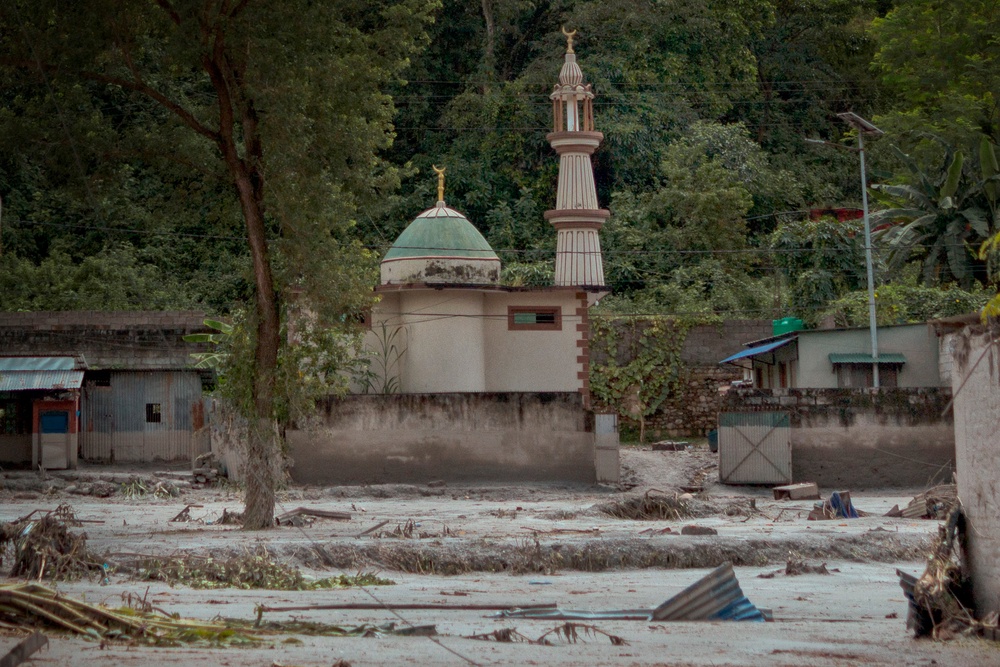
He said that its trucks with relief supplies were blocked after a lake formed by the landslide broke its banks.
China says dammed lake risks 'manageable
10:30 , Alisha Rahaman Sarkar'Downstream rescue operations in China resumed this afternoon following a brief halt, after flood risks from an overflowing barrier lake on the Nepal-Tibet border were deemed "manageable", China's state broadcaster said.
China's Xi Jinping chairs emergency meeting
10:15 , Alisha Rahaman SarkarChinese president Xi Jinping held a Politburo meeting today in Beijing to direct rescue work in Tibet following the devastating mudslide.
Authorities must "scientifically formulate search-and-rescue plans, make every effort to search for missing people from China and abroad", he told the meeting, according to state news agency Xinhua.
The meeting noted that rescue work faced "extremely difficult challenges" and called for stronger monitoring of glacier lakes, landslide risks and barrier lakes, emergency aid to affected areas in Nepal, and closer international disaster cooperation.
Death toll in Nepal rises to 489
10:01 , Alisha Rahaman SarkarThe catastrophic flash flood caused by a glacier collapse killed 489 people in Nepal and five in China's Tibet, with almost 1,000 more missing in the two countries.
A huge torrent of rock, ice, mud, and debris cascaded through Himalayan mountain river systems after the collapse and also led to the formation of a lake where water continued to collect and rise.
Meanwhile, a lake formed by a landslide on the Nepal-China border started to overflow on Friday, triggering panic and putting at risk areas devastated by the floods.
Nepal issues alert as dam on Tibetan side bursts again
09:39 , Alisha Rahaman SarkarAuthorities in Nepal have issued an alert warning that a dam on the Tibetan side has burst again.
The Nepal police shared the alert, which asked all security personnel, rescue workers, and people engaged in rescue work to move to a higher ground.
It is unclear if the dam is related to the flooding concern from a barrier lake that formed after the initial flash floods, high up in the Chinese side of the Himalayan mountains.
China confirms five killed in Tibet mudslide
09:25 , Alisha Rahaman SarkarChina this afternoon raised the death toll from a devastating mudslide that had struck the border between Tibet and Nepal earlier this week to five from three, Chinese state media reported.
The number of people reported missing on the Tibetan side of the border was unchanged at 558 as of 3pm local time.
What triggered Nepal flash floods?
09:16 , Alisha Rahaman SarkarAn initial study of satellite imagery from Planet Labs showed a large section of the lower end of a glacier breaking away at an altitude of about 5,200m and falling roughly 1,200m onto the valley floor, gathering rock and debris as it went.
The resulting avalanche struck the Lhende river in Tibet, about 20km northeast of the Rasuwagadhi border crossing with Nepal, temporarily damming the water before the barrier gave way and released a powerful flood downstream.
More here.

What triggered Nepal flash floods? And why are experts worried about a second flood?
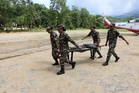
Rescuers evacuate people from a tunnel of a hydropower project
09:00 , Alisha Rahaman Sarkar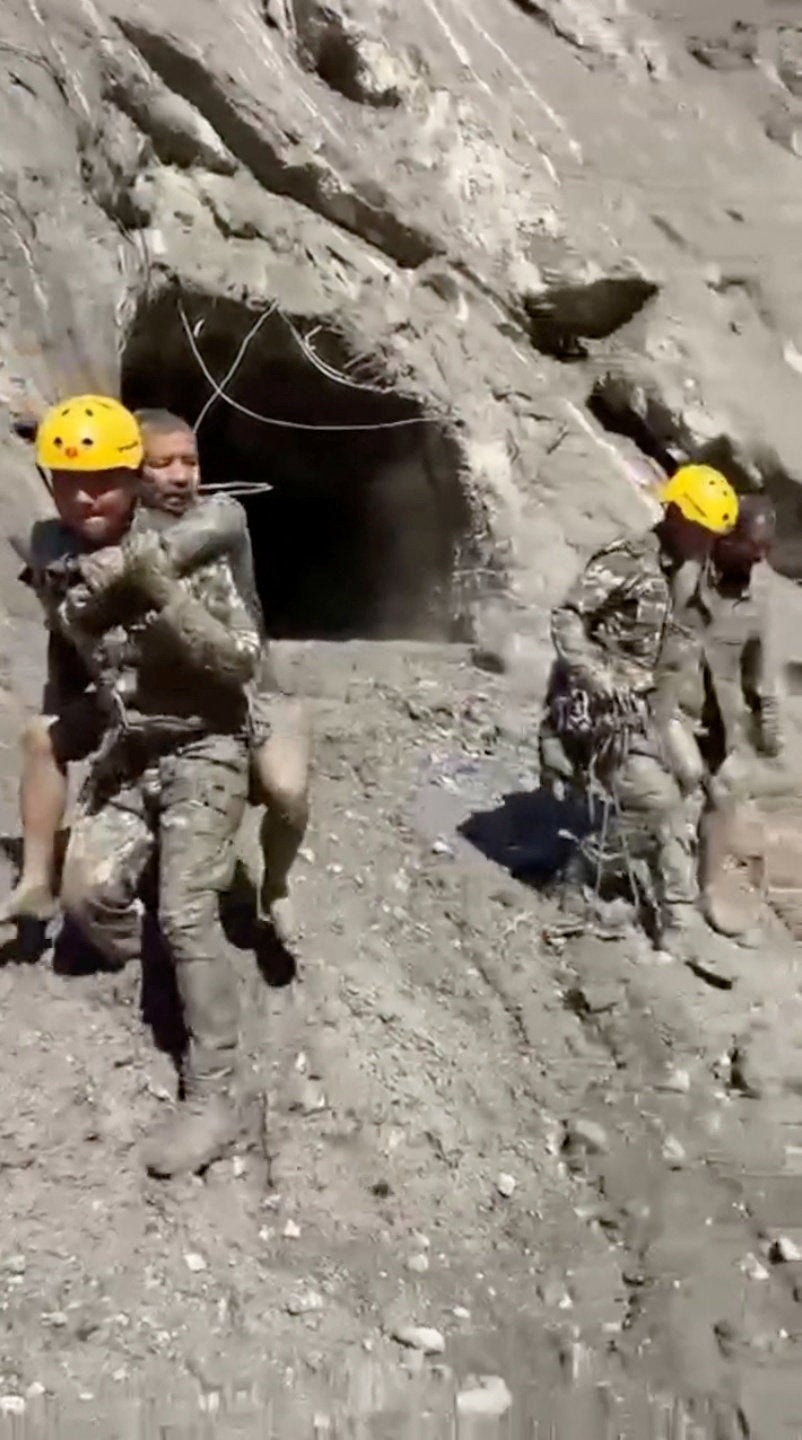
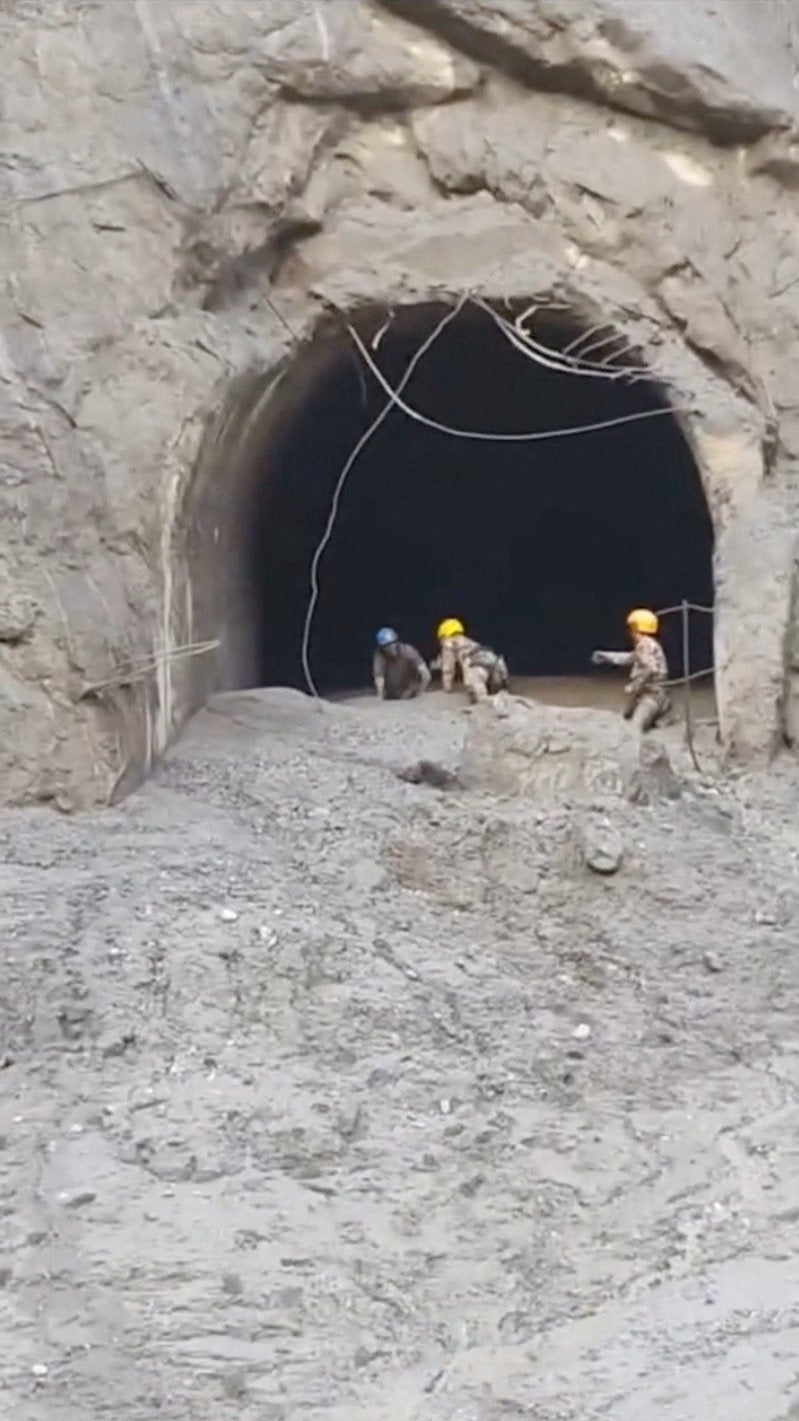
Rescuers racing against time to save 100 trapped in hydropower tunnel
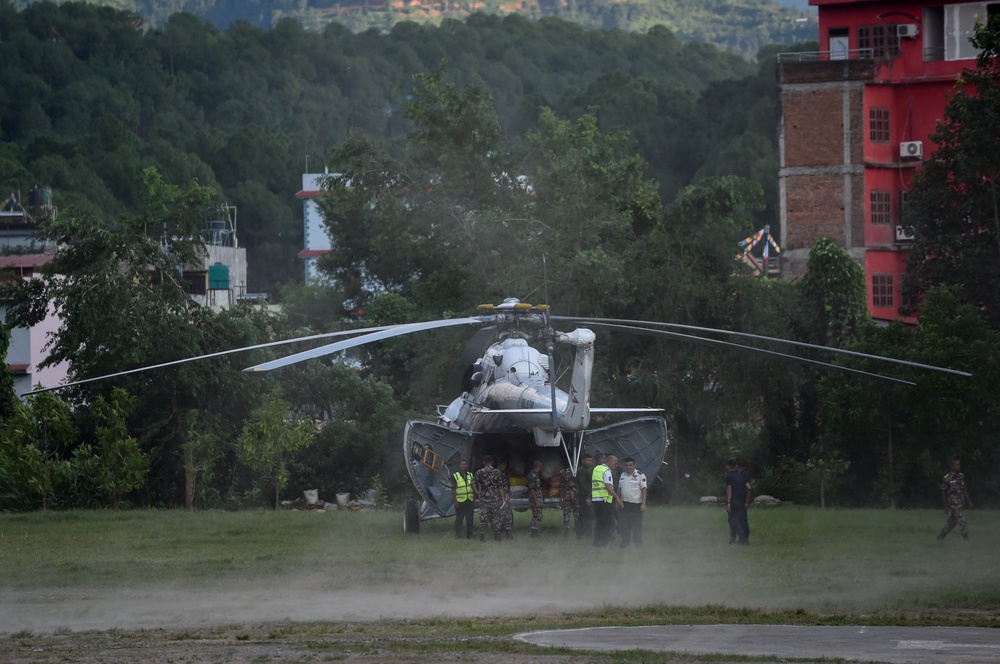
08:50 , Alisha Rahaman SarkarThe Nepali army and rescue team are racing against time to save almost 100 people stuck in a hydropower tunnel in Rasuwa district following the flooding.
The teams have rescued 350 workers and locals from the premises of the Trishuli-1 hydropower project, the Nepal prime minister's office said.
A video posted on the PMO’s Facebook page showed two army rescuers, wearing hard hats and military fatigues, rappelling from a low-hovering helicopter before crawling up a mud-covered slope toward the tunnel entrance.
Families search for missing loved ones at Kathmandu hospital
08:43 , Alisha Rahaman Sarkar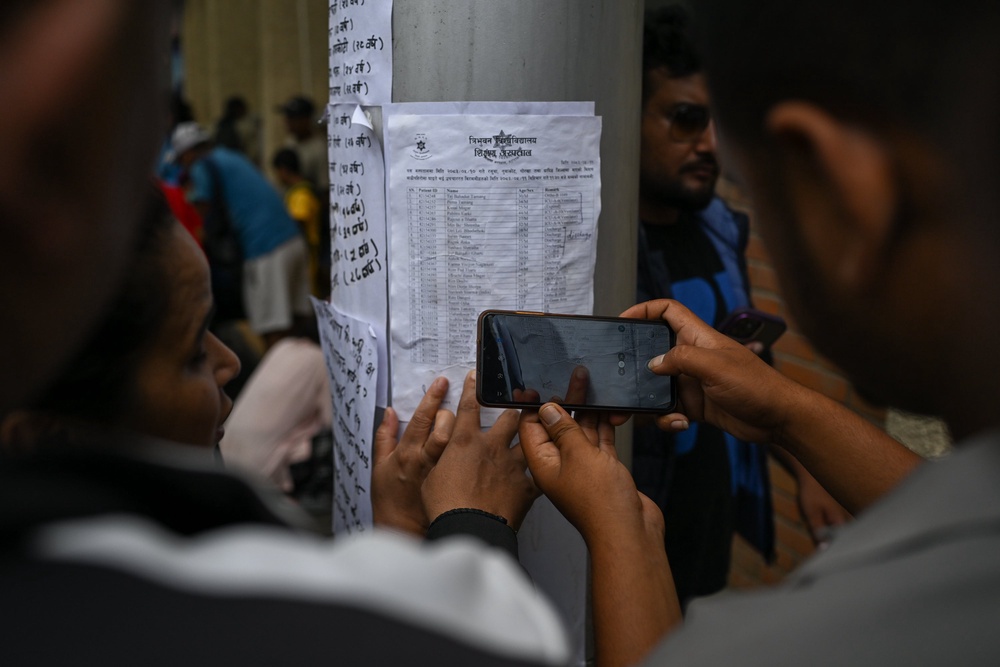
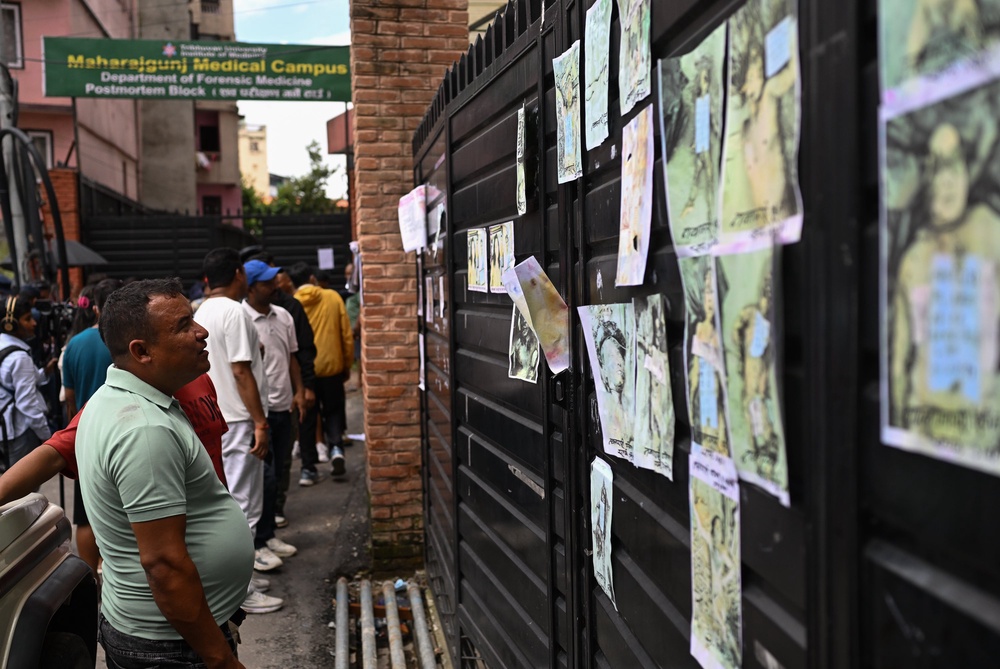
Breaking: China resumes rescue operation in Tibet
08:37 , Alisha Rahaman SarkarChinese officials have resumed the search and rescue operation in Tibet, which was suspended due to fears of a second flood after a lake formed by a landslide on the Nepal-China border started to overflow.
Chinese state media said the rescue operation was "continuing as normal" after water levels of the barrier lake "dropped slightly".
South Korea 'negotiating' to send response team to Nepal
08:34 , Alisha Rahaman SarkarSouth Korea said it was negotiating with Nepal after Kathmandu said it did not need foreign assistance for search-and-rescue operations following the devastating flash flood that swept through several towns.
South Korea said it has already sent a response team to Nepal and will also dispatch a disaster relief team.
South Korean nationals are among the foreign tourists missing in Nepal following Wednesday's devastating flood.
"South Korea will keep negotiating with Nepal over the matter," South Korea's foreign ministry added.
Seoul has pledged $1 million in humanitarian assistance through international organisations, its foreign minister said on X.
Buildings ‘wiped out like toothpicks'
07:53 , Namita SinghAround the world, relatives of those missing were desperate for information about their whereabouts. Sneha Sudhir was one of 10 women whose husbands had set out from Nepal on a trek to Tibet's Mount Kailash when the region was struck by disaster.
The men, all from northern Virginia, are among dozens of Americans missing. "Where are they?" Sudhir said tearfully from her home in Chantilly, Virginia, on Thursday.
Sudhir said the women were supporting each other and reaching`out to officials, politicians and friends and family in the United States and India, hoping for word.
"Everybody is taking turns in shedding their tears, wiping it off and getting back to work," she said.
President Donald Trump said the US had offered support to Nepal.
"Nobody's ever seen anything quite like that, where very powerful, strong, well-built buildings were wiped out like they were toothpicks. It's a terrible thing. We are sending aid and we've spoken to the leadership and we let them know anything they want, they'll have."
Lake formed by landslide on Nepal-Tibet border overflows, halting rescue work
07:52 , Namita SinghA lake formed by a landslide on the Nepal-China border started to overflow on Friday, putting at risk areas devastated by a flash flood two days ago and forcing a temporary halt to rescue efforts, authorities on both sides said.
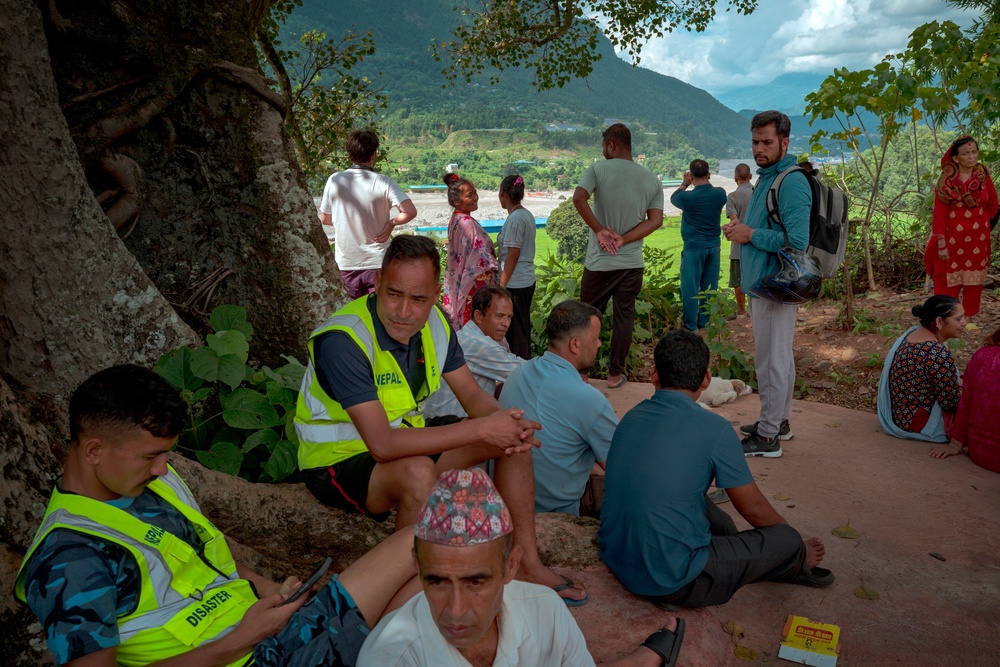
Residents in Nepal's Rasuwa district, on the border with China's Tibet, were seen rushing up hillsides to escape any surge in the river level, according to a Reuters witness.
The risk of the lake bursting prompted all Chinese rescue personnel and vehicles to withdraw to stand by in a safe area, state broadcaster CCTV said on Friday. Authorities in Nepal have stopped rescue operations for the next 90 minutes, an army officer said.
China's Xi chairs Politburo meeting on Tibet mudslide rescue
07:40 , Namita SinghChina's Politburo met on Friday to direct rescue work after the catastrophic mudslide and flash flooding that struck areas along Nepal's border with China's Tibet, state media reported.
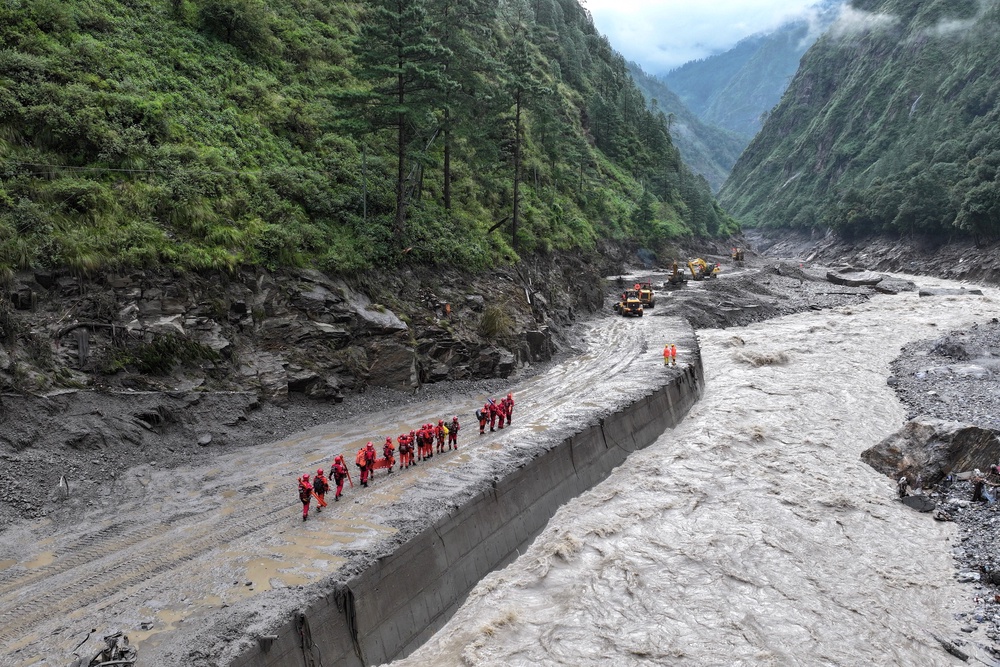
Authorities must "scientifically formulate search-and-rescue plans, make every effort to search for missing people from China and abroad," the meeting chaired by president Xi Jinping said, according to state news agency Xinhua.
The meeting said rescue work faced "extremely difficult challenges" and called for stronger monitoring of glacier lakes, landslide risks and barrier lakes, emergency aid to affected areas in Nepal, and closer international disaster cooperation.
Helicopter rescue efforts in Nepalese district halted
07:17 , Namita SinghHelicopter rescue operations in Nepalese district of Rusawa has been halted, with locals rushing up the hill, reported Reuters citing a witness.
It comes shortly after China's CCTV warned that a dammed lake upstream of the Gyirong border port has begun to overflow.
Nepal lake breaks banks, water level rising, district official says
07:13 , Namita SinghOfficials in Nepal's Rasuwa district have received a notice saying a lake has broken its banks, two days after a flash flood hit the region, Narendra Pariyar, the most senior bureaucrat of the district, said on Friday.
"We can see that the level of water in the river is rising," he said, adding that it is unclear how high the water level is at present.
In pictures: Rescue operations
07:00 , Jane Dalton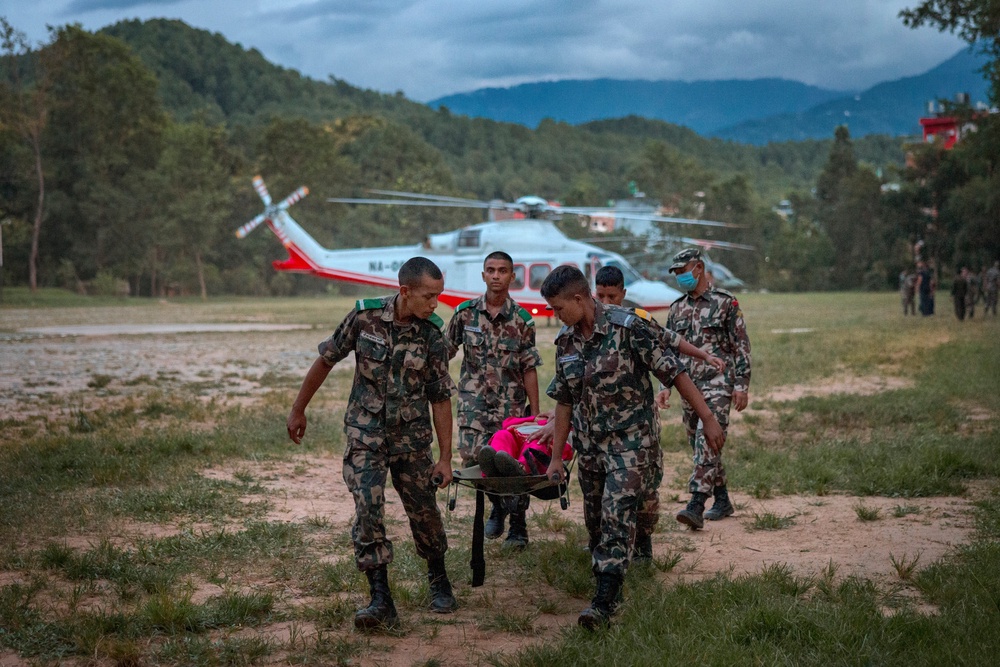
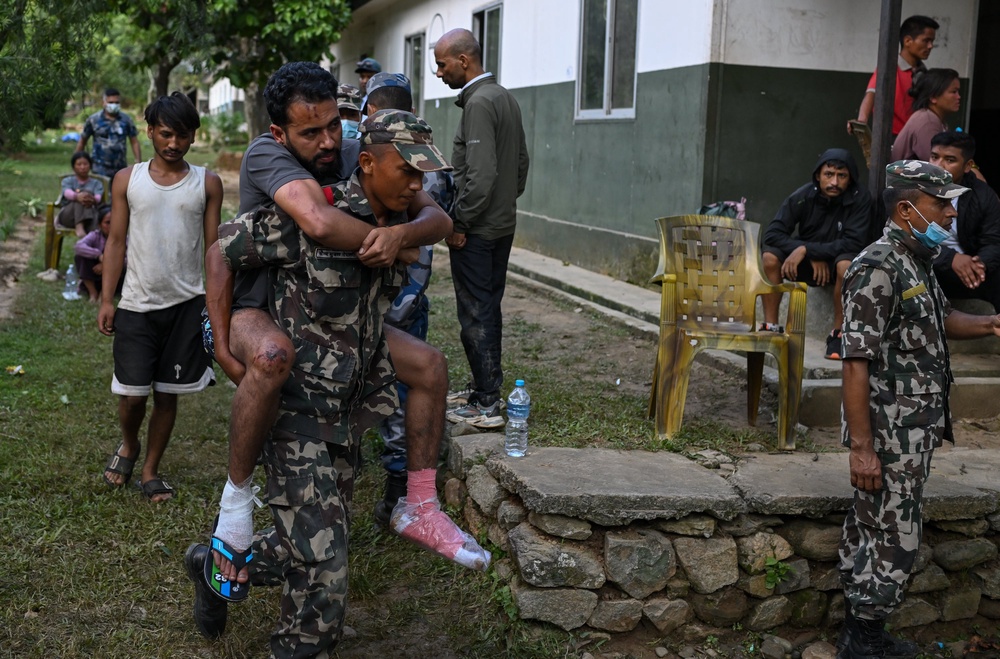
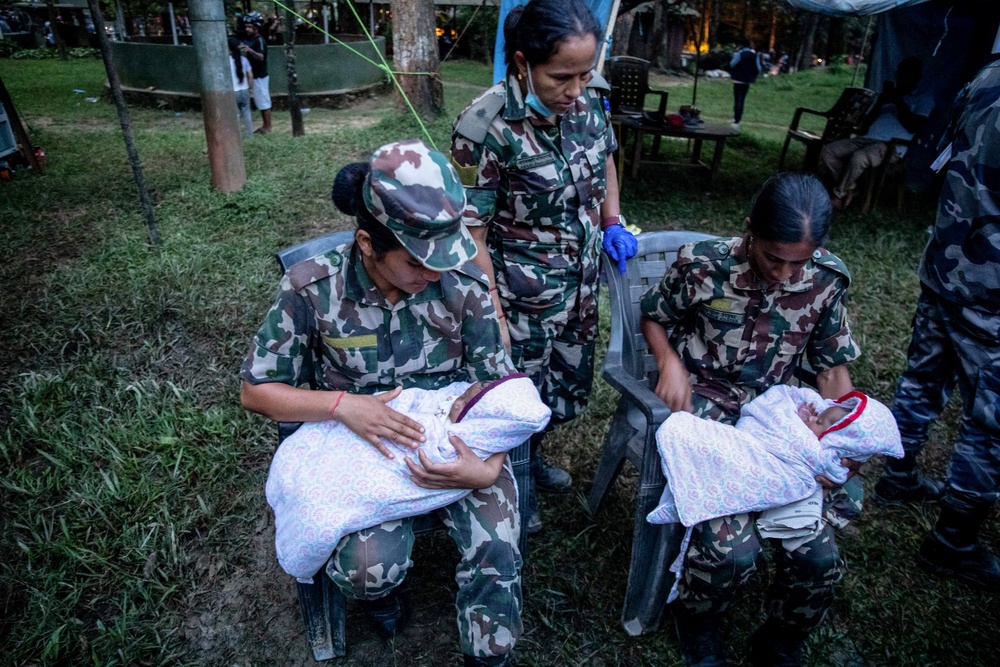
China suspends rescue efforts amid new flood threat
06:44 , Namita SinghChina has suspended rescue operations as the dammed lake upstream of Gyirong border begins to overflow, reported China's CCTV.
The state broadcaster earlier reported that the lake’s barrier was more than 10km (6 miles) from Gyirong Port, the border crossing with Nepal that was engulfed by mud and floodwater.
CCTV said the lake was at an elevation of 2,950 meters (9,680 feet), about 1,000 meters (3,280 feet) above Gyirong Port.
Nepal Army said that a team was sent to the border point to inspect the Bhotekoshi River amid the potential of more floods.
Video: Trump says US offers Nepal aid as dozens of Americans may be missing
06:25 , Namita SinghChina rushes to minimise risk from lakes formed by glacier debris near Nepal border
06:17 , Namita SinghChina is racing to reduce the risk of more flooding at the disaster-stricken border crossing linking its Tibet region to Nepal after hundreds were killed in a flash flood on Wednesday.
Nepal and China both warned on Thursday of fresh risks of flooding in the Himalayas, with debris dams which created two barrier lakes on either side of their border threatening to collapse.
Chinese authorities have mobilised an eight-member engineering team to conduct aerial surveys and 3D modelling of the barrier lake, according to state broadcaster CCTV on Friday.
One of the engineers, Chen Hanxiao, said challenges included difficult access to the site.
"After the glacier collapse created the lake, many isolated cliffs and steep cliffs appeared along it," Mr Chen told CCTV on Thursday evening.
Chen said the general approach to reducing the lake's threat is to excavate a drainage channel at a lower point of the dam but the width and depth of that channel needed calculations based on how fast the water will flow and how quickly the lake will fill.
Data from their survey found that the lake was about 150 metres long and 40-50 metres deep with a reservoir of 1.5-2 million cubic metres of water. Their next tasks were to monitor the lake and collect data from the lake floor, as well as weather monitoring in the coming days.
The Gyirong border port area has seen light to moderate rainfall which has loosened and destabilised soil and rock surrounding the precarious zone upstream. The rain is forecast to continue over the coming week.
China on Thursday warned that 3 million cubic meters of water — the equivalent of about 1,200 Olympic swimming pools — are expected to flow into the still-dammed lake over the next three days, creating a high risk of a breach, with peak flow expected around 1 September.
The formation of a barrier lake was captured in aerial footage by a Chinese rescue team shown by state broadcaster CGTN.
It showed masses of brown water accumulating in a basin with no visible outlet, that had already submerged bushes and trees and appeared to push against a barrier of debris and stones. Nearly 1,000 remain missing on both sides of the border, including as many as 540 foreigners from 31 countries, according to officials.
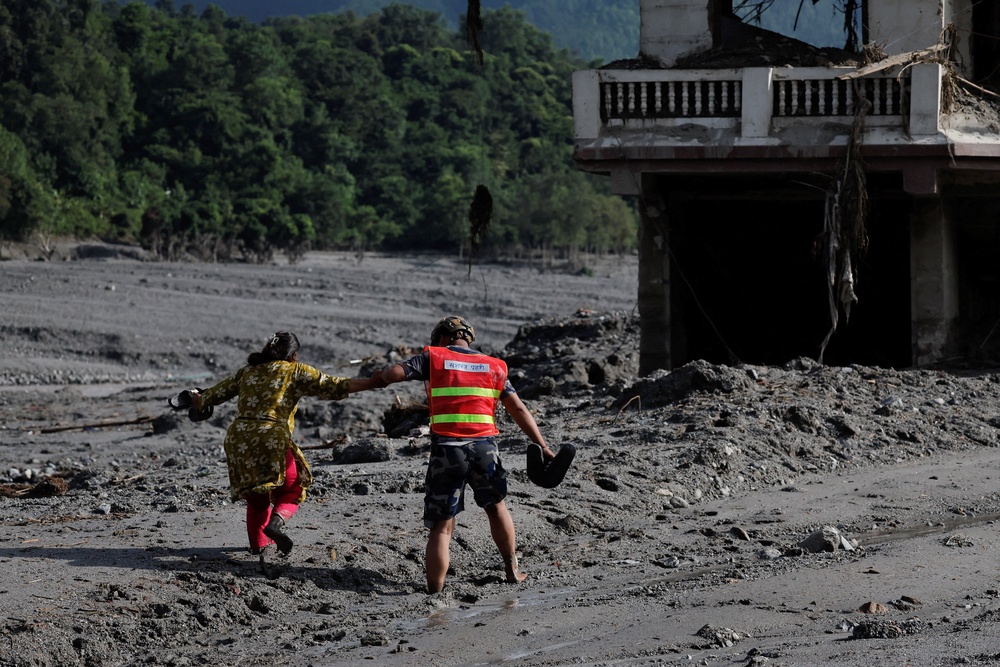
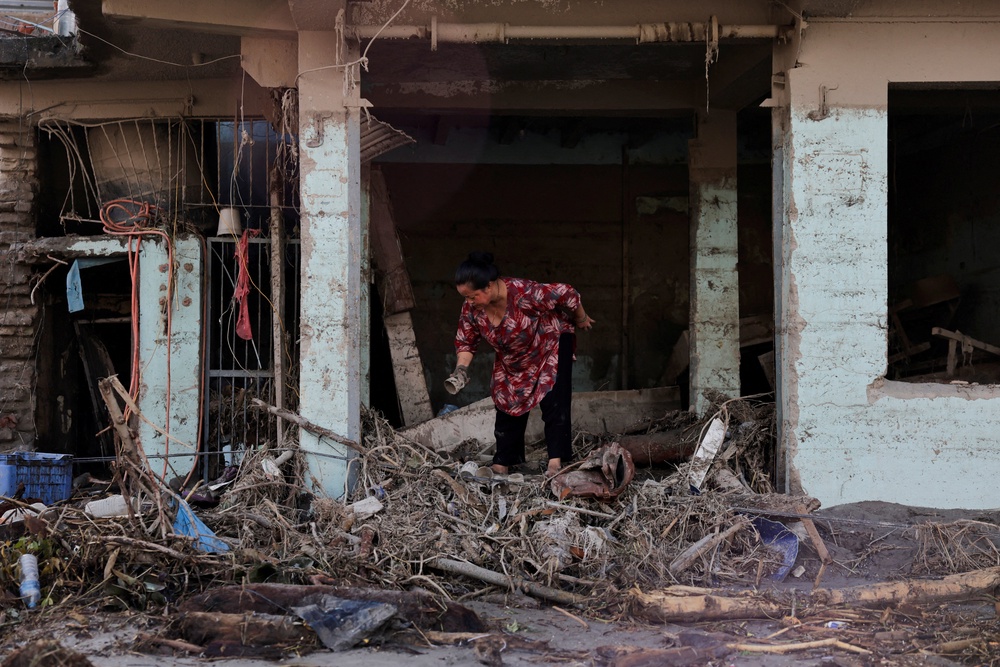
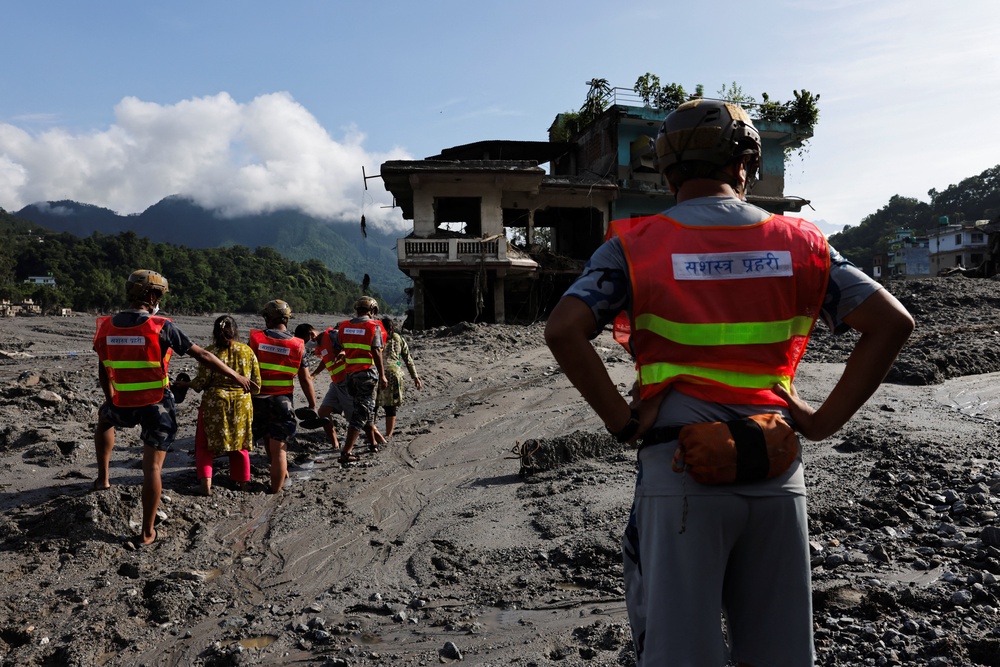
In pictures: Nepal reels from devastating floods that left at least 469 dead
06:09 , Namita Singh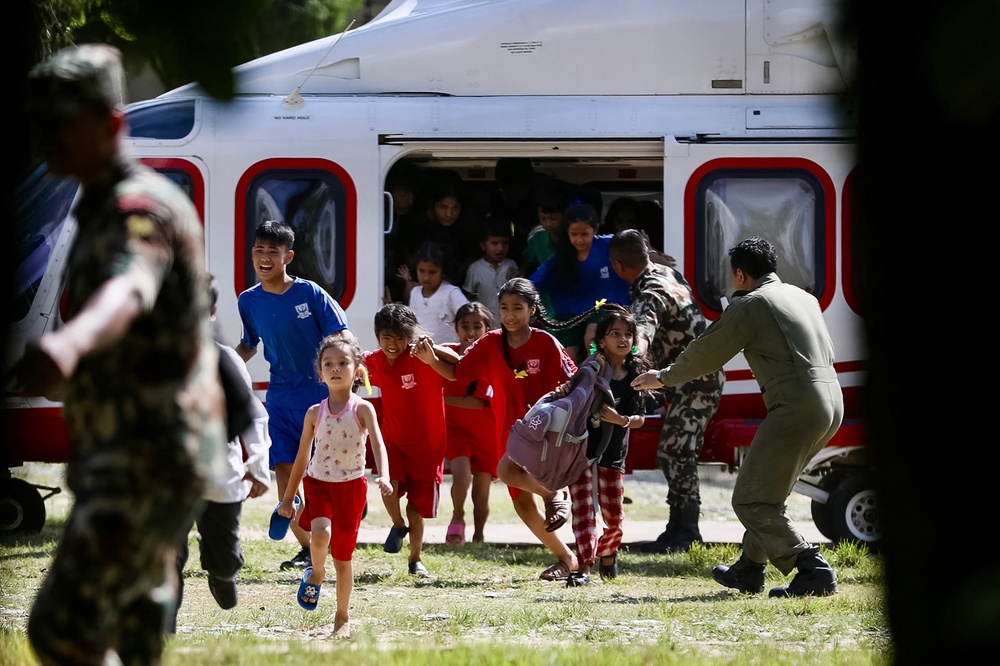
Warming climate destabilises mountain rocks and ice, say experts
06:00 , Jane DaltonClimate change causes conditions that can destabilise high-mountain rock and ice, increasing the risk of disasters, scientists say.
While the exact cause of the disaster is still being analysed, scientists say it probably began with a massive ice-rock avalanche on the northern slopes of Nepal's Langtang Lirung peak into the Lhende Khola river on the Tibetan side.
"Climate change is generating conditions that can destabilise high-mountain rock and ice," said Simon Cox, chief scientist at the Mountains to Sea program at Earth Sciences New Zealand.
That in turn makes collapses and cascading hazards of the kind this week more frequent, he added.
He said warming could reduce ice on steep slopes, boost melt water, and change patterns of freezing, thawing and rainfall.
That can weaken mountainsides and make large collapses more likely in some spots, he added.
Nepal does not need foreign rescue help with flood, foreign ministry says
05:48 , Namita SinghNepal does not need help from other countries to conduct search and rescue operations after a devastating flash flood wrecked towns, its foreign ministry said on Friday.
"The offer for help is natural. Our security agencies are doing the search and rescue operation. For now we don’t require such help,” Lok Bahadur Chhetri, spokesperson for the foreign ministry said on Friday.
Government of India releases list of individuals rescued
05:34 , Namita SinghIndia's Ministry of External Affairs released the list of individuals rescued from Nepal. At least 63 Indian nationals working at Trishuli-I project in Nepal were saved, said MEA spokesperson Randhir Jaiswal.
Update on Indian nationals rescued in Nepal.
— Randhir Jaiswal (@MEAIndia) August 27, 2026
Please see the names of 63 Indian nationals working at Trishuli-I project in Nepal who have been rescued:
Details below ⬇️ pic.twitter.com/NdXEwgZmYN
About 90 Americans unaccounted for after catastrophic floods hit Nepal and Tibet
05:32 , Namita SinghUS officials said about 90 US citizens remained unaccounted for Thursday, a day after catastrophic flash floods engulfed a border area of China and Nepal, killing hundreds of people.
A spiritual organisation said that 22 Americans associated with it were unaccounted for.
In a statement, the US State Department said it is not aware of any US deaths, but three Americans have been rescued.
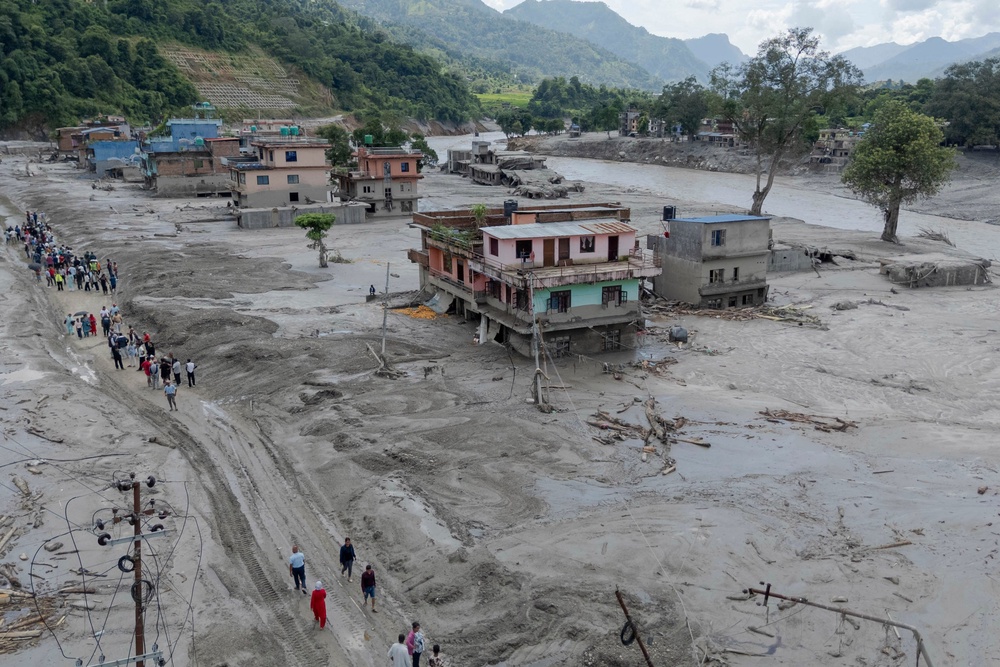
Many of the missing were on a pilgrimage to Mount Kailash in Tibet, a sacred site for Hindus, Buddhists and others.
Social media posts were surfacing Thursday from loved ones pleading for people to provide updates or circulate information about Americans they had lost contact with — a Virginia woman travelling with a tour group, a Texas couple on a birthday trip, and a mother accompanying her 14-year-old daughter.
China-Nepal Rasuwagadhi border destroyed, reveals analysis
05:10 , Namita SinghNew imagery from Vantor Tech confirms that the China-Nepal Rasuwagadhi border crossing has been completely destroyed, with the glacial flood completely scouring the valley floor.
New imagery from @vantortech confirms that the China-Nepal Rasuwagadhi border crossing has been completely destroyed, with the glacial flood completely scouring the valley floor.
— OSINTtechnical (@Osinttechnical) August 27, 2026
At least 359 people are dead and nearly 1,000 missing, according to local authorities. pic.twitter.com/DiBiUzJGtO
At least 469 people are dead and nearly 1,000 missing, according to local authorities.
Sussex man’s wife, parents, brother and uncle missing
05:00 , Jane Dalton
Sussex man’s wife, parents, brother and uncle missing after Nepal floods
Torrent tore through border crossing
04:54 , Namita SinghChinese rescuers had yet to reach the worst-hit area on the Chinese side of the border, the Gyirong border crossing, by Thursday evening, state media reports indicated, as crews worked to clear debris from the key access road leading to the area.
The Gyirong border port has a key role in China's Belt and Road network linking the country to South Asia, with logistics zones and parking lots built there in the past decade. Dramatic footage on Wednesday showed enormous torrents of muddy water and debris tearing through structures in the border crossing area within seconds and engulfing people trying to flee.
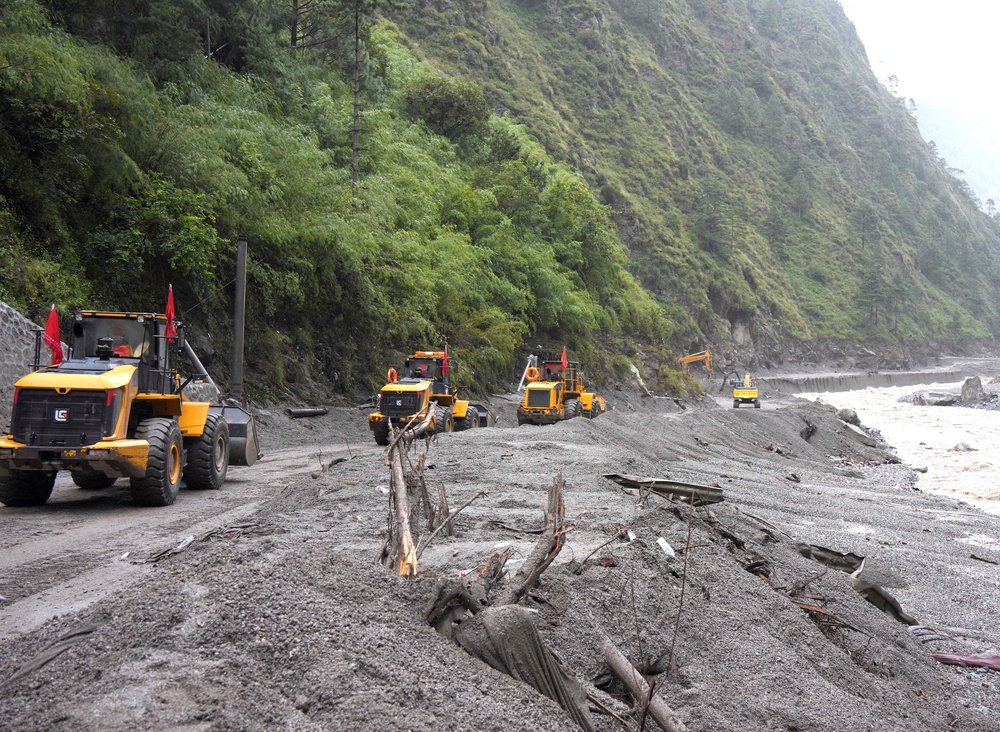
The tally of missing in Tibet's Gyirong County was 558, Chinese state broadcaster CCTV said on Thursday, including 260 foreign nationals.
So far, just three people have been confirmed dead on the Chinese side. China's Premier Li Qiang, the country's No 2 official, arrived at the disaster-stricken site in Gyirong on Thursday afternoon, state-run Xinhua news agency said.
The visit suggested Beijing was treating the disaster as a matter of the highest national priority.
Rescuers scour Nepal flood debris as risk of fresh flooding grows
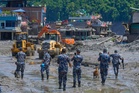
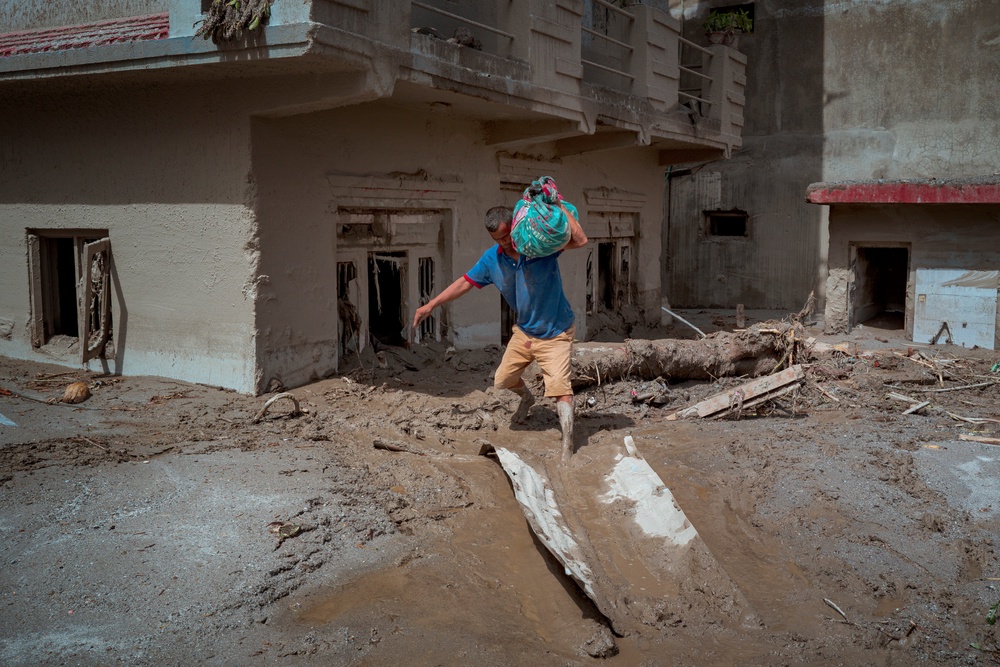
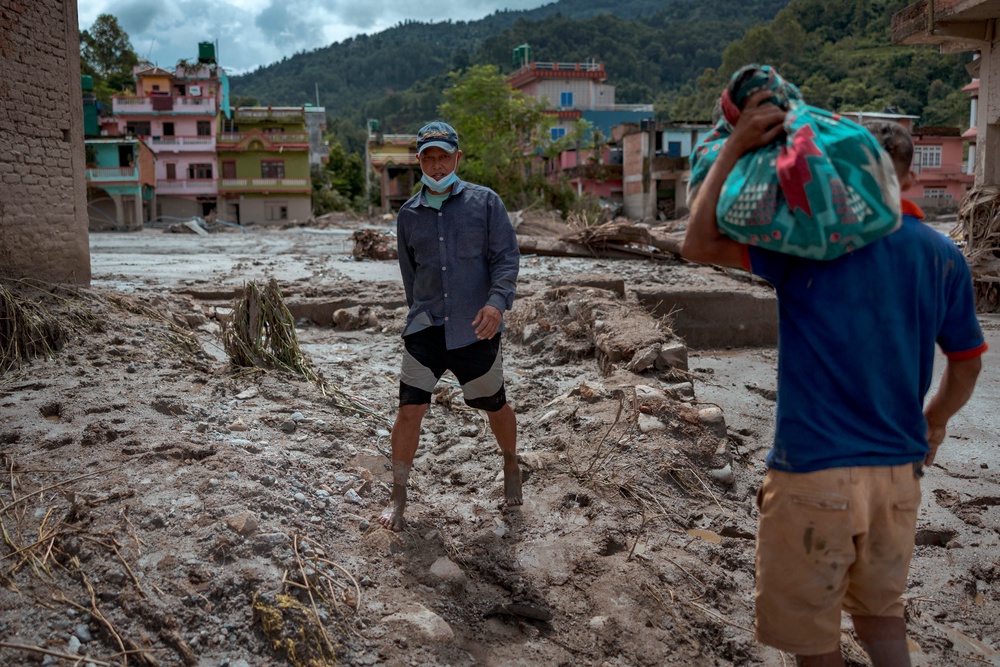
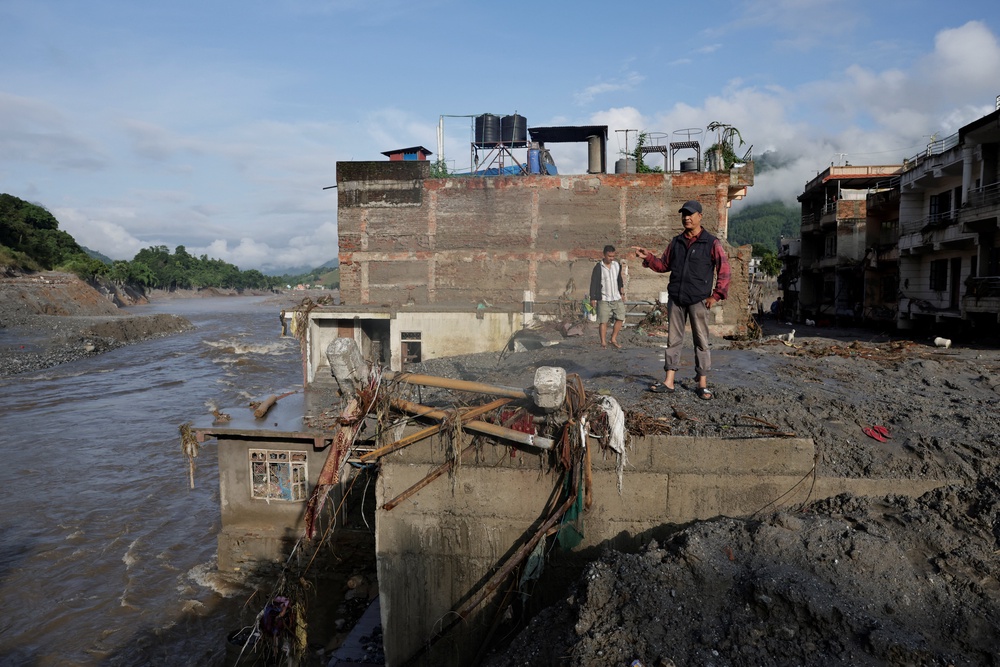
04:34 , Namita SinghRescue teams using heavy machinery dug through mud and debris in Nepalese towns devastated by a flash flood two days ago, as hopes of finding survivors faded and officials worked to reduce the risk of fresh flooding.
The confirmed death toll in Nepal was at 469 people early on Friday, with hundreds more missing there and in neighbouring Tibet, near where a glacier collapse on Wednesday morning sent a huge torrent of rock, ice, mud and debris cascading through Himalayan mountain river systems.
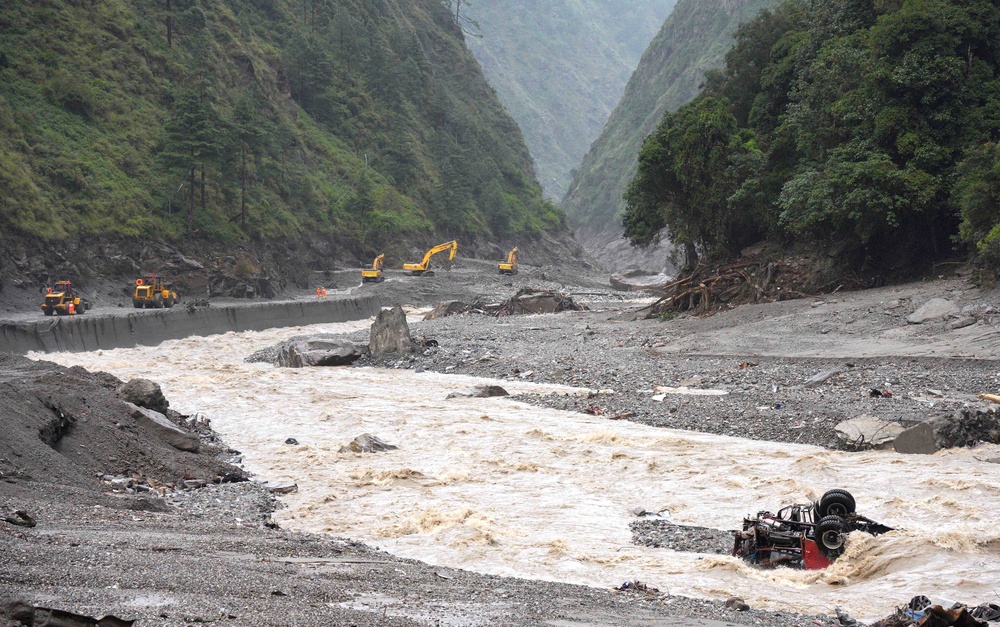
The flood ripped through villages and valleys, destroying power stations, roads and bridges along a route that links Kathmandu with Lhasa in Tibet and is popular with trekkers and pilgrims.
Of those missing, at least 650 are foreigners. Authorities in Nepal used helicopters to search for survivors and drop emergency supplies to thousands cut off in towns and valleys, while emergency services – some using sniffer dogs – recovered dozens of bodies swept down into the plains.