

Nepal's young government’s competition to appoint ambassadors for more than a dozen nations has been embroiled in controversy over allegations of sexual harassment and fraud against at least two nominees.
Balendra Shah, the 36-year-old rapper-turned-politician elected to lead Nepal following last year's violent Gen Z protest that overturned the KP Sharma Oli government, has taken a different approach to bring reforms to the country.
In May, the foreign ministry opened a historic competition, inviting applications to become the next ambassador or permanent representative.
The government said the ambassadors would be selected based on merit, instead of political connections, to ensure transparency in the appointments.
The criteria to bag the prized job included being over 35, a masters degrees, and prior experience in diplomacy or foreign policy.
But the government faced a daunting task of selecting the candidates out of the 4,500 applications, which included retired diplomats, professors, officials, bureaucrats, and lawyers.
The Shah administration on 18 September recommended names of 13 ambassadors following a three-month-long screening process. But it failed to publicly share the shortlist or disclose the selection process of the final 13 applicants.
The next step to appoint the envoys has begun this week.
A joint parliamentary hearing committee on Monday grilled government nominees for India, China, the UK and the US, who spent more than eight hours answering lawmakers’ questions.
The nominee for the UK, former army chief Gaurav Shumsher Rana, was questioned about the long-running dispute over the benefits and rights of the British Gurkha veterans.
“If I am given the responsibility of ambassador, the issues concerning equal pensions and benefits for Gurkha soldiers will be addressed during my tenure,” he told the panel.
Gen Rana served more than four decades in the Nepali Army before being appointed the chief of army staff in 2012. He oversaw the military response to the 2015 earthquake, which killed 9,000 people and left thousands injured.
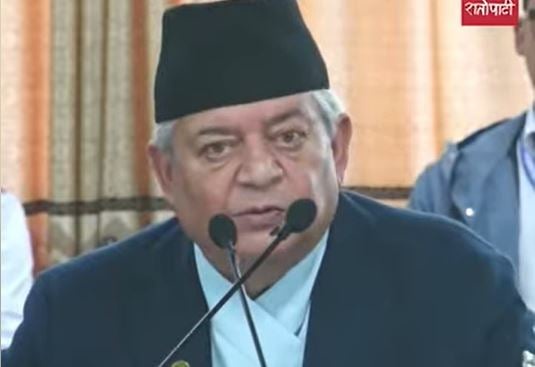
For India, the government nominated Nischal Nath Pandey, while Kalyan Raj Sharma was proposed as the ambassador to China. The Himalayan nation, nestled between Asian giants India and China, faces the mammoth task of balancing its diplomatic relations with both nations.
Mr Pandey is the director of the Centre for South Asian Studies and Mr Sharma is an economist and Nepal-China affairs specialist.
The nominees on Monday explained their proposals to strengthen Nepal’s diplomatic ties with their respective host countries and shared ideas to expand bilateral ties.
The committee on Tuesday interviewed five more nominees for Germany, Spain, Israel, Oman and South Korea.
However, the nominees for Japan and Saudi Arabia have come under the scanner after complaints of sexual harassment and extortion emerged about them.
Giri Bahadur Sunar, the government's Saudi nominee, has been accused of sexual harassment, violence, along with financial wrongdoing. A woman told the parliament committee that she had been subjected to sexual harassment. Mr Sunar has denied any wrongdoing.
The woman alleged she met Mr Sunar at the Osho Tapoban in Kathmandu in 2004 and began a relationship in 2010 when he would urge her to divorce her husband. She said she had been subjected to harassment for two decades.
"The allegations against me should be backed by evidence, shouldn't they? There are courts and the government," Mr Sunar was quoted by The Kathmandu Post as saying.
A member of the parliamentary committee told the newspaper that the complaints against Mr Sunar were "taken seriously".
A second complaint accused Mr Sunar of collecting Rs3.3m or £16,300 to promote a Nepal police deputy inspector general. "The allegations about collecting money also need to be proven. Filing a complaint alone is not enough," Mr Sunar said.
A complaint has been registered against the proposed ambassador to Japan, Jigyan Kumar Thapa, at the parliamentary hearing committee, accusing him of possessing permanent residency in Japan.
Mr Thapa claimed he surrendered his Japanese permanent residency in March 2026 and had no personal financial interests or obligations in Japan. His wife and children are Japanese residents.
The hearing is expected to conclude on 14 October. Following confirmation by the parliamentary committee, a formal approval will be requested from the relevant countries. Once approved, president Ram Chandra Paudel will appoint them as ambassadors.
Read MoreTrump teases prospect of summit with Kim Jong Un as soon as next month
Fresh flash floods leave more than 100 foreign trekkers stranded in Nepal
Police accused of using excessive force on journalists during ‘cockroach’ protests
Berlin Marathon cheat apologises after being pictured riding bike during race
Sri Lankan ambassador visits foreign worker sentenced to death in Saudi Arabia
Four passengers killed and 30 injured after train derails in central Pakistan