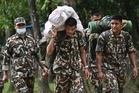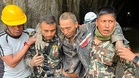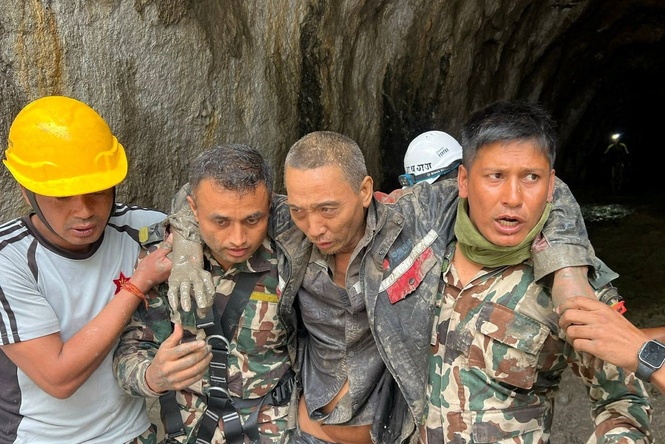
Nepal’s rescuers on Saturday pulled out a Chinese national and a 64-year-old woman alive from under debris, 10 days after devastating floods hit the country, as teams continued searching for thousands still missing.
The latest survivor is a Chinese man identified by the Kathmandu Post as Luhaitao, found about 225m inside a tunnel at the Upper Trishuli-1 hydropower project. A joint team involving the Nepal Army and foreign rescue specialists brought him out alive and took him for a medical assessment.
Hours later, an armed police force team rescued Chandika Kumari Shrestha from the upper floor of a four-storey house buried beneath debris in Betrawati, Nuwakot. Shrestha, 64, was found unconscious after 10 days trapped inside the building and was flown to an army barracks in Trishuli for initial treatment.
Their rescue came a day after Nepalese workers Sanjay Sah and Kabir Maharjan were pulled alive from the Upper Trishuli-3A project, where they had been trapped for nine days. Sah was rescued at about 9am and Maharjan around 20 minutes later, both roughly 40 metres inside the tunnel.
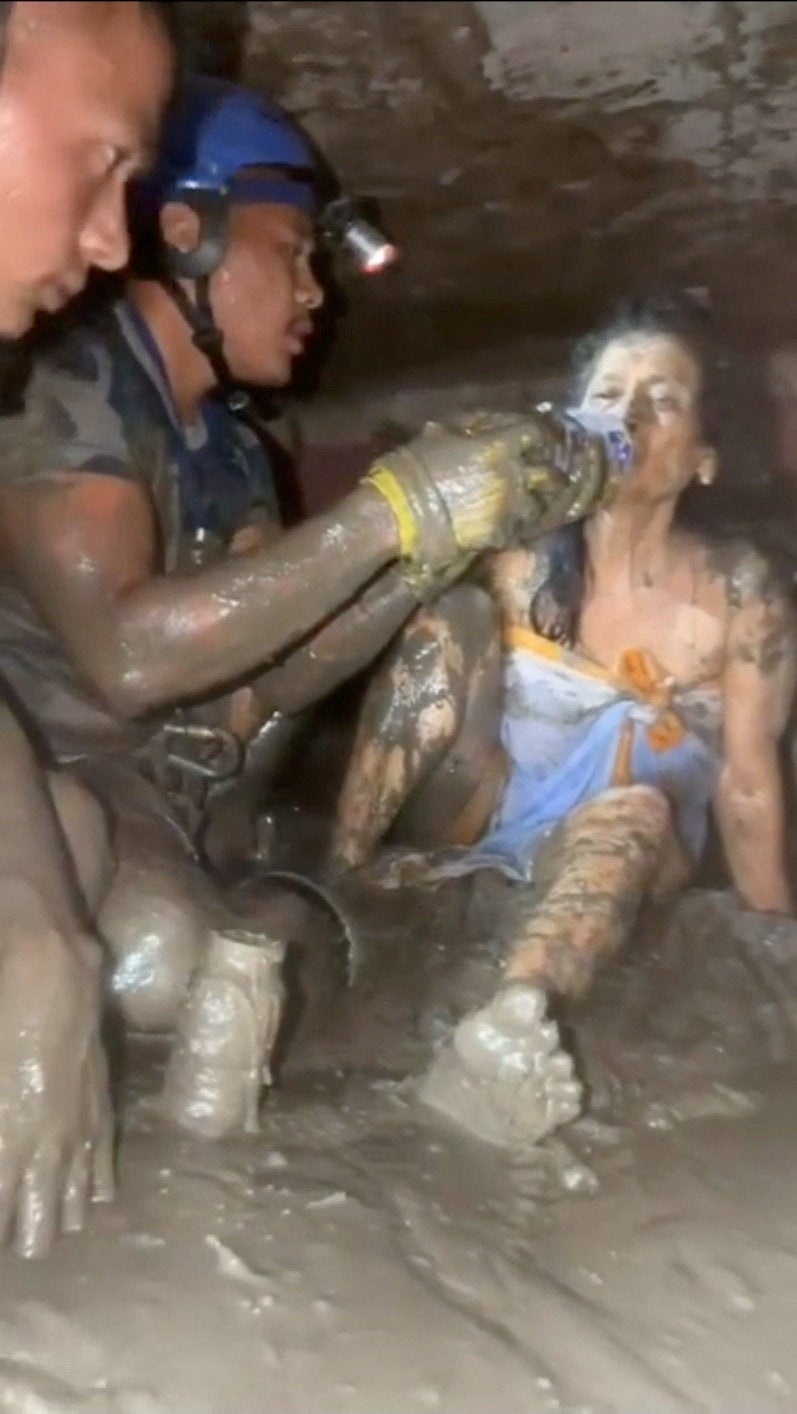
The workers were caught in the disaster after a vast collapse in the Himalayan region on 26 August sent a tsunami-like surge of water, mud, and debris down the Bhotekoshi River in Rasuwa, close to Nepal’s border with Tibet.
The torrent swept through settlements and hydropower projects, destroying infrastructure, and trapping hundreds of workers inside tunnels.
Search teams entering Upper Trishuli-3A found the body of another person but no further survivors. Armed police said they had reached all sections of the tunnel and encountered mud, soil, sludge, rocks and collapsed slabs, with no other voices heard.
Nepal Police said on Saturday that 1,344 bodies had been recovered and 4,898 people remained unaccounted for. A total of 8,631 people had been rescued, while 3,655 were staying in holding centres.
The death toll is still rising as search teams work through mud, rock and debris carried downstream by the flood. Of the 1,344 bodies recovered, 501 remained unidentified, police said. DNA samples have been collected from 1,260 deceased people and 972 relatives to help establish identities and reunite families with the remains of their relatives.
Flooding has damaged 11 hydropower projects and a solar plant, with 942 people, including project workers, still unaccounted for across the affected facilities, according to the Kathmandu Post.
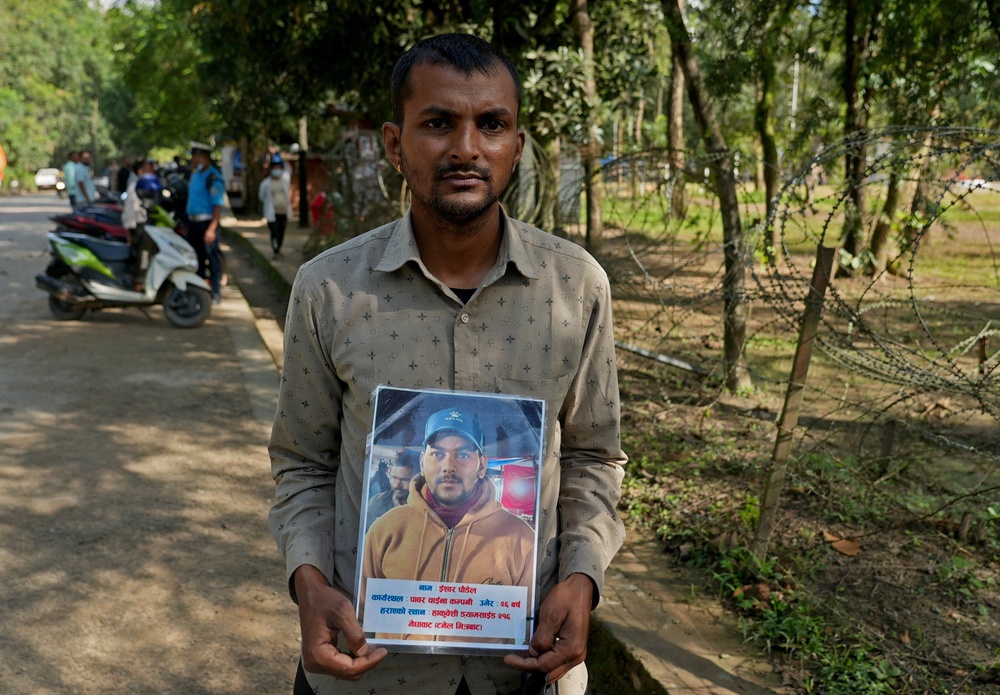
After Sah and Maharjan were rescued, search teams reached the farthest sections of the tunnel and found the body of another person but no further survivors. Mud, soil, sludge and rocks had filled sections of the tunnel, while slabs above it had collapsed under the force of the flood.
Major searches are still under way at hydropower sites, where hundreds of workers were caught by the flooding. At the Rasuwagadhi Hydropower Project, 93 people remain missing, according to the company operating the 111-megawatt facility. They include 51 regular employees, one board member, two daily-wage workers, and 39 employees of three contractor companies.
Teams from India, China and South Korea are working alongside the Nepal Army, while more than 500 engineers have been coordinating through a WhatsApp group to provide rescuers with tunnel drawings, plant layouts, and information about missing workers.
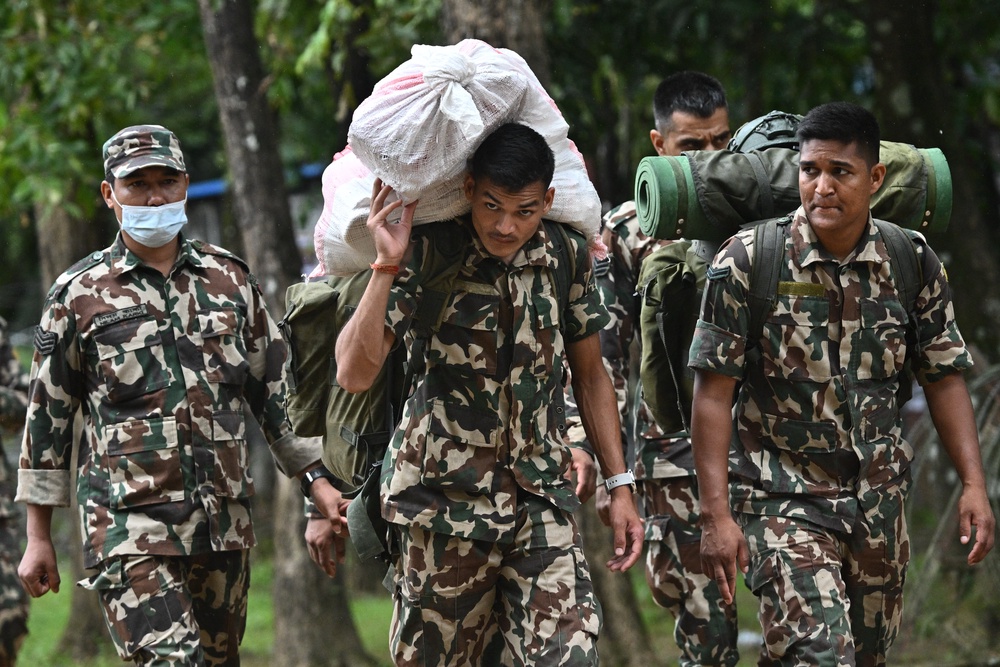
Nepal has also asked for specialist equipment including high-capacity drones, LiDAR, ground-penetrating radar, high-capacity pumps, DNA-testing kits, and Bailey bridges. The government says the preliminary damage assessment has reached 387.54bn Nepalese rupees (£1.8bn) across infrastructure, settlements, bridges, health, education, agriculture, energy, electricity, and telecommunications.
The government has declared 7 September a national day of mourning, and flags will be flown at half-mast at government offices and Nepalese diplomatic missions, while security personnel and civil servants involved in rescue work will receive additional allowances and free treatment if injured.
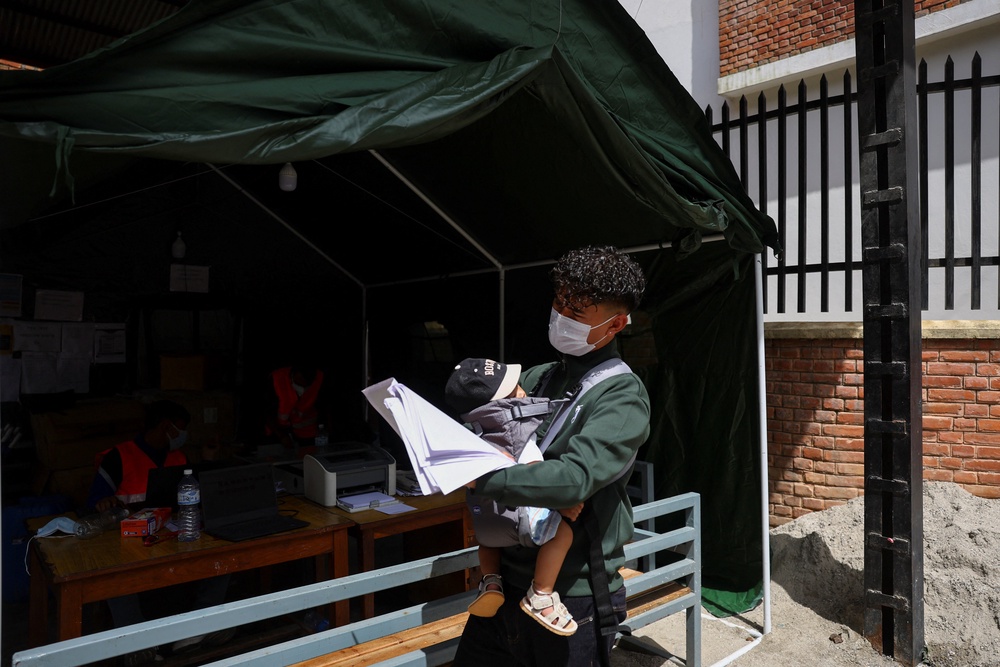
UNICEF says at least 22,000 children urgently need safe drinking water, sanitation, and hygiene support, while preliminary reports indicate that at least 107 children may have been separated from their parents or caregivers. The agency estimates that about 2,600 children under five could require treatment for severe wasting.
The UNDP has estimated that 84,270 people across 17 municipalities in six districts have been affected, while damaged roads, electricity, and telecommunications infrastructure are complicating access to affected communities.
Read MoreInside Nepal’s tunnel rescue operation guided by Whatsapp group of 500 experts
Joanna Lumley says ‘heartbreaking’ Nepal floods ‘could have been predicted’
The women and babies dying because of Trump’s aid cuts in Afghanistan
Dozens of trapped hydropower tunnel workers in Nepal ‘could still be alive’
Climbers are melting Everest’s glacier with their urine, study warns