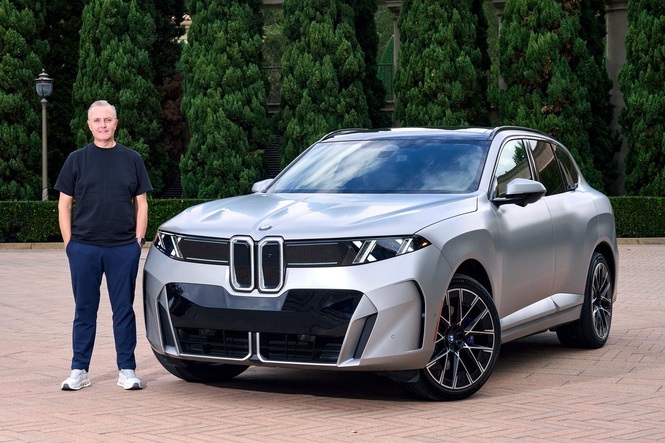
I had a particular reason for wanting to drive the new BMW iX5. Twenty-seven years ago, I was at the launch of the original X5, when BMW decided that the best way to introduce its new SUV was to put us on a racetrack. We headed to Road Atlanta in Georgia, where the message was clear: this was a big, tall family car that could actually handle. It was a pretty convincing demonstration, too.
That original X5 was the first truly sporty SUV as far as I was concerned, although BMW preferred to call it a Sports Activity Vehicle, or SAV. The name never really caught on with the rest of us, but the car certainly did. BMW has built more than 3.1 million X5s across its first four generations. The original came from its Spartanburg factory in South Carolina, where the new iX5 will be built as well.
This fifth-generation model brings fully electric power to the X5 for the first time. It’s also the first BMW designed to accommodate five different types of power: petrol, diesel, plug-in hybrid, battery electric and, later, hydrogen. Britain gets electric, diesel and plug-in hybrid versions from spring 2027, with the iX5 60 xDrive driven here providing the all-electric introduction. An electric M Performance version will follow.
The styling brings BMW’s newer Neue Klasse design ideas to a familiar SUV shape but, in my view, in a slightly more acceptable way than on the smaller iX3. There’s an upright nose, an illuminated vertical kidney grille and new double-X daytime running lights, with a sloping roofline, pronounced wheelarches and rear lights stretching almost the full width of the car. You can even switch the double-X lighting pattern to a diagonal design, if the X look doesn’t do it for you – personally, I think it looks great.
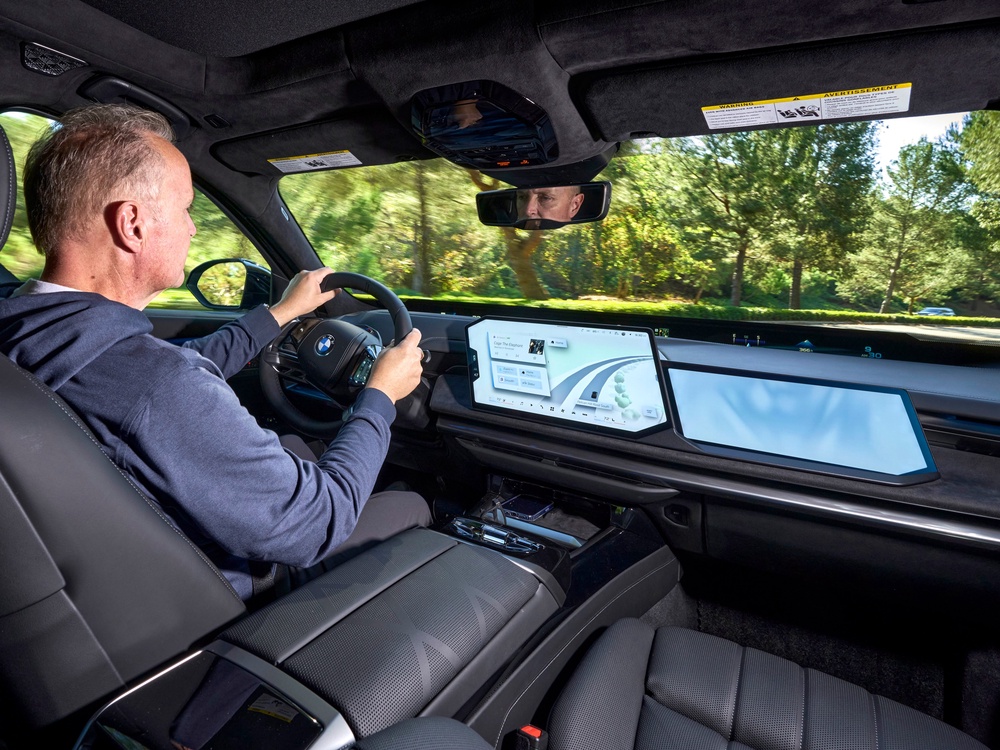
There’s rather more change underneath. The iX5 60 xDrive combines a huge 141kWh battery with two motors, four-wheel drive and a maximum claimed range of 525 miles. Inside, BMW’s new panoramic display arrangement that runs the full width of the dash at the base of the windscreen shares the cabin with everything from an opening glass roof to optional slate trim. Yes, actual slate.
It’s the first fully electric BMW to be built at Spartanburg in the US, with batteries assembled locally at the new Woodruff plant, which uses no fossil fuels in normal operation. BMW estimates that around a third of the car’s weight comes from secondary raw materials. Quite a lot has changed since that day at Road Atlanta – not least the arrival of the excellent, slightly smaller, and cheaper iX3 – but I still wanted to know whether this electric X5 could make a big SUV enjoyable to drive.
How we tested
I drove the BMW iX5 60 xDrive around Southern California on freeways, town streets and rough urban roads, including a visit to Target for the usual Fowler car park test. As usual, I gave all the technology, including the Bowers & Wilkins hi-fi system, a thorough test, too.
BMW iX5: from £85,375, BMW.co.uk
Independent rating: 9/10
- Pros: Comfortable ride, excellent steering and body control, quiet cruising, long maximum claimed range, fast rapid charging
- Cons: Upright rear seats aren’t especially comfortable on longer journeys, fiddly powered doors
BMW iX5 specs
- Price: from £85,375
- Battery size:141kWh
- Maximum claimed range: 525 miles
- Charging: 460kW DC, 10 to 80 per cent in 23 minutes
Battery, range, charging, performance and drive
The battery is the obvious place to start, because the iX5 gets the largest battery BMW has fitted to a fully electric car, with 141kWh of usable capacity – that’s a substantial amount of energy to carry around. BMW’s sixth-generation electric technology uses cylindrical cells that are 120mm tall and 46mm across, fitted directly into the battery pack without the usual separate modules. BMW says the cells have 20 per cent greater energy density than its previous generation, while the taller cells hold almost 30 per cent more usable energy than those in the smaller iX3.

The maximum claimed range is 525 miles with BMW’s provisional figures spanning 401 to 525 miles, depending on the car’s configuration, so your choice of wheels and equipment plays a part.
The 800V electrical system allows a maximum DC charging rate of 460kW. BMW quotes a 10-80 per cent charge in 23 minutes and up to 217 miles of additional range in 10 minutes, using a suitable high-powered charger, while it can also use 400V DC chargers.
There’s a heat pump, and the battery can be warmed or cooled before a rapid-charging stop. Enter a charger as a destination in BMW Maps and the car prepares the battery automatically, or you can start the process through the screen or phone app. You can also check the battery’s preparation status and how much longer it needs.
Bidirectional charging gives that enormous battery another job. It can work as a store of energy for a suitably equipped home, with emergency back-up among its potential uses, while BMW’s vehicle-to-home setup can work with solar panels, too. Vehicle-to-load also turns the car into a mobile power bank, supplying up to 3.7kW through the appropriate adaptor for things such as an electric grill or charging an e-bike. That could come in handy on a campsite. Vehicle-to-grid capability can also return energy to the electricity network through a compatible installation and tariff.
Driving duties are shared between a motor at the front and another at the rear, producing a combined 570bhp and 805Nm. The rear motor does the main work, with the front motor able to switch off when it isn’t needed to save energy. BMW quotes 0–62mph in 4.6 seconds and an electronically limited top speed of 130mph, and it feels every bit as fast as that.
There’s plenty of engineering to manage it all. Adaptive suspension is standard, with a double-wishbone layout at the front and five links at the rear, plus weight distribution close to 50:50. BMW’s ‘Heart of Joy’ computer control system coordinates the motors, braking and energy recovery, along with parts of the steering operation. BMW says it reacts 10 times faster than its earlier systems and allows energy recovery to handle almost all normal braking, right down to a standstill. Its Soft Stop function is designed to make the final part of stopping smoother.
Optional adaptive chassis control adds air suspension and rear-wheel steering, with the rear wheels turning by up to 3.2 degrees. The Professional version adds active anti-roll control, too, while the air suspension can raise the car by 20mm for obstacles or lower it by 40mm when parked to help with getting in and loading, as well as adjusting its height while driving.
On the Californian roads I drove, the ride was nicely judged. The car felt connected to the road without making comfort pay the price, whether I was threading through urban streets or settling onto the freeway. There were some pretty poor surfaces along the way, too, so this wasn’t simply a case of everything feeling lovely on a freshly laid strip of tarmac.
Find a few bends and it’s a lovely car to let flow from one corner to the next. The steering is excellent and the body control is impressive for such a tall SUV, helped in no small part by that big, heavy battery sitting low in the car. BMW quotes a kerb weight of 2,825kg, so there’s a fair amount to keep in check.
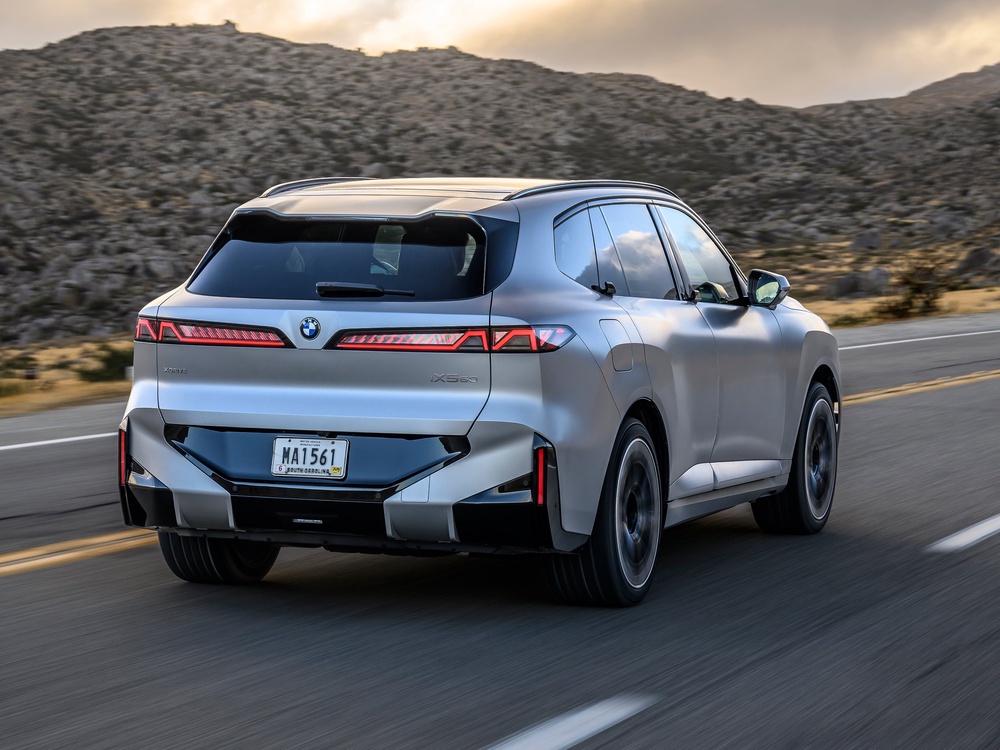
Does it feel like a sports car in quite the way that original X5 perhaps did all those years ago? Not really, but it’s a thoroughly enjoyable car to drive, and you can make fairly swift progress in it, too. It’s also very quiet, although BMW’s now-familiar synthesised acceleration sound joins in when you put your foot down. I rather liked it.
Interior, practicality and boot space
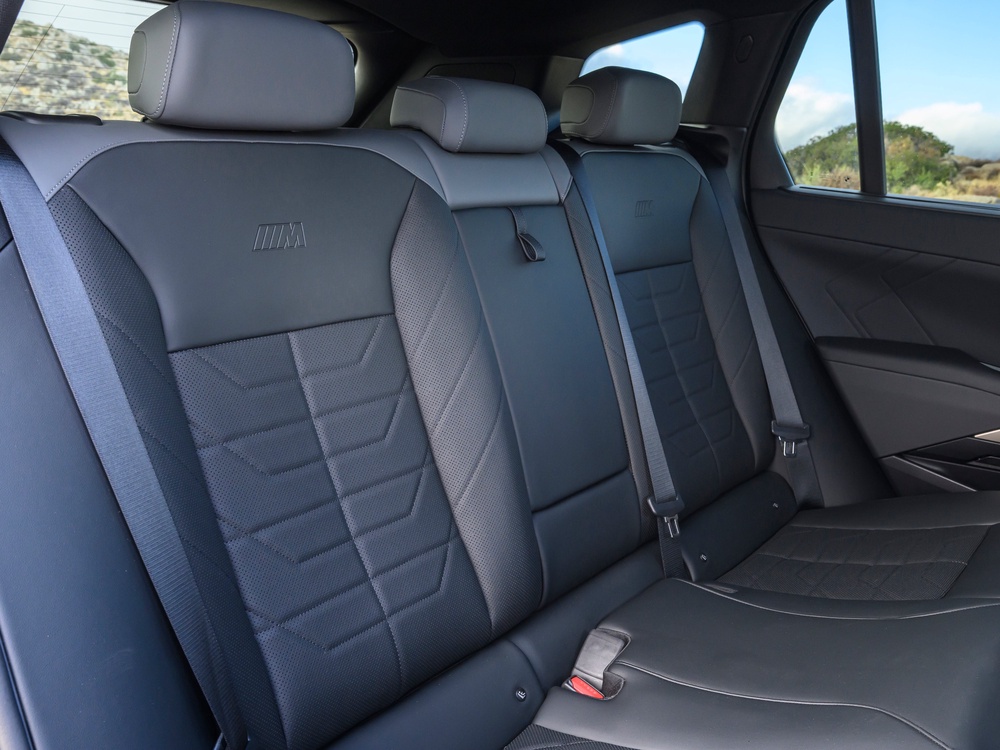
The iX5 measures 4,994mm long, 2,000mm wide and 1,748mm tall, with a 3,035mm wheelbase – that’s 60mm longer than before. There are five seats and 655l of boot space, increasing to 1,850l when the rear backrests are folded. Those backrests split 40:20:40, with a through-loading arrangement for longer items, while another 53l of storage under the bonnet gives the charging cable somewhere to live without taking up room in the main boot.

BMW says the rear seating position is two degrees less upright than before, with its quoted knee-room measurement increasing from 108mm to 130mm. Even so, I found the back seats a bit too upright and not massively comfortable on a long journey that involved getting stuck in Californian traffic. If you’re regularly carrying adults in the back, have a decent sit in it before deciding.
There’s a centre armrest with cupholders that can also act as a phone tray, and Isofix fittings for child seats. The updated Travel & Comfort system offers optional Qi magnetic holders for attaching phones and other devices to the front seatbacks, while rear passengers can charge devices wirelessly from the lower part of the centre console.
Up front, sports seats are standard, with electric adjustment and Veganza upholstery. Optional multifunction seats add ventilation, massage and more electric adjustment, including the cushion depth and headrest height, with four-way lumbar support for both front occupants. Merino leather is available with those seats, alongside Alcantara trim.
The standard panoramic glass roof has an opening front section. Heated rear seats and front armrests (which are nicer and of more use than you might imagine) are among the additional comfort features available. And across the dashboard and into the doors, a backlit trim strip provides cool-looking adjustable ambient lighting.
BMW also offers real slate as part of its Clear & Bold interior treatment. A thin layer of stone is applied to a backing so it can follow the shape of the cabin, with touch-sensitive functions incorporated into some of the surfaces. Glass elements include the gear selector, volume control and seat-adjustment controls. The centre console has two cupholders, two USB-C ports and a wireless phone tray.
Then we get to those doors. The new Winglet door handles are tucked into the pillars between and behind the doors, leaving the door skins clear – they look a bit odd and a bit too tempting for anyone to hang a bag of rubbish (or worse) on. Soft Close is standard, while the full self-opening doors are an option. They can respond to a touch of the handle, an interior button, the app, voice control or the screen, and pressing the brake pedal can close them once you’re seated – just as they do in a Rolls-Royce.
That sounds terribly clever but I found the handles and self-opening arrangement a bit of a faff. Stand in front of a door and it won’t open, because the safety sensors (quite reasonably) don’t want it to hit you. I understand the thinking; I’m just not sure the whole arrangement answers a question anybody asked.
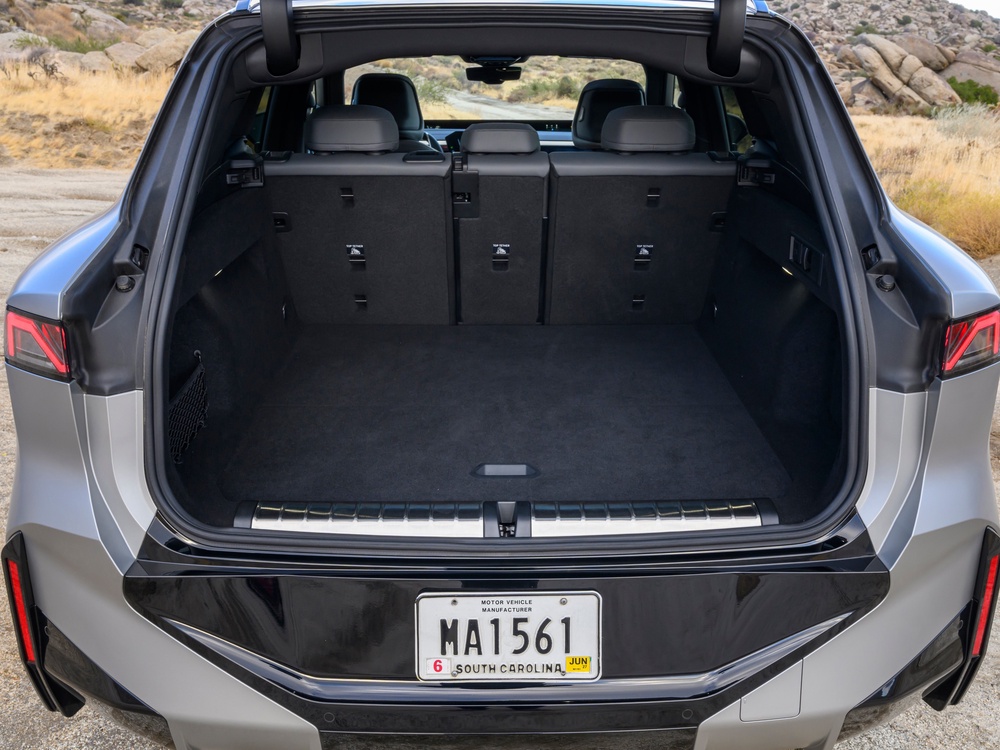
My usual Fowler car park test took place at Target, and the dimensions explain why I include that sort of everyday stop. The turning circle is 12,800mm, reducing to 12,100mm with rear-wheel steering, which makes a handy difference.
Technology, stereo and infotainment
BMW’s new Panoramic iDrive brings a substantial change to the traditional BMW dashboard. The main central touchscreen measures 17.9in, with an irregular shape that BMW calls free-cut. Above it, Panoramic Vision projects information across the whole width of the bottom of the windscreen, putting driving information ahead of the driver and leaving the central and passenger-side areas available for personalised content. A separate 3D head-up display places navigation and assistance information further into the driver’s view.

You can drag up to six widgets from the main screen to the panoramic display and arrange them to suit you. The steering-wheel controls provide haptic feedback and illuminate as their functions become relevant, with assistance and parking controls on the left and phone and media functions on the right. QuickSelect shortcuts sit on the central screen, which also handles plenty of the car’s other functions.
BMW Operating System X runs the whole arrangement. It supports individual layouts, colours and backgrounds, including your own photographs, with profiles for up to seven BMW ID users. Personal, Sport, Efficient and Silent modes change the setup, while wireless Apple CarPlay and Android Auto are included. Navigation instructions and media information from your phone can also appear in the panoramic and head-up displays. Over-the-air updates can add functions and keep the software up to date, with automatic updates an option.
That head-up display is rather spectacular, too, with full colour, augmented reality instructions and such a large display that I found it got a little bit in the way on full brightness at night time.
The voice assistant responds to “Hey, BMW” or a steering-wheel button and can deal with navigation, entertainment, phone calls, windows, climate control and seat functions. You can also create routines that combine actions according to conditions such as the temperature, time or which seats are occupied.
There’s useful thinking around charging, too. Route planning includes the charging stops you’ll need and tells you what charging is going to cost. You can choose preferred operators and the minimum battery level you want on arrival at a charger or your destination. The system draws on earlier charging sessions to consider likely speed and reliability, as well as the charger’s exact location.
Even the powered charging flap has joined in. It uses artificial intelligence to learn when you’re likely to need it, recognising familiar charging habits or your approach to a charging stop and opening automatically. It can do that without an active navigation route and it closes automatically afterwards.
The My BMW app can set charging windows, prepare the cabin, operate the windows and control the optional automatic doors. Passengers can connect by scanning a QR code and take control of music, temperature, lighting and navigation functions. Digital Key Plus lets a compatible phone or watch act as the key, with the ability to share access and set different permissions.
An optional 14.6in passenger screen provides video, music, games and video conferencing, including while the car is moving. If the interior camera detects the driver being distracted by it and looking over, the screen dims. Video on the central screen is for when the car is parked, and some games use your phone as the controller. Connectivity can come through BMW Digital Premium or your own phone’s hotspot, or a wifi connection.
BMW offers a standard audio system with 12 speakers and 280W, while the optional Bowers & Wilkins surround-sound setup increases that to 18 speakers and up to 775W with Dolby Atmos for compatible content. It’s another awesome Bowers & Wilkins system, although it didn’t quite have the separation ability with Dolby Atmos as you get in a Polestar 3 or Volvo EX60.
Driving Assistant Plus is standard, providing adaptive cruise control, distance control and lane assistance. BMW’s Symbiotic Drive allows the driver to steer, brake or accelerate without immediately cancelling the assistance. The optional Motorway Assistant supports hands-free driving where permitted, with a technical maximum of 81mph and lane changes confirmed by a deliberate glance towards the appropriate mirror. It remains driver assistance, though: you need to pay attention and be ready to take over.
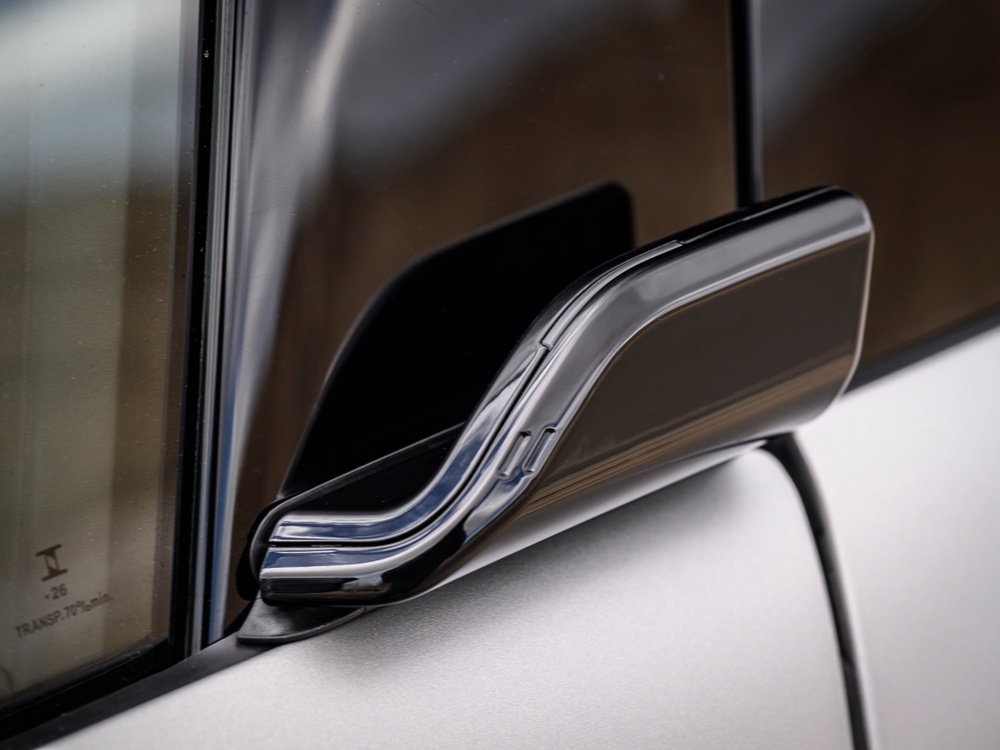
BMW is also introducing city assistance for junctions, traffic lights, roundabouts and urban lane changes, starting in Germany before a phased rollout elsewhere in Europe. Parking Assistant is standard, with artificial intelligence used to find spaces and plan manoeuvres, while optional Parking Assistant Professional adds remote parking through a compatible phone. Other safety systems include emergency braking, lane-change and side-collision warnings, crossing-traffic detection and an exit warning that can delay a door opening when a cyclist approaches. There are front, side and head airbags, plus an airbag between the front occupants.
Prices and running costs

The BMW iX5 60 xDrive costs from £85,375 on the road – £510 below the £85,885 diesel X5 40d xDrive and £1,495 below the £86,870 X5 50e xDrive plug-in hybrid. Going electric doesn’t mean paying a premium here.
The other plug-in hybrid, the X5 M60e xDrive, starts at £101,775. That’s the petrol-electric performance model; a fully electric M Performance version will join the range separately. The first UK cars will arrive in spring 2027.
For charging, BMW Charging provides access to more than one million points across Europe and more than 2.8 million worldwide, with fixed or discounted tariffs through IONITY and selected partners. In the US, BMW is also involved in the Ionna charging joint venture, with 400kW chargers and preferred charging prices.
The route planner’s charging-cost information helps you see what a journey will involve before you plug in. Home energy storage and bidirectional charging can play a part in household electricity use, too
The verdict: BMW iX5
The iX5 is a lovely car to drive, with excellent steering, impressive body control and a comfortable, quiet ride. Its huge battery and long maximum claimed range add to the appeal, although I’d prefer more comfortable rear seats and rather less cleverness when I’m simply trying to open a door. The biggest issue is the iX3, which is pretty much as good, almost goes as far and is considerably cheaper.
BMW iX5 rivals
FAQs
How long does it take to charge?
BMW quotes a 10-80 per cent charge in 23 minutes using a suitable rapid charger, with a maximum DC rate of 460kW. A 10-minute stop can add up to 217 miles of range.
How much does it cost and is it worth it?
The BMW iX5 60 xDrive starts at £85,375. The comfortable ride, excellent steering and body control, quiet cruising and long maximum claimed range are the iX5’s strengths. I was less impressed by the upright rear seats on a long journey and the fuss involved with the optional powered doors.
Does BMW replace batteries for free?
Qualifying battery faults are covered under BMW’s standard UK electric-car warranty for eight years or 100,000 miles from first registration, whichever comes first. There’s also cover if the battery’s capacity drops below 70 per cent of its original level. The rest of the car has a three-year, unlimited-mileage warranty.
Why trust us
Our team of motoring experts have decades of experience driving, reviewing and reporting on the latest EV cars, and our verdicts are reached with every kind of driver in mind. We thoroughly test drive every car we recommend.
Read MoreThink EVs are too expensive? These 12 could blow your mind, not your bank balance
How to install an EV charger at home: Costs, grants and what to expect
Skoda Epiq review: I’ve driven the cool new electric SUV, but is it epic?
Leapmotor B03X review: I drove the new electric SUV with 237 miles of range that’ll improve with age
Bentley ploughs on with electric Luxury Urban SUV plans
BMW iX3 review: Is this new electric SUV with 500-mile range a game-changer?
This fast-charging EV can have an almost-full battery in under 10 minutes
Volkswagen ID. Cross review: Small electric SUV feels impressively polished and properly posh