

Scientists have discovered a new insect species that lived during the time of the dinosaurs, after examining a fossil specimen trapped in tree resin that had hardened into amber.
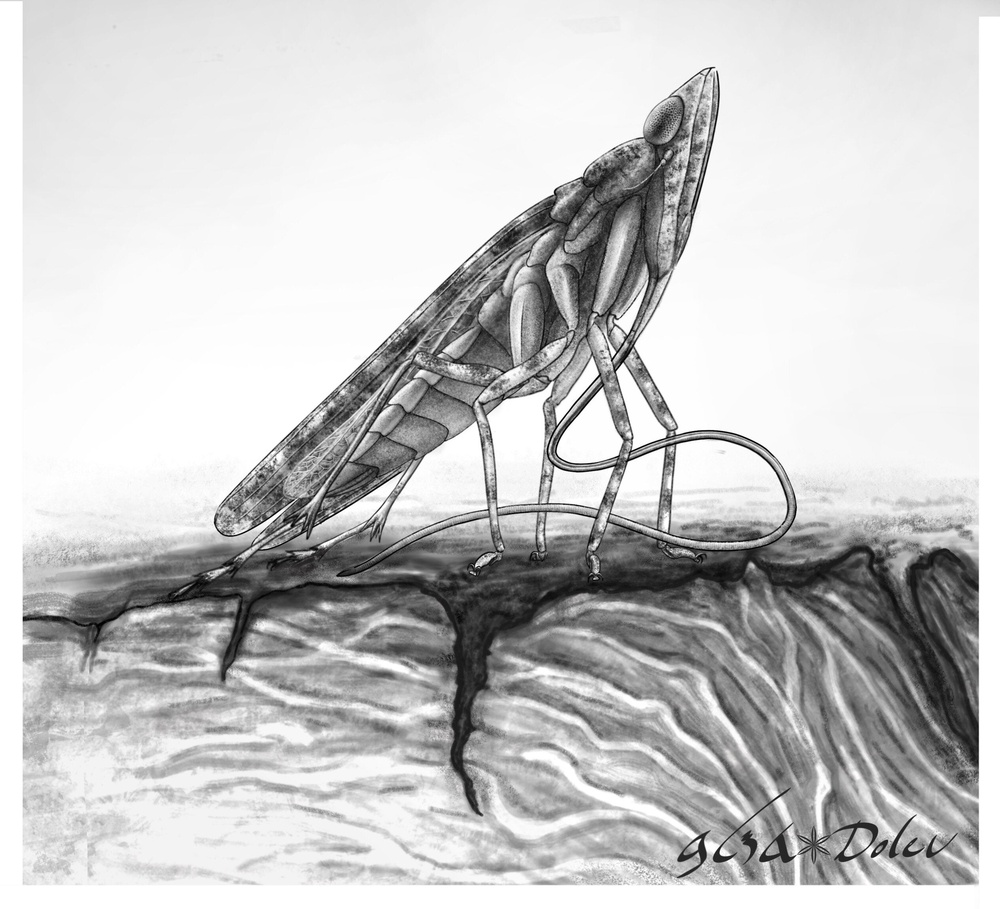
Researchers from the Steinhardt Museum of Natural History in Israel identified and named the species Cretodorus noonoo, or "Noo-Noo”. The name comes from a friendly vacuum cleaner from the children's television series Teletubbies, whose long, flexible hose resembles the mouthpart of the ancient insect.
Noo-Noo had unusual structures, including exceptionally long and flexible mouthparts, reaching nearly twice the length of its body. This strange structure enabled the insect to reach food sources deep inside cracks and crevices in tree bark inaccessible to animals with more rigid mouthparts, scientists said in a new study published in the journal Insects.
"The discovery of 'Noo-Noo', a new species that lived 99 million years ago, gives us an extraordinary glimpse into the insect world of the age of the dinosaurs,” Leonidas-Romanos Davranoglou from the Steinhardt Museum of Natural History said.
“This is not merely an insect previously unknown to science,” he added, “but an animal that developed an evolutionary solution with almost no modern equivalent: a long, flexible and durable feeding organ that likely enabled it to reach food deep within tree bark.”
Noo-Noo belonged to an ancient family of planthoppers known as Neazoniidae, 13 of whose specimens were found preserved in Kachin amber from Myanmar.
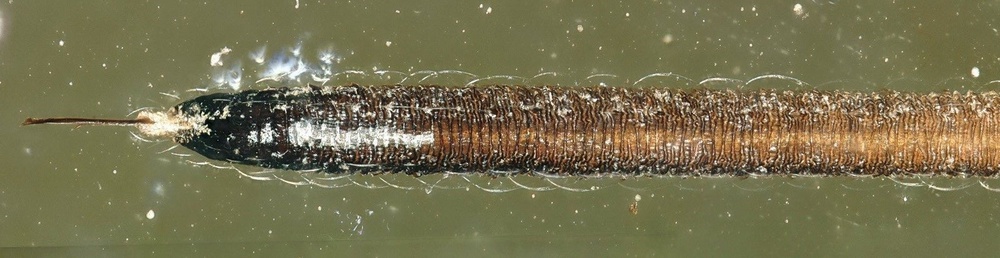
The insect possessed extremely elongated mouthparts, with a surface densely covered with multiple folds, making them flexible and preventing collapse, similar to the folds in a bendy drinking straw or a corrugated flexible hose.
The mouthparts likely functioned as a piercing-and-sucking system that made noo-noo a specialist at taking sap from trees.
In some of the fossils examined in the study, the mouthparts were preserved in a bent position. This, researchers said, could be further evidence that the mouthparts were also flexible when the insects were alive.
Noo-Noo had another strange structure with two grooved lobes at the tip that likely opened during feeding, researchers found. This part likely helped anchor its mouthpart to the walls of a bark crack, similar to a wall anchor expanding inside a drilled hole.
Such a structure is unknown among noo-noo’s living relatives today, pointing to an evolutionary solution that disappeared over time.
The insect’s modern relatives possess mouthparts structured like a simple needle, allowing them to pierce plant tissues and suck fluids from them.
Noo-Noo’s discovery was set to expand the understanding of Cretaceous forests, researchers said.
Similar corrugated feeding structures found in several unrelated insect groups that lived in this period raised the possibility that forests rich in thick-barked trees provided an advantage for insects capable of reaching deeper tissues. "The fact that similar structures appeared in several insect groups during the Cretaceous period suggests that ancient forests created ecological conditions and opportunities very different from those we know today,” Dr Davranoglou said.
“The discovery of a new species like this is not simply the addition of another name to the tree of life, but another piece of the puzzle that enables us to reconstruct what ecosystems looked like and how they functioned tens of millions of years ago.”
Read MoreNearly 1,500 Myanmar nationals repatriated from Malaysia as UN warns of risks
Somali pirates kill five crew on board hijacked oil tanker, officials say
Thailand's government approves emergency funding after deadly floods that impacted millions
What is the plague? How the deadly disease spreads after suspected case in Russia
5,000-year-old skulls in Egypt reveal evidence of human sacrifice
Why the ‘cold blob’ may collapse the weather system as we know it